TOKYO — In Asia, no national leader has been more effective in spinning an underperforming economy than India’s Narendra Modi.
Anytime the numbers disappoint, the prime minister rolls out the latest version of his party’s ad campaigns. Most recently, this has been a Goldilocks moment for growth. Yet Modi is being confronted by an economic indicator he can’t explain away: a chronically weak rupee.
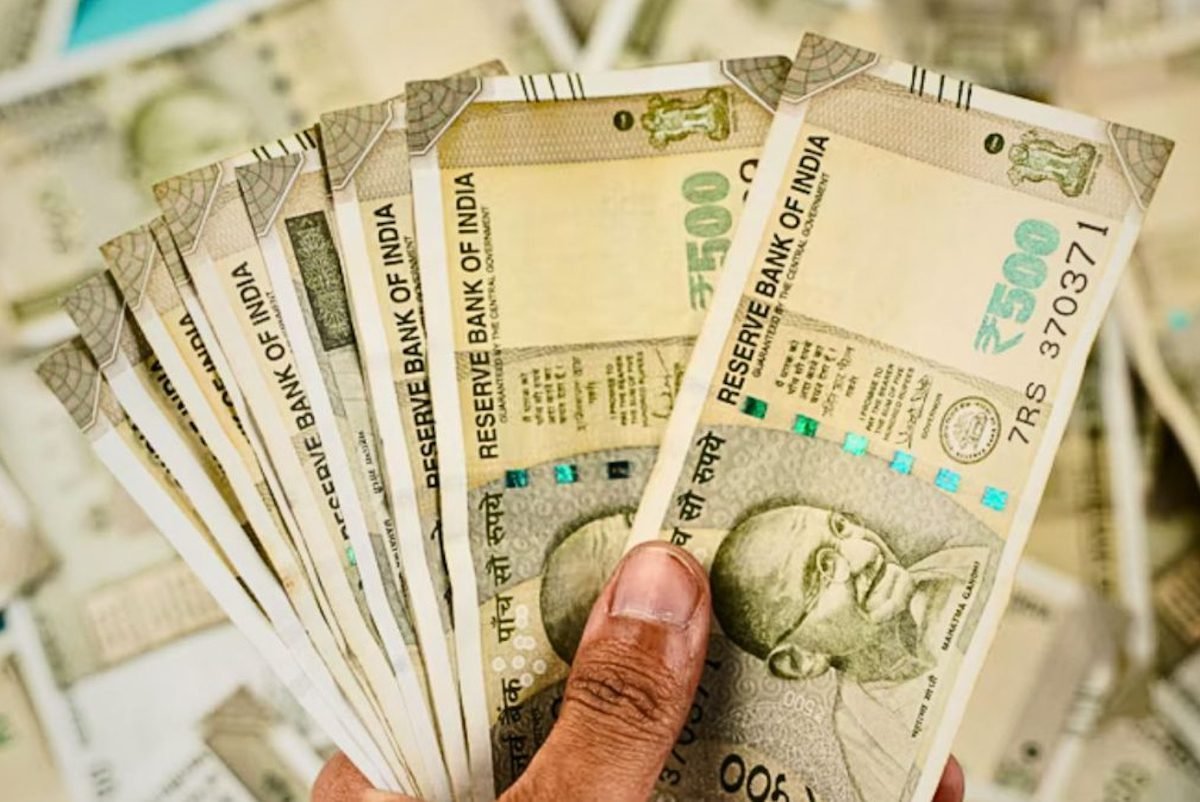
India’s currency was Asia’s worst performer in 2025, falling 5%. That trajectory has carried over into this year at a disastrous moment for the most populous nation, as surging oil pricesshake up the global economy.
The rupee has lost another 5.5% since January 1. And given that India is near the top of the list of current-account-deficit economies, the rupee remains “particularly vulnerable to further depreciation,” says economist Priyanka Kishore at Asia Decoded.
Things could get much worse if analysts at Wells Fargo and Van Eck Associates are right that the rupee could weaken toward 100 versus the dollar from around 95 now if the Iran war drags on.
As researcher Ahmed Aizan at broker Equiti Group tells Bloomberg: “100 per dollar is no longer a tail risk — it is a credible stress scenario if current conditions persist. The latest measures look more like short-term stabilization tools than a structural solution.”
The urgency at the Reserve Bank of India suggests Asia’s third-biggest economy is in financial sandbagging mode. There, Governor Sanjay Malhotra’s team is scrambling to cap foreign exchange positions to halt the selloff. And largely in vain.
The RBI’s inability to tame the currency speculators shorting the currency comes as Brent crude prices settle in above US$100 for the long haul. That’s markedly above the $70 baseline that was assumed by Malhotra’s team in Mumbai back in October. The price surge is increasing India’s monthly oil import bill by $5 billion.
“Pressure will likely continue if crude prices remain around $100,” says Siddharth Rajpurohit, an analyst at Systematix Institutional Equities. That quandary, he adds, will challenge Modi’s Bharatiya Janata Party “sooner rather than later.”
The RBI is also prodding India’s biggest banks to provide their own dollars rather than relying on the central bank. That has the RBI selling dollars behind the scenes to put a floor under the rupee. In 2025, the RBI sold $51.7 billion, the most on record.
The RBI’s guidance “is effectively engineering a near-term supply of dollars in the market,” notes Kunal Sodhani, head of treasury at Shinhan Bank. “But the durability of this support will depend on external variables — chief among them, the trajectory of oil prices and the broader geopolitical landscape.”
The directive is wreaking with some havoc in India’s banking system. This week, shares in the State Bank of India fell roughly 4% to the lowest level yet in 2025. Shares in ICICI Bank and HDFC Bank also took notable hits.
Yet the pain from elevated oil prices will be even greater among India’s 1.4 billion people. India is the third largest importer of crude, making it among the most vulnerable economies to fallout from the Iran war, particularly the closure of the Strait of Hormuz.
As Pankaj Chaudhary, a junior Indian finance minister, puts it, the overall economic impact and implications for India’s current account deficit depend on the “evolving trajectory of various macroeconomic parameters.” In other words, a weak rupee is a plus for exports but negative for India’s import bill.
Chaudhary expressed confidence that the RBI “intervenes in situations of excess volatility.” Still, he argues that New Delhi’s foreign exchange reserves are sufficient to cover more than 11 months of goods imports.
Modi’s government, Chaudhary notes, is monitoring how events in the Middle East unfold and the coming damage to India’s $4.1 trillion economy. “The overall impact of the ongoing conflict will depend on the evolving global situation, including the duration and intensity of the conflict,” he says.
Fitch Ratings analyst Thomas Rookmaaker ranks India among the “large net fossil-fuel importers” that “would face the sharpest deterioration in external balances and real incomes if energy prices rise and shipping disruptions persist.”
It hardly helps that forecasts suggest much of India is set for even higher-than-usual temperatures — and potential heatwaves — through June. This significantly heightens economic risk as Middle East energy risks increase. Weather quirks will exacerbate already strained supplies needed to cool that nation.
Yet much of the downward pressure on the rupee reflects preexisting conditions that Team Modi had 11-plus years to address before bombs fell on Tehran. Before the war kicked off in the Middle East, New Delhi “had a very wide trade deficit” and it’s now “going to widen” further, notes Abbas Keshvani, a strategist at RBC Capital Markets.
For all Modi’s spin and slogans, India’s economy isn’t where voters who returned his BJP to power in 2014 hoped. Back then, Modi was a bona fide folk hero. His success running the western state of Gujarat from 2001 to 2014 captivated the nation.
During his tenure as chief minister, Gujarat year after year generated higher gross domestic product, greater productivity and innovation, less bureaucracy and corruption, and better infrastructure than the national average.
In 2014, the BJP returned to center stage in hopes that Modi would apply the “Gujarat model” throughout Asia’s third-biggest economy. Yet, it turns out Modi’s blueprint wasn’t as scalable as hoped. Already, talk of a Goldilocks moment is aging very poorly in part thanks to 11-plus years of complacency.
Early on, made some big gestures to open sectors, from aviation to defence to insurance to retail to increased foreign investment. The efforts even lured Walmart India’s way. Steps to open the pharmaceutical and manufacturing industries hold great promise, too.
Yet, the report card isn’t great. In 2014, for example, Modi announced a splashy “Make in India” program. The plan was to increase manufacturing’s GDP share to 25% to reduce high youth unemployment. And credit where its due: India lured Airbus, Amazon, Apple, Intel, Microsoft, Nissan, Samsung and Taiwan’s Powerchip Semiconductor Manufacturing Corp.
But nearly 12 years on, the sector accounts for only about 17% of the economy. Now, as oil and fertilizer prices surge and export markets quake, it will be harder for India to grow that share.
Part of the problem is that a 7-8% growth rate doesn’t ensure that its benefits reach the middle and lower classes. Or to reduce youth unemployment. This failure to create millions more manufacturing jobs is a microcosm of why Modinomics entered the US President Donald Trump 2.0 era on fragile footing.
The emphasis has been on high-profile short-term wins rather than on the heavy lifting beneath the surface to cut bureaucracy, increase transparency, level playing fields, strengthen human capital and raise productivity
As 2026 unfolds, Modi still seems more focused on GDP milestones than vital reforms. Case in point: the obsession with topping Japan in GDP terms. India closed 2025 with 7.8% growth, well ahead of China’s 5% pace. Economists had expected the Modi government’s economy to expand around 7.5% this year. That was before the Iran conflict sent shockwaves through global markets.
India overtaking Japan in GDP terms would resonate just as powerfully in Tokyo as in New Delhi. The shock of China surpassing Japan about 15 years ago still lingers. It symbolized the definitive end of Japan’s post‑war economic miracle. It reinforced the sense that the country’s “lost decades” of deflation had left a deeper mark than many wanted to admit.
The obvious counterpoint is that the size of an economy matters far less than the income of its people. And it’s a compelling one. China’s $19.4 trillion economy may leapfrog over Japan’s $4.2 trillion output, yet China’s GDP per capita remains under half of Japan’s. Japan, in turn, enjoys a GDP per capita roughly twelve times that of India.
This undermines the Goldilocks narrative. Until India crafts policies to grow better, not just faster, the rupee will remain on the sale rack. And a reminder that all’s not as grand in “New India” as Team Modi often claims.
Follow William Pesek on X at @WilliamPesek