The Iran war has resulted in the highest level of regional conflict seen since America’s 1991 Operation Desert Storm against Iraq, with more than a dozen countries targeted by Iranian drone or missile barrages.
Intense missile defense operations by the US, Israel and the Gulf states offer valuable lessons for Indo-Pacific countries that could face similar threats in future conflicts, particularly those involving China and including over Taiwan.
The threat posed by ballistic missiles — such as the Dongfeng series fielded by the People’s Liberation Army Rocket Force (PLARF) — underscores the urgent need for America’s Indo-Pacific allies to expand civil defense services, build fortified civilian shelters and harden military hangars.
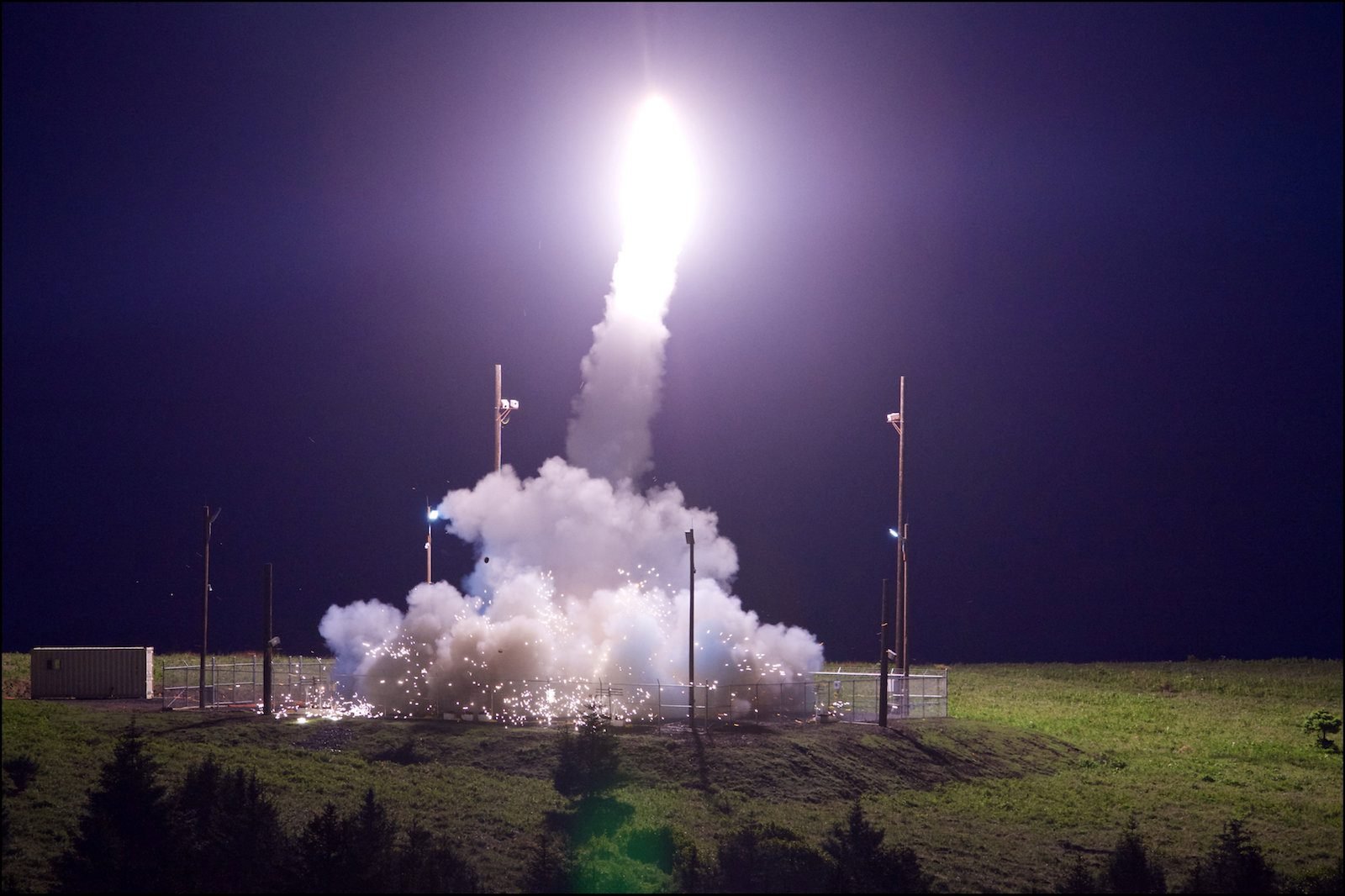
The Iran war has tested American missile defense systems, with US-made Patriot and Terminal High Altitude Area Defense (THAAD) batteries seeing heavy use. Iranian ballistic missile strikes have created shortages in air defense stockpiles that the US and South Korea have rushed to replenish.
Iranian forces struck an undisclosed number of THAAD radar systems, each reportedly valued at US$300 million, degrading response and warning times for future missile launches. The damage prompted the US to redeploy several THAAD batteries from US Forces Korea to the Middle East.
The next steps in the US military campaign against Iran will commit nearly its entire inventory of stealthy JASSM-ER cruise missiles, drawing them from stockpiles devoted to other regions.
The US has also redeployed nearly its entire inventory of stealthy JASSM-ER cruise missiles, valued at $1.5 million per weapon, with Pacific stockpiles taking a particular hit, according to recent news reports.
A key wake-up call has been the cost of intercepting Iran’s inexpensive drones using Patriot missiles, which run upward of $3 million per interception. According to the Atlantic Council, 29% to 43% of all known THAAD batteries are now deployed to intercept Iranian ballistic missiles.
Ukrainian President Volodymyr Zelensky has dispatched 200 military specialists to the Gulf states, where their expertise in countering and destroying drones cost-effectively is suddenly in high demand.
With Iranian drone technology now in Russian hands — deployed in Moscow’s own Shahed variant nearly daily — Ukrainian specialists are also sharing effective countermeasures with the US and its partners.
Valuable combat data
Iranian missile barrages are generating valuable combat data relevant to other regions, including the Indo-Pacific, which must prepare for a scenario in which China targets countries hosting American military bases.
Japan, Taiwan, Guam, South Korea, and the Philippines could face retaliatory strikes similar to Iran’s attacks on the Gulf states in a potential conflict over Taiwan or over contested territory in the South China Sea, among other potential flashpoints.
The PLARF is focused solely on developing and fielding its ballistic missile arsenal. That includes the Dongfeng, which is considerably more capable and lethal than Iranian ballistic missiles for several reasons.
First, several Dongfeng variants have been upgraded with hypersonic capability to defeat American missile defenses, most notably the DF-17. While the US has achieved a relatively high interception rate against Iran’s Fattah missiles, the DF-17 could potentially evade those defenses and inflict serious damage on missile defense systems and regional bases.
Second, the PLARF can strike naval targets using mobile launchers equipped with the DF-21 and DF-26 series. Iran’s ballistic missiles have not come within striking distance of US naval forces, but the DF-21 and DF-26 are specifically designed to target and disable carrier strike groups, including the US Seventh Fleet.
Third, the Dongfeng series includes intercontinental variants capable of reaching most of the world, whereas Iran’s missiles are primarily regional. The DF-41, with a range exceeding 12,000 kilometers, is assessed as a likely threat to Guam — described by US commanders as an unsinkable aircraft carrier. The DF-41 is also nuclear-capable, making interception an urgent priority.
Fourth, China can field a large inventory of ballistic missiles across multiple ranges, potentially overwhelming American and allied air defenses if launched at a rate of 500 to 1,000 per day.
The PLARF currently fields several hundred short-range ballistic missiles (SRBMs), 500 intermediate-range ballistic missiles (IRBMs), 1,300 medium-range ballistic missiles (MRBMs), and 400 to 550 intercontinental ballistic missiles (ICBMs).
In a wartime scenario, China could potentially produce several hundred missile variants per day, given production lines that have expanded output well beyond America’s fallen capacity. The PLARF also fields more than 850 launchers for various missile types, posing a broad regional threat.
Dongfeng threat
The US is investing billions of dollars in upgraded air defenses across the Indo-Pacific, including the Enhanced Integrated Air and Missile Defense System (EIAMD) in Guam — a major multilayered interception system designed to protect US troops and assets.
The US and Japan are also jointly ramping up production of the SM-3 Block IIA ballistic missile interceptor, the most advanced such system the two allies field in the region.
As with the Iran war, there is a heightened need to prepare contingencies in case Dongfeng missiles penetrate air defenses. That scenario would place greater demands on civil services and require additional civilian shelters.
On the civil defense side, hardened shelters for civilians are a key contingency for a potential conflict with China. As Israeli emergency services have demonstrated, hardened bomb shelters save lives against missile threats.
Japan has conducted site surveys for nearly 1,500 additional facilities that could be converted into shelters against missile barrages, as relations with China have deteriorated over Taiwan.
The new shelters would supplement Japan’s existing 61,142 designated facilities as Tokyo continues to build out its defense posture and contingency plans in the event Beijing or Pyongyang directly threatens its national security.
In March 2025, Japan unveiled plans to evacuate 110,000 residents and tourists from the Sakishima island chain near Taiwan, including Okinawa, which remains a major hub for US military forces. Okinawa hosts the majority of US troops in Japan and would likely be a Dongfeng missile target in a Taiwan contingency.
Taiwan currently maintains thousands of shelters — 4,600 in the capital, Taipei, alone, with capacity for more than 12 million people. Additional undisclosed shelters exist in the mountainous interior, offering both civilians and armed forces asymmetric advantages given terrain that is largely impassable.
South Korea, which maintains some 19,000 shelters nationwide, has begun construction of its first nuclear-blast-resistant bunker. The country’s shelter network is primarily designed to protect against missile barrages from Pyongyang, which could inflict hundreds of thousands of casualties within the first days of a full-scale war.
While South Korea is focused primarily on a potential attack from the North, Seoul must also factor in the PLARF’s missile capabilities. South Korea has long balanced its alliance commitments with efforts to avoid provoking China.
Nevertheless, with a THAAD battery stationed in South Korea and the Pentagon pushing US Forces Korea toward a broader role in a Taiwan contingency, Seoul will need to expand civil defense preparations — particularly around American military installations — in the event it is targeted by Chinese ballistic missiles.
Empowering partners
The US would be well-advised not only to fund expanded missile defense across the Indo-Pacific but also to work with partner nations on civil defense, given that there is no guarantee all of China’s Dongfeng missiles will be intercepted.
Beyond hardened civilian shelters, contingency planning must address evacuation routes around critical military installations and command-and-control nodes such as Okinawa and Guam. Military exercises could also incorporate civil defense drills and scenarios focused on protecting sensitive infrastructure, including power plants and energy networks.
Lessons from the Iran war will be invaluable to contingency planners across the Indo-Pacific. With China’s Dongfeng missiles and launchers significantly more capable than Iran’s, the US and its regional allies must recognize that these systems will be harder to intercept and that protecting civilian lives and critical infrastructure will be a top priority.
Julian McBride is a defense analyst and contributing editor at 19FortyFive.