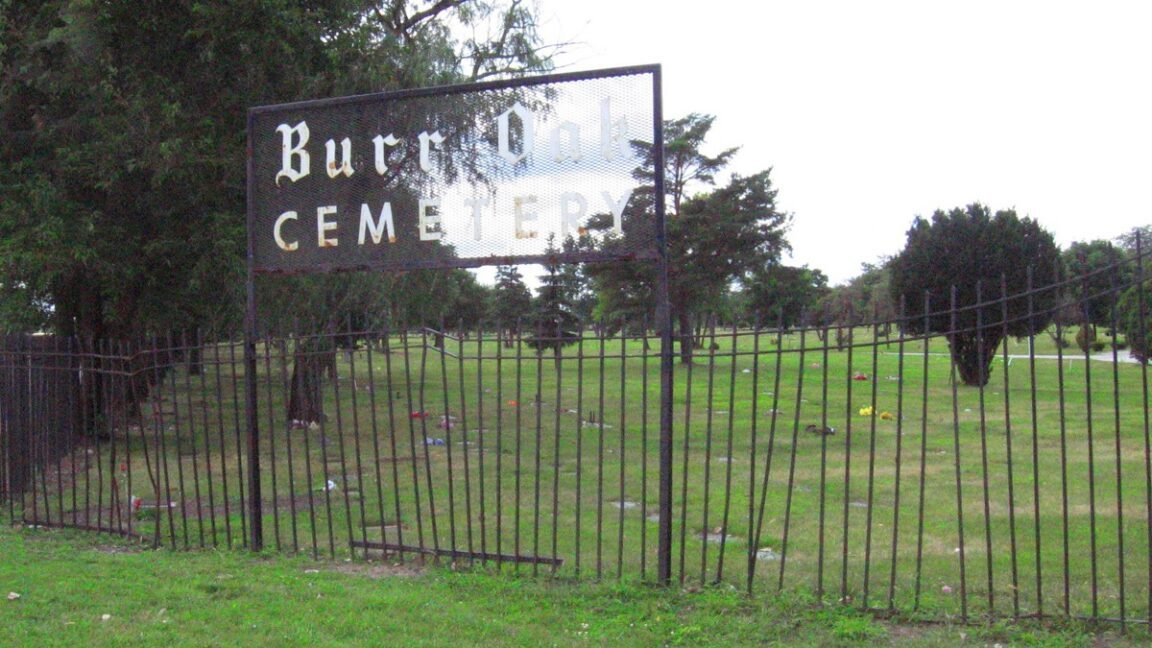
Back in 2009, residents were scandalized when employees at Burr Oak Cemetery in the Chicago suburb of Alsip were accused of exhuming old graves in order to resell the burial plots, unceremoniously dumping older remains in another area on the grounds. The perpetrators were tried and convicted in 2015, but the forensic evidence of the moss that helped convict them has now been detailed in a new paper published in the journal Forensic Sciences Research. It’s a followup to a 2025 paper concluding that mosses and other bryophyte plants have been used as evidence in forensic cases only a dozen or so times over the last century.
“The focus was an attempt to elevate the profile of these small, often overlooked plants,” co-author Matt von Konrat, who heads the botany collections at Chicago’s Field Museum, told Ars. “Mosses are ubiquitous, resilient, and capable of preserving timeline and habitat information in ways that complement other forensic tools. Our recent publications help consolidate these cases into the scientific record and, we hope, encourage investigators to recognize and preserve botanical evidence more routinely. [We also wanted to] highlight the use of natural history collections and their stories and how they can be applied to questions and applied in ways we have yet to imagine.”
Burr Oak Cemetery dates back to 1927, when it was founded to serve as the final resting place for Chicago’s African American population, which had grown significantly since the turn of the century due to migration from the South. Among the luminaries buried there are Emmett Till, heavyweight boxing champion Ezzard Charles, and blues singers Willie Dixon and Dinah Washington.
The grave robbing was first discovered in June 2009. Sgt. Jason Moran, who led the local investigation, told reporters in 2019 that on his first visit to Burr Oak, he saw skeletal remains sticking up out of piles of dirt. After interviewing employees and family members of those buried there, he concluded that graves were being desecrated, and any original headstones removed, to make room for new burials. That’s when the Sheriff’s office called in the FBI.
The official records were a bit of a mess, to say the least, but the ensuing investigation revealed that while the cemetery had space for 130,000 graves, between 140,000 and 147,500 people were listed as buried there. And some areas had apparently never been used for burials. The cemetery’s then-director, Carolyn Towns, grounds foreman Keith Nicks, Nicks’ brother Terrence, and another employee, Maurice Dailey, were charged.
The only reason they were caught is because they became increasingly reckless about their grave-robbing, even using a backhoe to dig up old graves, smashing skeletons to bits as they did so. Some 1,500 bones were recovered and identified as belonging to at least 38 individuals, but between 200 and 400 graves had been desecrated, per official estimates. Emmett Till’s decaying casket was found covered by a tarp and surrounded by debris in a garage behind the cemetery. (The restored casket is now housed at the Smithsonian’s Museum of African American History.)
The evidence of the moss
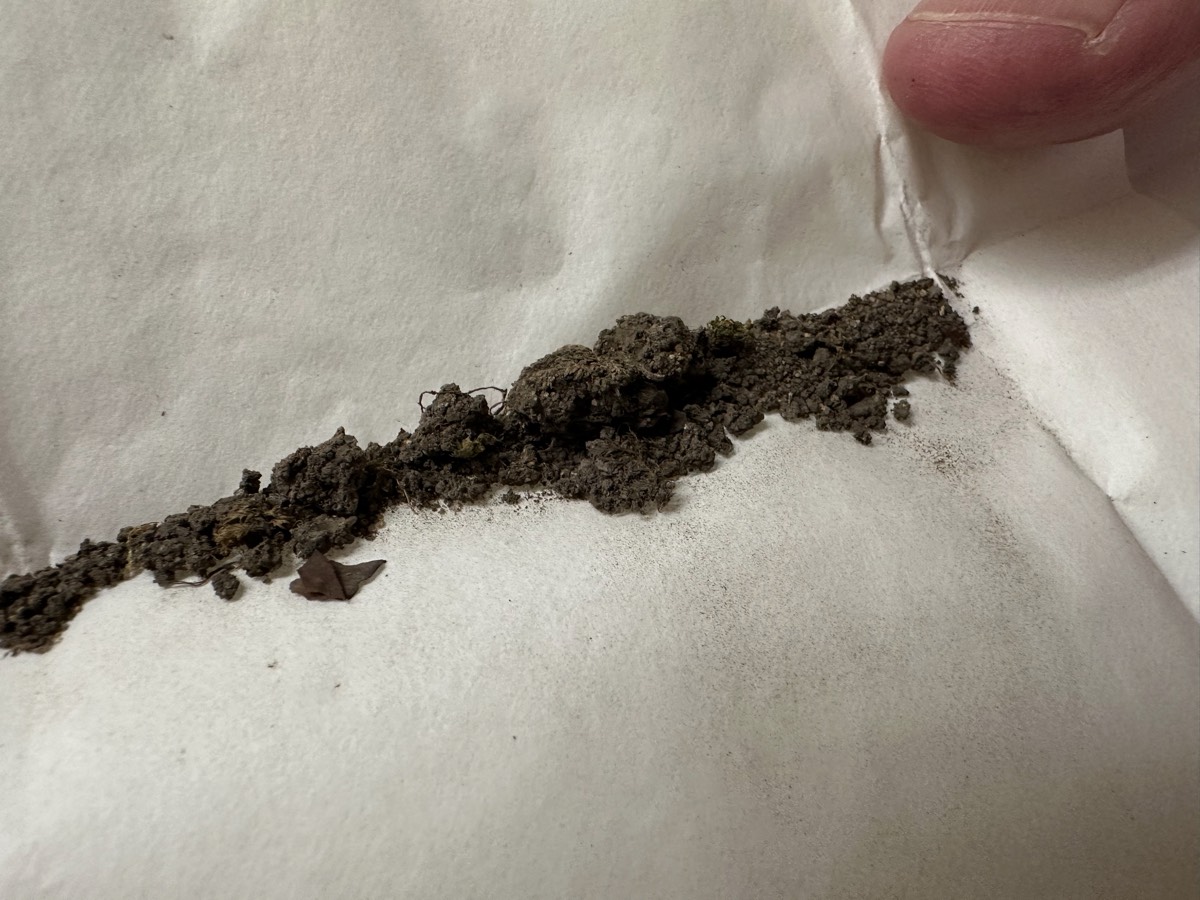
Prosecutors still had to prove their case. In addition to the skeletal remains, the FBI had collected broken mulberry branches and buried grass fragments for expert analysis. Von Konrat was just going about his museum business in 2009 when the FBI called, seeking expert advice on pieces of moss their team had found, inexplicably buried 8 inches below the topsoil with the reburied remains. They needed his help identifying the species as well as determining how long it had been buried. This would provide the FBI with a crucial timeline of when the remains had been reburied.
“Moss is a little bit freaky,” said von Konrat. “Mosses have an interesting physiology, where even if they’re dry and dead and preserved, they can still have an active metabolism, a few cells that are still active. The amount of metabolic activity deteriorates over time, and that can tell us how long ago a moss sample was collected.” The key was chlorophyll, a green pigment central to photosynthesis. Chlorophyll degrades as a decaying plant’s cells stop functioning, so the museum team could measure how much light was being absorbed by the chlorophyll in control specimens where the age was known (both fresh and dried). Then they could compare those measurements to the forensic sample.
Von Konrat’s team relied upon the museum’s herbarium—which houses a wide variety of dried plants, including several years of samples of the same species from Cook County. They were able to identify the moss sample found at the site. A careful survey of the cemetery revealed that this species was not growing at the crime scene but was found in abundance at the spot where law enforcement suspected the bodies had been dug up from old gravesites. They also determined that the moss sample provided by the FBI was just a couple of years old.
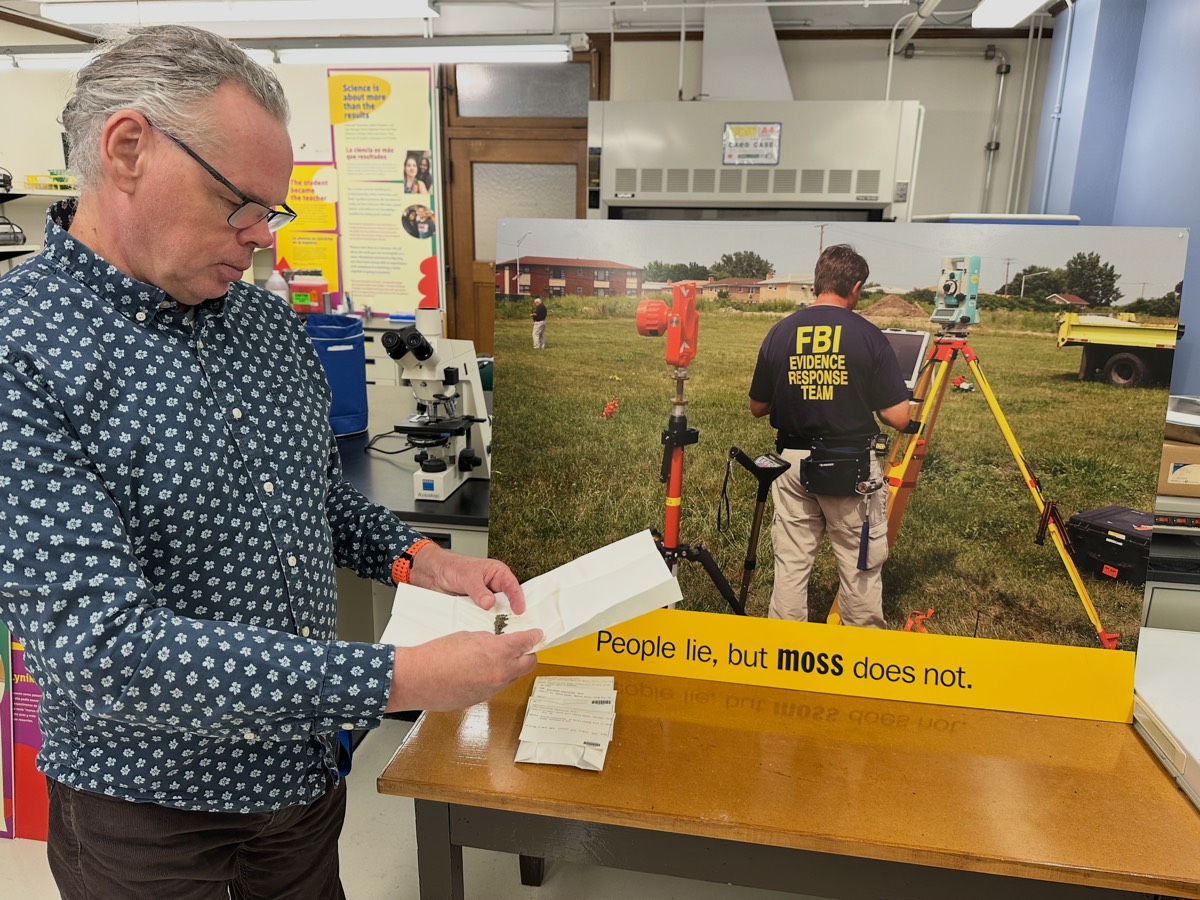
“This led to the conclusion there was a high probability the moss evidence was transported with the human remains,” said von Konrat. Furthermore, “We were able to make comparisons and conduct physiological experiments with the evidence, fresh moss, and herbarium specimens to arrive at our conclusion that the moss had been buried for less than six months. This put the accused at the scene of the crime. Their defense was that this happened before their employment.”
That defense failed in light of the evidence of the moss; all the perpetrators were found guilty. Townes was given a 12-year sentence for her role as the mastermind behind the grave robbing. Dailey, who operated the backhoe, was put on probation. Keith Nicks, as foreman, received a six-year sentence, and his brother Terrence was sentenced to three years. In 2016, the recovered remains were reburied in a common grave at the dump site where they were found, with police officers serving as pallbearers.
“This investigation demonstrates how combining botanical identification and physiological experiments can yield crucial insights to assist forensic casework,” von Konrat et al. concluded. “We hope this encourages an increased awareness of bryophytes and similar microscopic plants when undertaking forensic investigation, ensuring critical plant evidence is not overlooked in the future.”
DOI: Forensic Sciences Research, 2026. 10.1093/fsr/owaf038 (About DOIs).