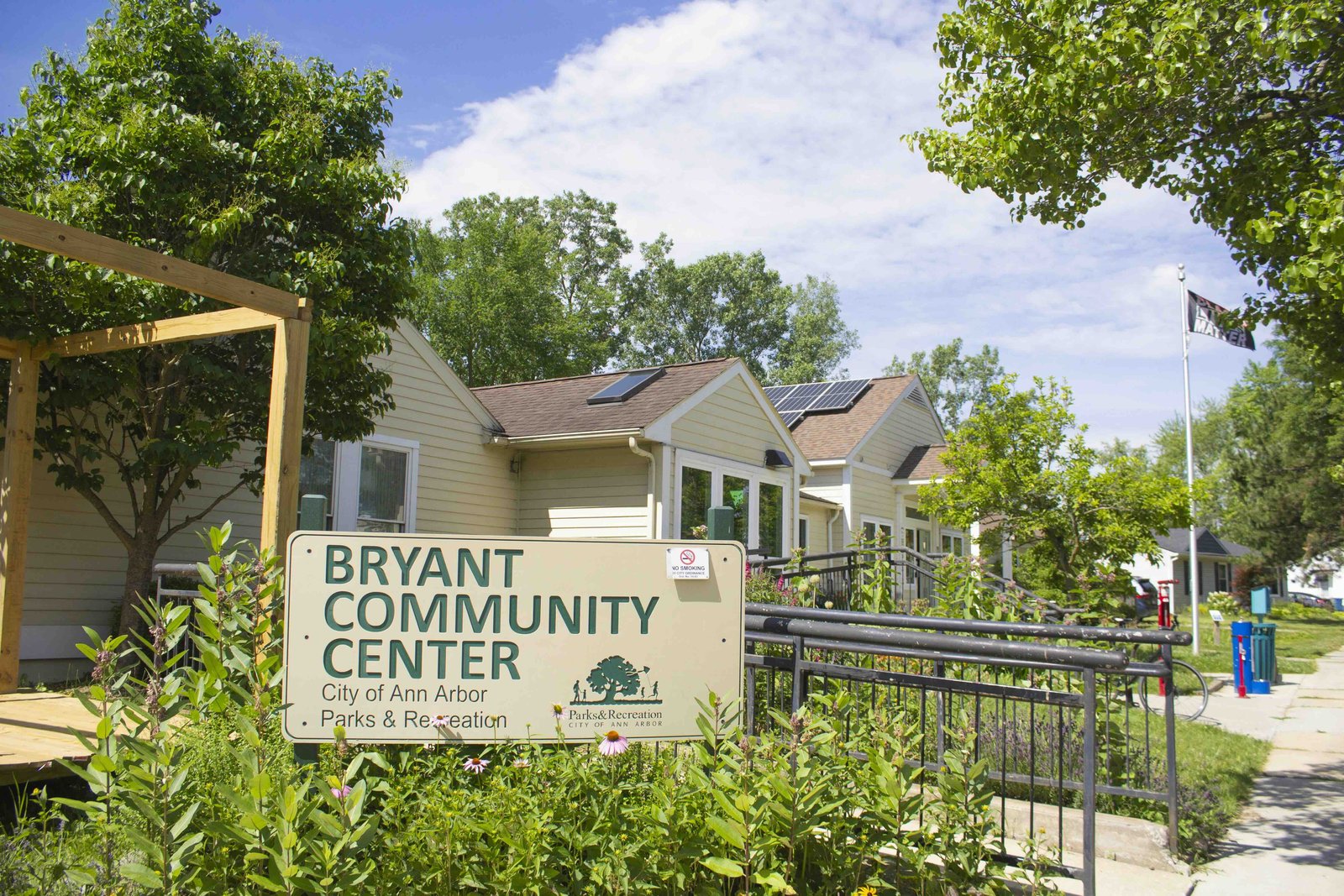
When Krystal Steward started knocking on her neighbors’ doors in Ann Arbor, Michigan, in 2021, to discuss energy efficiency and sustainability upgrades, she was met with a lot of blank stares.
She was new to the issues herself, she said. But the longtime social worker kept at her new job doing outreach for Community Action Network, a local nonprofit dedicated to serving under-resourced communities. She slowly started getting people in her neighborhood to take part first in home energy assessments, then a city program to swap out appliances, make structural fixes, and more.
“In the beginning it was kind of hard — a lot of people were reluctant. If someone is knocking on your door and telling you they can fix up your home for free, most people don’t believe that,” Steward said. But, she added, “Once one person tried it out, they’d tell their neighbors, and others would jump on board.”
Now the neighborhood, Bryant, is set to pilot a first-in-the-country program that officials hope will speed the city’s transition to renewables — and offer a new model for how local governments can control their energy future.
The idea is technical, but has sparked enthusiasm across Bryant and Ann Arbor: a new city-created Sustainable Energy Utility, known colloquially as the SEU. Rather than replacing the privately-owned utility that serves Ann Arbor, the plan is for this city agency to run in tandem, offering a supplemental service that residents can opt into.
If they do, they’ll stay connected to the regular grid, but will be outfitted with solar panels, battery backup systems, or other infrastructure, drawing on that power for their home use and opening up the prospect of selling any excess. The city, meanwhile, would pay for the installation and maintenance of these systems, which Ann Arbor would continue to own — a vision of energy generation and storage distributed across the city.
The plan begins in the coming months in Bryant, a 1970s-era community with about 260 homes, many of which are officially considered “energy burdened.” A quarter of residents pay more than a third of their incomes on utilities, in a neighborhood that is one of Ann Arbor’s only areas of unsubsidized affordable housing, according to Derrick Miller, Community Action Network’s executive director.
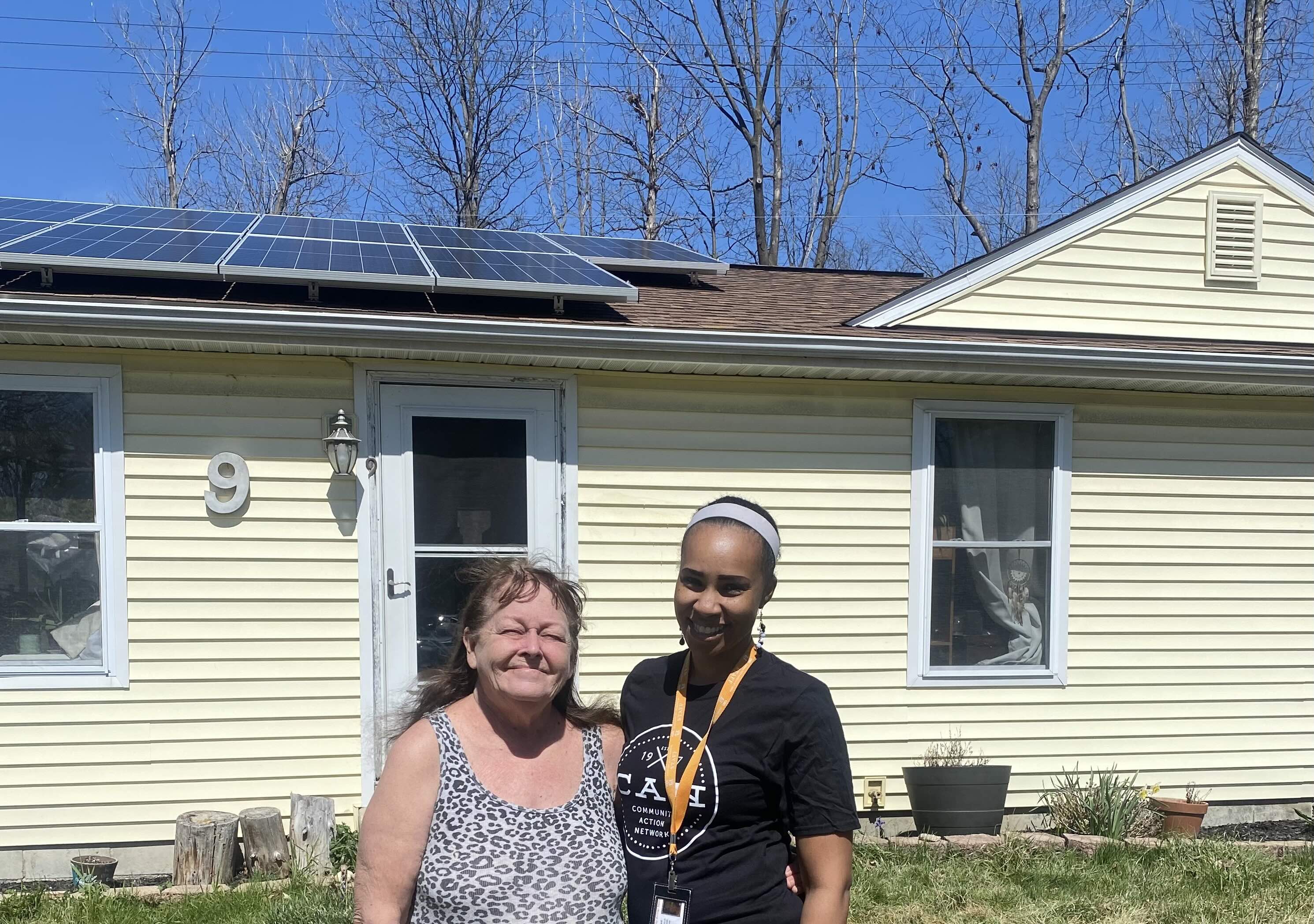
The SEU is a major step in a yearslong process to address Bryant’s energy affordability and sustainability concerns — and then expand the approach across the city.
“When we started having a conversation about how to decarbonize the neighborhood about four years ago, it felt outlandish. Now, it doesn’t feel like anyone can stop us,” Miller said.
Two parallel utilities
The appeal of the SEU became clear in November 2024, when a ballot measure on the proposal was approved by nearly 80 percent of Ann Arbor voters. A little over a year later, city officials are ready to implement the vision, said SEU Executive Director Shoshannah Lenski.
In late February, the city announced that it was accepting expressions of interest from residents and businesses to take part, accompanied by a flurry of community meetings, animated videos, and ads in local theater playbills.
Customers who opt in will get two utility bills — one for the power supplied by these new city-owned clean energy systems, and one for any power they’re still drawing from the regular grid — which Lenski and her colleagues say will add up to less than they currently pay.
“Just like customers don’t own a power plant, the city owns and finances the system upfront, and they pay for that electricity through a monthly bill,” Lenski said. She noted that the model could prove particularly helpful for renters, who often get left out of green energy incentives. Signing up large multifamily buildings will be important to quickly expand the SEU’s size, she said.
In addition to installing clean energy systems at participants’ homes, the SEU could build its own microgrids, something that would set it apart from other municipal clean energy programs. For instance, the agency could install solar panels on a school to supply power when students and teachers are in the building, and that power could go to other SEU customers when classes are out.
Backers say the strategy allows Ann Arbor to build out its green energy system with lower financial risk — and lower potential for political or industry pushback.
“When coupled with DTE’s planned investments in clean energy, these voluntary, fee-based programs help accelerate economy-wide decarbonization while maintaining reliability and affordability,” Ryan Lowry, a spokesperson for DTE Energy, which currently supplies energy to the city, said in an email.
It might seem surprising that DTE, Michigan’s largest electric utility, is supportive of the SEU. But industry experts noted that many investor-owned utilities are struggling under the unprecedented new demands for power. Having a local government try to help manage power needs could be seen as an asset, they suggested — though DTE will have no formal role in the SEU.
So far, more than 1,500 people across Ann Arbor have indicated that they want to sign up. The SEU plans to serve around 100 to 150 customers in Bryant this year, expand out to reach 1,000 next year, and then grow by several thousand annually after that.
A missing 40%
The approach answers a question prompted when Ann Arbor adopted an ambitious climate plan in 2020.
That framework included an electrical grid powered completely by renewable energy within a decade, but a city analysis in 2023 warned it was likely to miss that goal by more than 40 percent. In order to reach it, the city would need to push DTE to accelerate its renewable energy buildout, or lean on state officials to do so — or detach from DTE entirely and create a separate city-owned utility, an idea that does have some support in Ann Arbor.
But from the city’s perspective, these options seemed too risky or uncertain, Lenski said — until officials realized that the Michigan constitution allows municipalities to create and run their own utility, even if there’s another present.
“That’s where the idea of the SEU was born,” she said.
When University of Michigan researchers compared the four options, they found the SEU model had the greatest potential to lower energy prices and emissions, boost reliability, and help low-income communities.
“Overall, it came down to having some benefits of local control without some of the costs,” said Mike Shriberg, a professor who led the research, noting a similar model should be possible in every state.
Still, some worry the strategy does not go far enough. Advocates who want the city to break with DTE and replace its services with a utility fully owned by Ann Arbor are seeking a November ballot measure to set that process in motion. (Organizers are currently collecting signatures.)
Brian Geiringer, executive director of the advocacy group Ann Arbor for Public Power, said the SEU plan still leaves too much responsibility for the city’s energy transition with DTE.
But if voters do approve creating a fully public utility, he said, it would not mean an end to the SEU: The two approaches could work together, with the SEU focused on generation within Ann Arbor, and a publicly owned utility able to make its own decisions on purchasing power.
“If you draw a circle around Ann Arbor, the SEU is doing stuff inside the circle. And we’re interested in having the city control what comes in from outside of the circle,” Geiringer said.
Local control
Like Ann Arbor, hundreds of cities are working to implement climate goals — and running into similar gaps between ambition and practicality, especially when it comes to control over energy sources.
“Cities have set these goals, and the utilities aren’t obligated to follow those,” said Matthew Popkin, manager for U.S. cities and communities at RMI, an energy think tank.
“So Ann Arbor’s SEU is an example of cities taking more control of their future without dismantling or acquiring existing utility systems,” said Popkin. “That’s a really interesting model.”
Other models also exist. In Washington, D.C., for instance, a program called the D.C. Sustainable Energy Utility has been operating for 15 years, overseeing the city’s efforts to help residents use less energy.
The initiative is far narrower than the Ann Arbor vision, functioning not as a utility but rather as an organization contracted by the city to boost energy efficiency and increase access to clean energy through subsidies and rebates.
The program is a central part of the city’s goals to reduce its greenhouse gas emissions, said managing director Benjamin Burdick, and has helped cut some 10 million metric tons of emissions while saving residents more than $2 billion from reduced energy use.
Nationally, “the conversation that we’re hearing is around how do you continue to talk about climate with affordability,” he said. “Programs like the D.C. SEU are going to continue to be the way that we double down.”
The work in Ann Arbor is now receiving its own attention across the country.
“What caught my eye about Ann Arbor’s efforts were the references to citizen involvement and co-investment in their own grid,” said Jim Gilbert, a retired medical product designer in Boulder, Colorado, who is now helping the city assess the Ann Arbor model.
Boulder has dealt with recent power outages due to worsening climate impacts and aging infrastructure, and Gilbert said an SEU could offer a way forward.
Back in Ann Arbor, as the city prepares to launch the initial pilot of its SEU, the plan is to reach half of the Bryant neighborhood by the end of the year — and local residents are “all in,” said Krystal Steward.
Older members of the community are particularly excited, she said, noting that many are on fixed incomes and will particularly benefit from lower energy bills.
“It’s hard for me to keep up,” Steward said. “Now it’s not me reaching out to residents to sign up — they’re blowing up my phone.”