Leaders of Germany’s far-right Alternative for Germany are quietly scaling back their public alignment with Donald Trump as criticism of the Iran war intensifies and key regional elections approach. While party members continue to maintain connections with Trump allies behind the scenes, the leadership is urging a more cautious and less visible approach.
The shift comes despite ongoing engagement with U.S. figures. This week in Berlin, AfD foreign policy lawmakers were expected to meet officials linked to the U.S. State Department following an event on transatlantic relations. However, just days earlier, party co-leader Alice Weidel reportedly advised senior figures to limit high-profile visits to the United States, reflecting concern that overt ties to Washington could become politically damaging.
Public opinion in Germany has turned sharply against U.S. foreign policy, particularly following recent strikes on Iran. Polls indicate growing distrust, with only a small minority of Germans viewing the U.S. as a reliable partner. The AfD has echoed this sentiment, warning that further destabilisation in the Middle East is not in Germany’s interest.
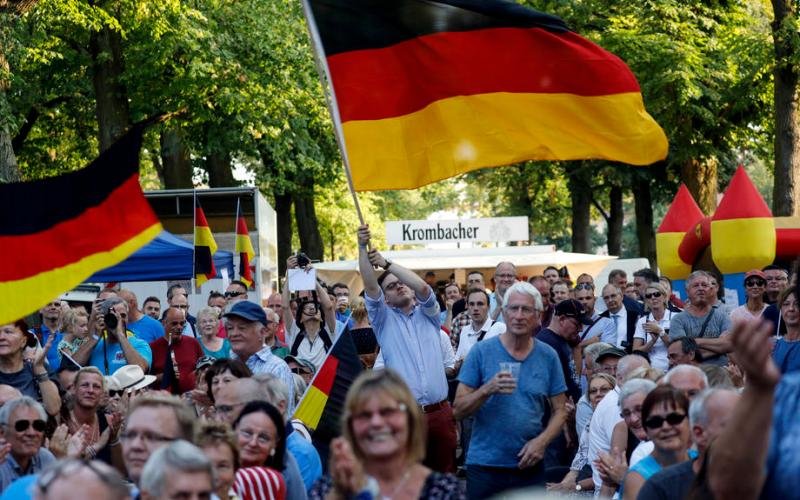
The recalibration also reflects electoral strategy. Two state elections in eastern Germany—regions where scepticism toward U.S. military interventions is stronger—are due in September. The AfD is currently leading in polls and hopes to convert that support into its first experience in government since its founding in 2013. Party figures acknowledge that, for now, electoral priorities outweigh foreign outreach.
Despite the more restrained public stance, the AfD is not abandoning ties with U.S. conservatives. The party still sees value in cultivating relationships with Trump-aligned figures, partly to challenge its political isolation within Germany. It continues to push mainstream conservatives to drop the long-standing “firewall” that prevents cooperation with far-right parties.
Historically, the AfD has held ambivalent views toward the United States, often criticising its global military role while expressing greater openness toward countries such as Russia. Weidel herself has previously argued that Germany should not support U.S.-led military campaigns, reflecting a broader scepticism within the party toward American influence.
Against this backdrop, the AfD’s quieter approach to Trump signals less a break than a tactical adjustment—balancing ideological alignment with shifting public opinion and electoral realities.