Norway should reapply to become a member of the European Union in light of their shared security challenges — namely Russia — the leader of the country’s conservative opposition party told POLITICO.
The oil-rich Nordic nation applied to join the EU in 1992, but the bid was rejected in a referendum two years later. Since then, Norway has been a member of the European Economic Area, which means it adopts many of the EU’s rules and regulations, as well as being a member of NATO.
But with wars and growing threats around the world, the arms-length relationship between Brussels and Oslo is no longer fit for purpose, argued Ine Eriksen Søreide, who was elected leader of Norway’s conservative party last month.
“In my opinion, and my party’s opinion, we would be best served by being full members of the EU,” she said in an interview on Thursday as EU leaders were convening for a summit in Brussels.
“I’ve been talking consistently about the need for a constructive debate based on the EU as it is today, not as it was in 1994 … and saying very clearly and loudly” that Norway’s interests lie inside the 27-member bloc, added Søreide, who was defense minister from 2013 to 2017 and foreign minister from 2017 to 2021.
A recent spat between Oslo and Brussels over ferro-alloys (additives in steelmaking) had underscored the drawbacks of being outside the union, said Søreide.
The spat, during which the EU imposed restrictions on imports from Norway, “very clearly illustrated that we are a part of the [EU] internal market … but that doesn’t help if something comes from the outside like these protective measures.”
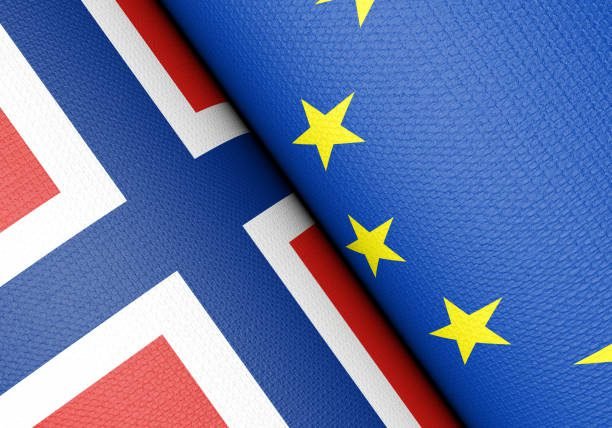
Iceland’s potential bid to join the EU is another spur for Oslo to seek membership in the bloc.
“If Iceland then decides in a referendum to reopen negotiations, it’s a very different ballgame,” she said. “I’m not suggesting that what Iceland does will in itself change the view of Norwegians, but it can lead to certain institutional changes and also a kind of different approach for the EU, making it more difficult for us to be on the outside.”
Beyond benefits on trade, Søreide listed defense, space, health and Arctic security as areas where Oslo would benefit from full EU membership. The fact that Norway isn’t part of the EU, but nevertheless transposes its laws, means that the country is “missing out in so many areas,” she said.
While Norway had transposed some 14,000 legal acts from the EU into national law in recent years, the country nonetheless gets no say in setting the bloc’s agenda or weighing in on its strategic orientations. The ferro-alloy case shows how Oslo can be seen as “a second-tier member” of the club, Søreide added.
‘More open’ today
The question of Norway’s EU membership has come up repeatedly during the past 30 years, with voters typically deciding not to join the bloc.
Norway applied for EU membership in 1992 along with Finland, Sweden and Austria, but ultimately voted against membership in a referendum — with 52.2 percent against and 47.8 percent in favor — while the other three countries opted to join.
In recent years, polls have shown that a majority remains against joining the bloc, with concerns about protecting Norway’s vast energy wealth outweighing the benefits of membership. Norway’s parliament has a majority of MPs opposed to membership.
However, support for joining the EU has ticked up over the past 18 months amid tensions in the transatlantic relationship and U.S. President Donald Trump’s threats of seizing Greenland. A tense exchange of leaked messages between Trump and Norwegian Prime Minister Jonas Gahr Støre — in which the former criticized the latter for not granting him the Nobel Peace Prize — drove home concerns about the transatlantic relationship for many Norwegians.
On the prospect of EU membership, Søreide said it was unlikely to materialize “immediately.” Indeed, Norway’s current government has not shown interest in launching a national debate about membership, and the next parliamentary elections aren’t until 2029.
But Søreide said that attitudes toward membership were shifting. “I do sense … there is a more open approach to the issue in Norway,” she said. “Now when you hear debates among everything from the business sector to large private sector organizations to people on the street, there is a difference in tone.”
The conservative party leader also criticized Norway’s Labour Party minority government, which is backed by a center-left coalition, for making the subject of EU membership taboo.
“I’m very disappointed and also quite surprised that the government, a Labour government, has kind of put even the debate off for the next four years,” she said, adding she found the approach “very strange in this situation.”
Søreide’s Høyre party is currently the third most popular in Norway, with about 18 percent support, according to POLITICO’s Poll of Polls. But that share has been inching up in recent months.
Asked about her own plans, she said she aimed to make her party “significantly bigger than we did in the last election, which was a very poor election for us,” and would seek to become prime minister in 2029.
Via Politico