If a battle is fought in space, it will look nothing like those depicted in the Star Wars franchise, with sleek TIE fighters blasting enemy ships with laser cannons and mag-pulses. Instead, these battles will be cerebral and unhurried, somewhat like the 1973 film The Day of the Jackal, a slow-burning political thriller with a plot that somehow mixes tension with clinical precision.
In that film, an assassin sets out to murder the French president. The main character’s moves are meticulously planned, with backup plans for backup plans. A police commissioner, just as clever, must pursue the assassin and stop the conspiracy. The events play out over weeks and months, not seconds and minutes.
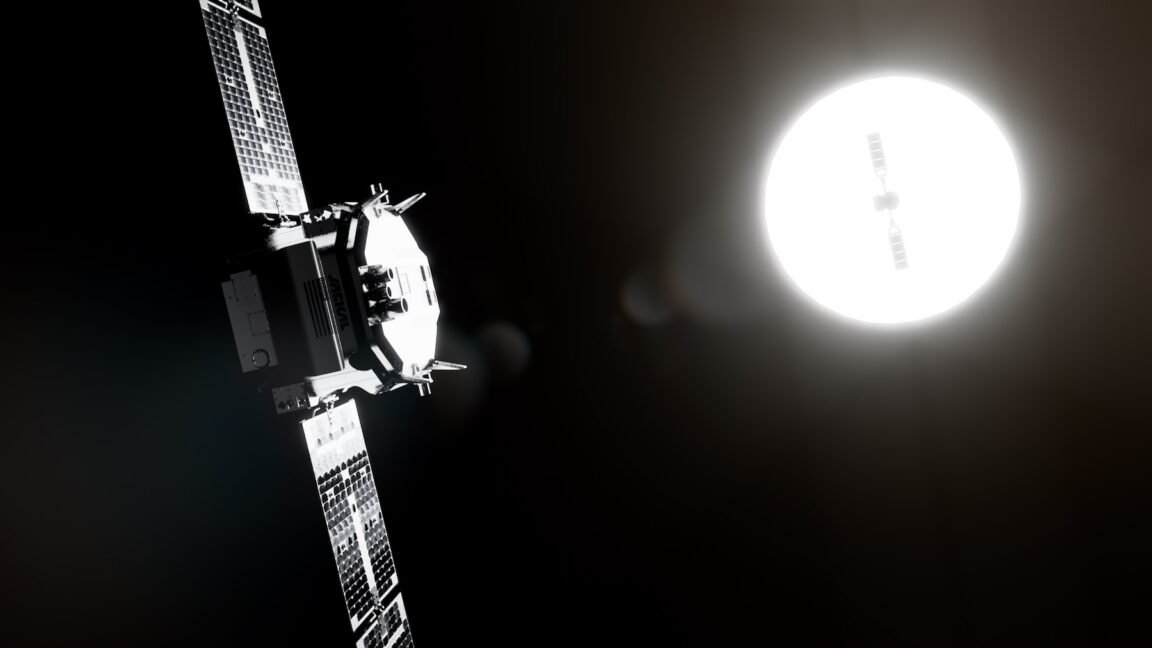
True Anomaly, which emerged from stealth just three years ago, is planning for The Day of the Jackal in space. The startup’s primary hardware product, aptly named Jackal, is a war-ready satellite platform designed for mass production. In nature, jackals are known for their intelligence, adaptability, and hunting prowess. True Anomaly’s Jackal boasts similar traits in space.
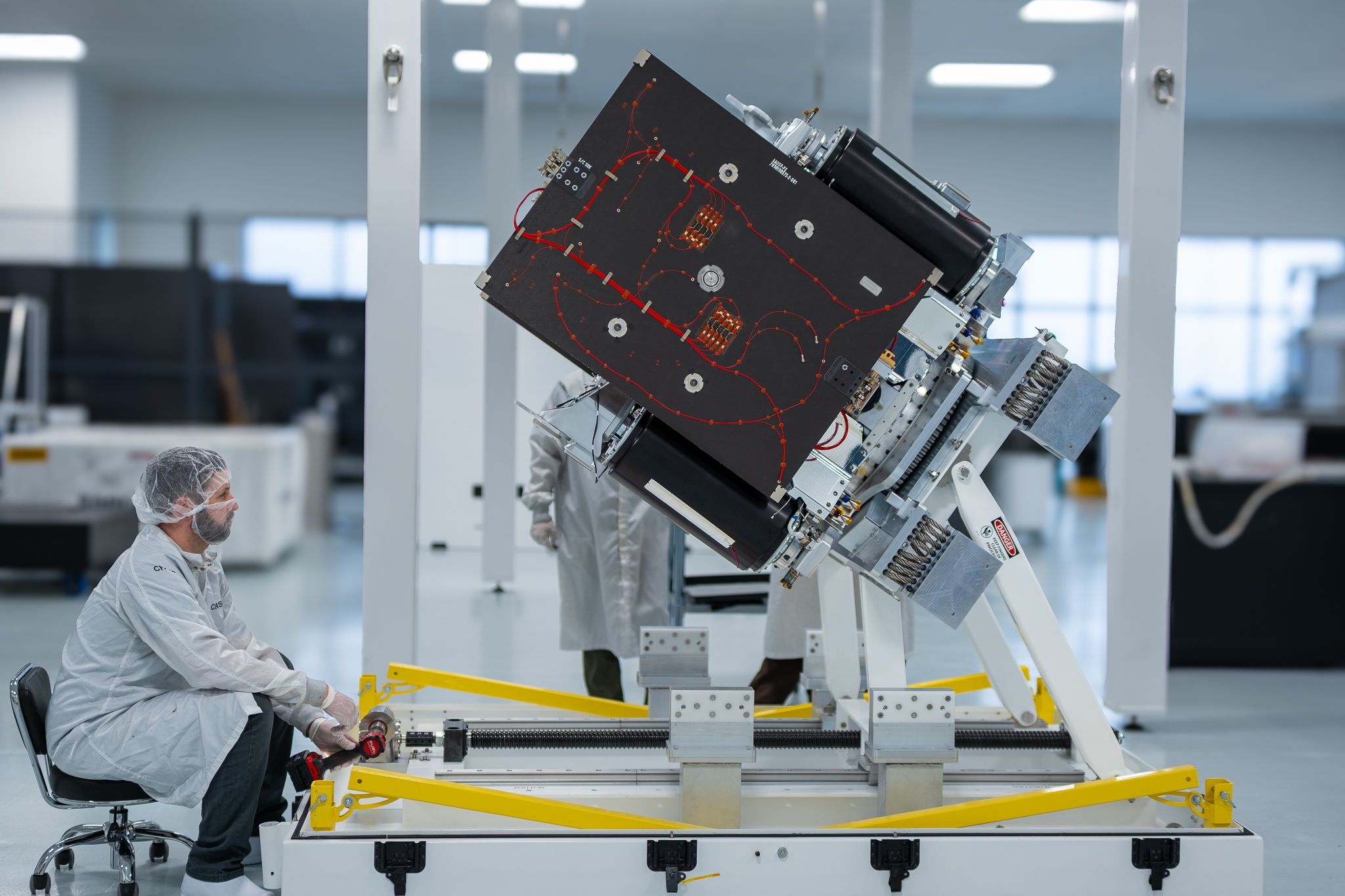
The Jackal spacecraft is designed for agility and maneuverability. True Anomaly has launched two Jackal test missions to date, and a third one is planned for launch in the next few months. The spacecraft bus, or chassis, is about the size of a refrigerator. It’s essentially a flying fuel tank with room for thrusters and sensors to rapidly turn, approach, and surveil other objects in orbit. Some day, True Anomaly believes Jackal could be used for orbital combat.
Even Rogers, a former Air Force space operations officer, co-founded True Anomaly in 2022. The company is named for the term in orbital mechanics that defines an object’s location in its orbit at any one particular time. It has attracted some $400 million in investment, including funding from the venture capital firm cofounded by Vice President JD Vance. Now, after staffing up to several hundred employees, True Anomaly is primed for a breakout, Rogers told Ars in a recent interview.
All-in on space warfare
True Anomaly is focused entirely on winning US military contracts. The startup has already won some Space Force business, including a responsive space demo named Victus Haze scheduled for launch later this year. For this mission, True Anomaly is building a Jackal spacecraft that will launch into low-Earth orbit and pose as a satellite from a potential adversary, such as China or Russia. Rocket Lab will launch a second satellite to go up and try to chase down True Anomaly’s Jackal, simulating how the Space Force might respond to an emerging threat in orbit.
The scenario will play out like a military exercise. This kind of work was Rogers’ specialty before he started True Anomaly. In the Air Force, he worked in a space aggressors unit. If you’ve seen Top Gun, these are the roles of Tom Skerritt’s “Viper” and Michael Ironside’s “Jester” as they spar with Tom Cruise and Val Kilmer playing Navy fighter pilots.
“The space aggressors are tasked with studying and replicating threats for the purposes of training and sometimes tests,” Rogers said. “When I was an aggressor, my job was to teach… the Air Force and space operations community how to deal with a thinking adversary.”
This was right before the establishment of the Space Force in 2019. Rogers said the military and its legacy contractors were not equipped for the future of space warfare. Whether you like it or not, there’s no longer a question of space becoming militarized. It is.
“Some of the gaps that I saw were significant,” Rogers said. “They’re what you would expect for a new service, right or just before a new service, but wouldn’t be acceptable in combat.”
Rogers concluded it would take a “concentration of capital and talent” to solve the problem, and that’s where True Anomaly comes in. “I started True Anomaly because I didn’t have the tools that I needed, and my colleagues needed, to do our jobs as space operations professionals, as orbital warfare professionals, in uniform.”
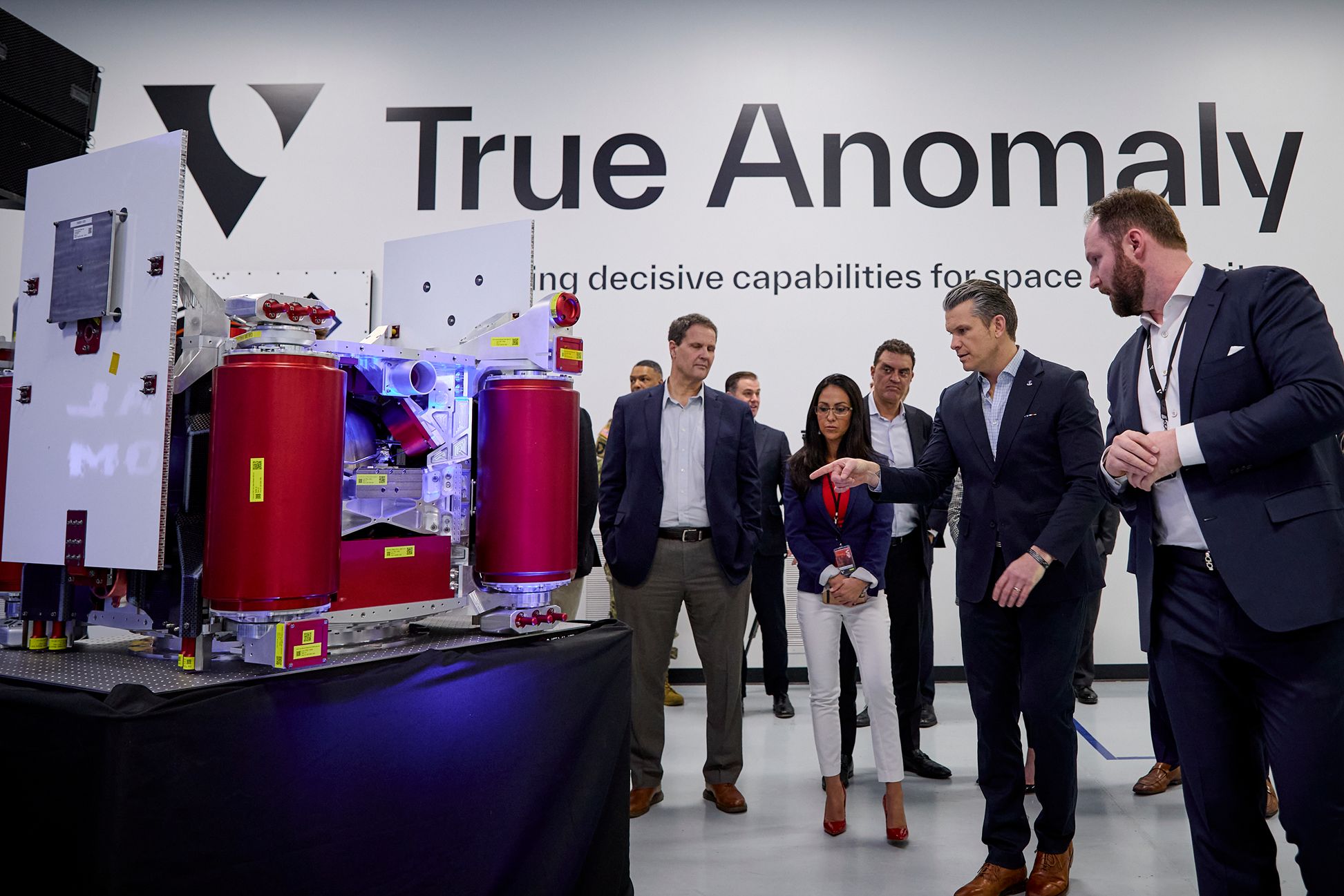
Last month, Defense Secretary Pete Hegseth visited True Anomaly on a nationwide tour of defense contractors. The message from Hegseth, like from other military officials, was a call to ramp up production, and fast. This mantra cuts across all domains, from ships to airplanes, missiles, and satellites. For that to happen, contractors must focus on fielding proven technology at lower cost. The military’s interest in funding research is waning.
In November, Reuters reported True Anomaly was one of multiple companies that won Space Force contracts to build prototypes of space-based interceptors and related technology for the Pentagon’s Golden Dome missile defense shield. Rogers declined to discuss Golden Dome with Ars, but it doesn’t take a rocket scientist to understand how the Jackal platform’s built-in agility might be useful to take on fast-moving ballistic or hypersonic missiles.
True Anomaly also seems well-positioned to win a contract for the Space Force’s upcoming RG-XX program, a follow-on to the military’s fleet of sentinels roaming geosynchronous orbit to approach and inspect other satellites. The Space Force is expected to award multiple companies contracts to build an undisclosed number of RG-XX satellites, expanding the geosynchronous inspection fleet from fewer than 10 existing satellites to a constellation of dozens or more.
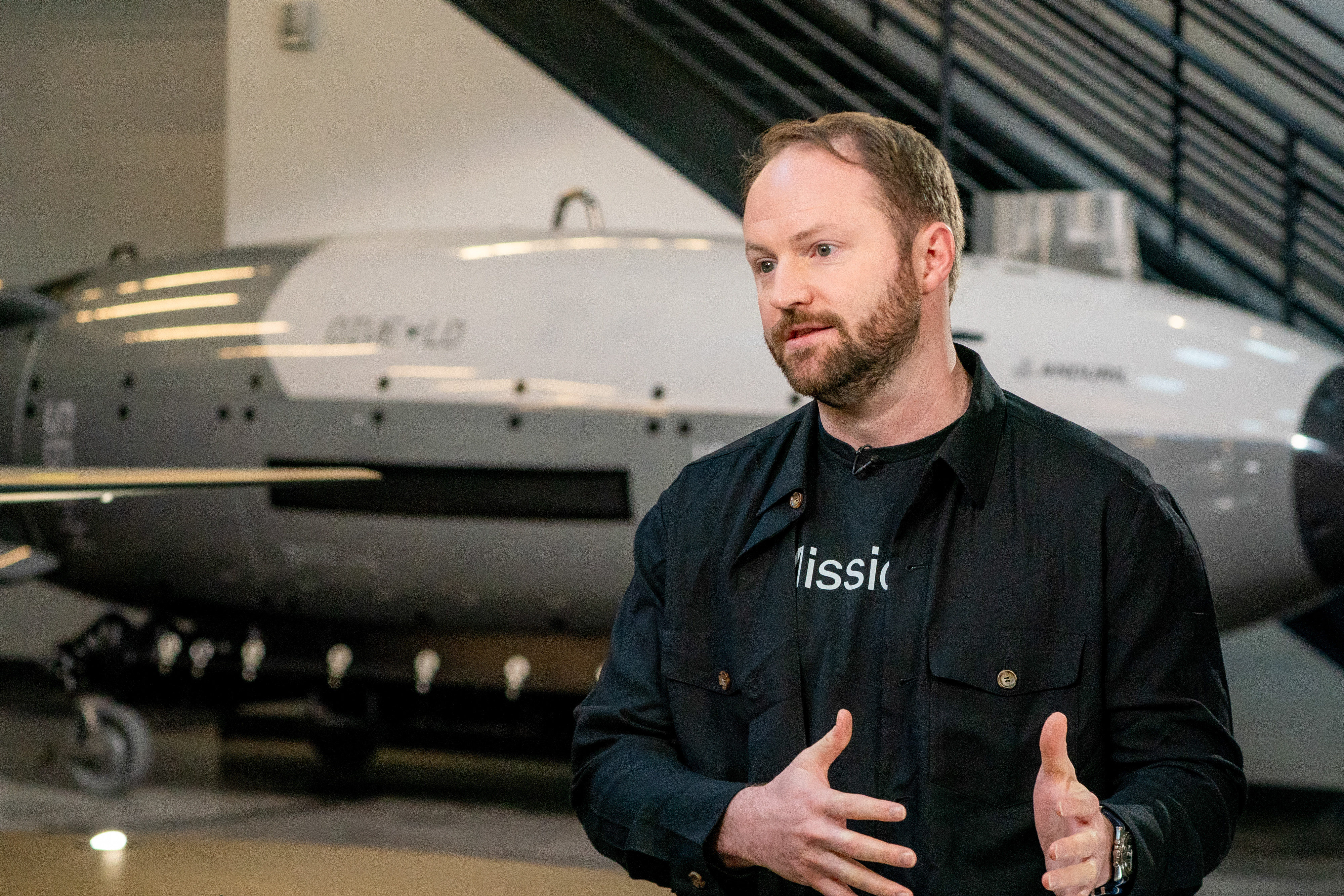
Ars recently visited True Anomaly’s headquarters for an off-the-record tour, then sat down with Rogers to chat about the vision, risks, and rewards in True Anomaly’s orbit. The text of the interview has been lightly edited for brevity and clarity.
Ars: True Anomaly’s specialty is in building highly maneuverable, highly agile spacecraft. Why was this your first priority?
Rogers: Space-to-space engagements are going to be one of the engagement phenomenologies the Space Force has to deal with. There are a small number of things that make space-to-space engagements successful outcomes: sensing, autonomy, maneuverability, and payload-carrying capacity.
In warfare… maneuverability is a key element of employing forces in any domain. That gives you the ability to overmatch your adversary. Kinematically, it gives you the ability to respond, to get into position when you’re out of position, and achieve a position of advantage. That was a major gap in the defense industrial base. There were a small number of very, very expensive RPO (Rendezvous and Proximity Operations)-capable spacecraft, and they were only effective in one particular orbital regime, so we built Jackal to fill this gap at the intersection of scale, maneuverability, agility, and autonomy. When I say scale, I mean per-unit cost.
If you assume a fairly constrained budget for the Space Force, you need us. You need to be able to use that budget to buy as many capabilities as possible. We want to drive the per-unit cost down to something that can allow for the necessary number of units to be purchased that would provide the force structure necessary for the Space Force to be successful, and those need to be built very quickly to deal with the threat.
Ars: What makes your satellites so maneuverable? What is the differentiator between Jackal and other spacecraft that the Space Force currently has in their inventory?
Rogers: The Jackal provides a high level of agility in both translation and rotation, so maneuverability in any direction—back, left, right, up, down, and a high rate of rotation, so you can track targets at high closing velocities. It is arrayed with a simple propulsion system, a proven propulsion system, with a very large number of thrusters—20 thrusters in the case of Jackal—that allow us to maneuver in any direction while not losing track of the target.
Ars: Tell me about your Mosaic software platform. What does it bring to the table?
Rogers: It’s designed to control Jackal, but also other systems, to do effects-based mission planning. You articulate to the software the intent of your mission, and the software helps you decompose that mission into tasks and then plans the trajectories and movements of forces, and the timing and tempo of those forces in the achievement of that mission. It then helps you manage the latency and periodicity of communications so you can track the execution, and then intervene in the execution, in a highly machine-facilitated way.
So, it’s sort of the ultimate command-and-control system for tactical and operational mission execution for space superiority. It’s a cockpit, while also being kind of the Ender’s Game-type approach to space warfare. We named it Mosaic after a modern concept in maneuver warfare called Mosaic warfare.
Ars: What is Mosaic warfare?
Rogers: Mosaic is designed for high quality and fast loops for space superiority by ingesting disparate data, fusing that picture into an intuitive, human-readable picture, and then allowing for rapid tasking and orchestration of assets. The last pillar that’s really important for Mosaic warfare is human command and machine control. So it’s a command-and-control concept that leverages human creativity and the capacity to pattern-match quickly and gain intuition about a system with the capacity for machine-speed orchestration in real time.
Ars: We’ve heard Space Force generals begin to talk about dogfighting in space. What does dogfighting look like in the space domain? Is that the right term?
Rogers: I think it’s a perfectly fine term. It’s certainly a fun term. But dogfighting in space doesn’t quite have the drama of an aerial dogfight. So, we should come up with a different one. Maybe not dogfight. Maybe sloth fight. Sloth fighting in space. The tempo is slower, and the relative velocities are slower. True Anomaly is building the technologies that will allow for a very high-tempo engagement activity in space that is more akin to what we see in terrestrial operations. But I think today it’s more like sloth fight than dogfight.
Ars: Why dedicate yourselves to national security in space? Why not pursue other markets at the same time?
Rogers: Where we are today in space warfare is very similar to where air superiority was in the 1930s, which is, you have this massive industrialization effort, this buildup of war-fighting capability the United States is doing now, in advance of, or in an effort to, prevent conflict. No. 2, you have the demonstrated utility of air platforms following World War I and the development of early doctrine. And No. 3, you have the advancement of flight sciences. As those three things interacted with each other, new operational concepts were built for air systems that necessitated military-only platforms.
There was no commercial application for the P-51. The P-51 was there to be a fighter escort and sweep asset for air superiority missions. As operational concepts mature for space superiority, those operational concepts will drive a performance envelope for warfare that will be mutually exclusive of commercial applications. Not in all cases. There are spinoffs that can happen, to be clear, but we’re focused on getting the war-fighting technologies right, and we believe the market will support this thesis.
Ars: This is an interesting topic, the idea of developing doctrine and learning how to use new technologies in warfare. I read the first munition was dropped from an airplane in 1911, before World War I. It’s interesting to trace where the space domain is in that arc and compare it to how humans learned how to fight in the air.
Rogers: That’s what I spend most of my time thinking about. How are we going to use space systems for warfare in the future? We have all the applications for intelligence and missile warning and communications, but we’re just starting to think about space warfare, offense, and defense.
By the way, those decompose into different missions on the basis of the specific tactical tasks that need to be accomplished… That means that there are going to be, just like in every other domain, platforms that are purpose-built, that really only have a [military] function. There’s no other function for a guided bomb unit, a GBU, other than for warfare. The B-2 has no commercial application. Lockheed Martin doesn’t sell F-35 to United Airlines, right? That’s because the mission drives the design, so I’m just basically vehemently agreeing with you.
Ars: Is True Anomaly building sensors, weapons, or things for on-ship awareness? Or just the spacecraft bus?
Rogers: We are absolutely designing and building payloads. We hope to announce a few early payloads this year, but we really see ourselves as a full-stack mission solution provider across a wide variety of space superiority missions. We’re going to build a wide variety of sensors for different mission applications: optical sensors, active sensors, lidars, radars, you name it. We’ll leverage our existing supply base where we can, but for most missions, we’re going to provide the full stack of capability, payload, spacecraft, software, and then ops and sustainment, and tactics development and training as well.
But we’re going to partner also. We’re going to provide whatever we think is in the best interests of the customer… Jackal is just the beginning of our hardware lineup. We will have different platforms in the future that are bigger and that are smaller. We’ll have a wide variety of payload solutions… We just started with Jackal because that’s where we had the most expertise, and that’s where the industry needed to be disrupted.
Ars: Do you hand over the keys of your satellites to the Space Force after they launch, or do you operate the satellites yourselves and provide services to the Space Force?
Rogers: We’re open to anything that makes sense for the mission—commercially owned and operated, government-owned and operated. If it’s speed to market, and there’s a clear demand signal, commercially owned and operated might make sense, but I think there are probably hybrid models that will end up evolving. We do not have a dogmatic view of the best way to partner with the government.
Ars: What missions have you flown so far, and what’s next?
Rogers: Our previous missions are all developmental flight tests for Jackal. They were all executed on our own funding, and we use a model that’s similar to other aerospace companies like SpaceX, which is what we call fly, fix, fly. So we build, we flight test, we push those systems to failure, we find their failure modes through flight test, and then we fix them, and then we fly again. We’re really trying to drive towards a very high flight cadence so that we can increase the speed of our learning cycles.
Our last two missions were learning flight tests. We got farther on the second one than we did on the first one, by design, and then we’ve got another one coming up here in a couple of months that I think is going to open a much wider portion of the envelope that we need to evaluate Jackal against.
Ars: What do you have launching over the next 12 or 18 months?
Rogers: We are preparing for several upcoming missions, and there are over a dozen other flights that we’re doing in the next 18 months for other efforts. So, we have a very hardware-rich year ahead of us.
Ars: What can you tell me about the GEO mission? Is that another internal mission?
Rogers: That’s an internal mission. We do anticipate there being a government partner at some point, but that’s a developmental flight for the GEO version of the spacecraft, which features a bunch of really interesting upgrades. That spacecraft, we’re using as an opportunity to create one baseline [design] between both LEO (low-Earth orbit) and GEO… That allows for commonality across mission sets. The design will allow us to hit rate for Jackal, and in Denver alone, we can build 50 spacecraft a year. So that will be the iteration that allows us to really go into large-scale production.
Ars: I’ve seen some hints about a True Anomaly lunar mission. Is that something you can talk about?
Rogers: That’s one of the ones I can’t talk about.
Ars: I want to take a step back and talk about larger trends. The military is pivoting toward a stronger emphasis on production over research and development. How is True Anomaly suited to answer this demand?
Rogers: We are the perfect partner for this change in the way that the DoD is operating. There are a number of examples we can point to, chief among them Jackal and Mosaic, where True Anomaly shouldered the burden of developing a product on our own dime, with conviction, and took that product to a point where it could be produced at scale to meet a wide variety of requirements for the Space Force. That’s a motion you’ve seen adopted across industry. I think we’re one of the best exemplars of that. We expend our own private capital to build products designed for space superiority so that the Space Force can purchase units of capability immediately, rather than paying for R&D. So we recoup our investment through firm fixed-price production contracts.
Ars: I’ve heard some hesitation among investors that the Space Force’s changing priorities might be a hindrance to fundraising. Is there a risk to True Anomaly if the Pentagon suddenly comes to you and says we need something different, or if a new administration changes direction? And what about the risk of being a target for a military attack?
Rogers: We’re in a slightly different position than the rest of industry. We’re a privately owned company, but we’re not a commercial space developer. We’re not building systems for commercial operators, and we’re not offering commercial applications that are dual-use applications. We’re a defense company. We actually assume we’re exposed to those risks already.
I think some of the work the government is doing to acknowledge that there is risk to companies like True Anomaly is great, although we’re not any different than Northrop or Lockheed, in the sense that we know that we’re targets of espionage, we know that we’re targets of adverse action, and we invest in the infrastructure and the personnel to mitigate those risks.
I think there is a question that the rest of industry has to answer for themselves, and we hope to build, at some point, defense solutions for commercial operators, but for the purpose of ensuring that the United States military has access to commercial resources when they need them, so done under the auspices of being a defense company, not a commercial defense company.