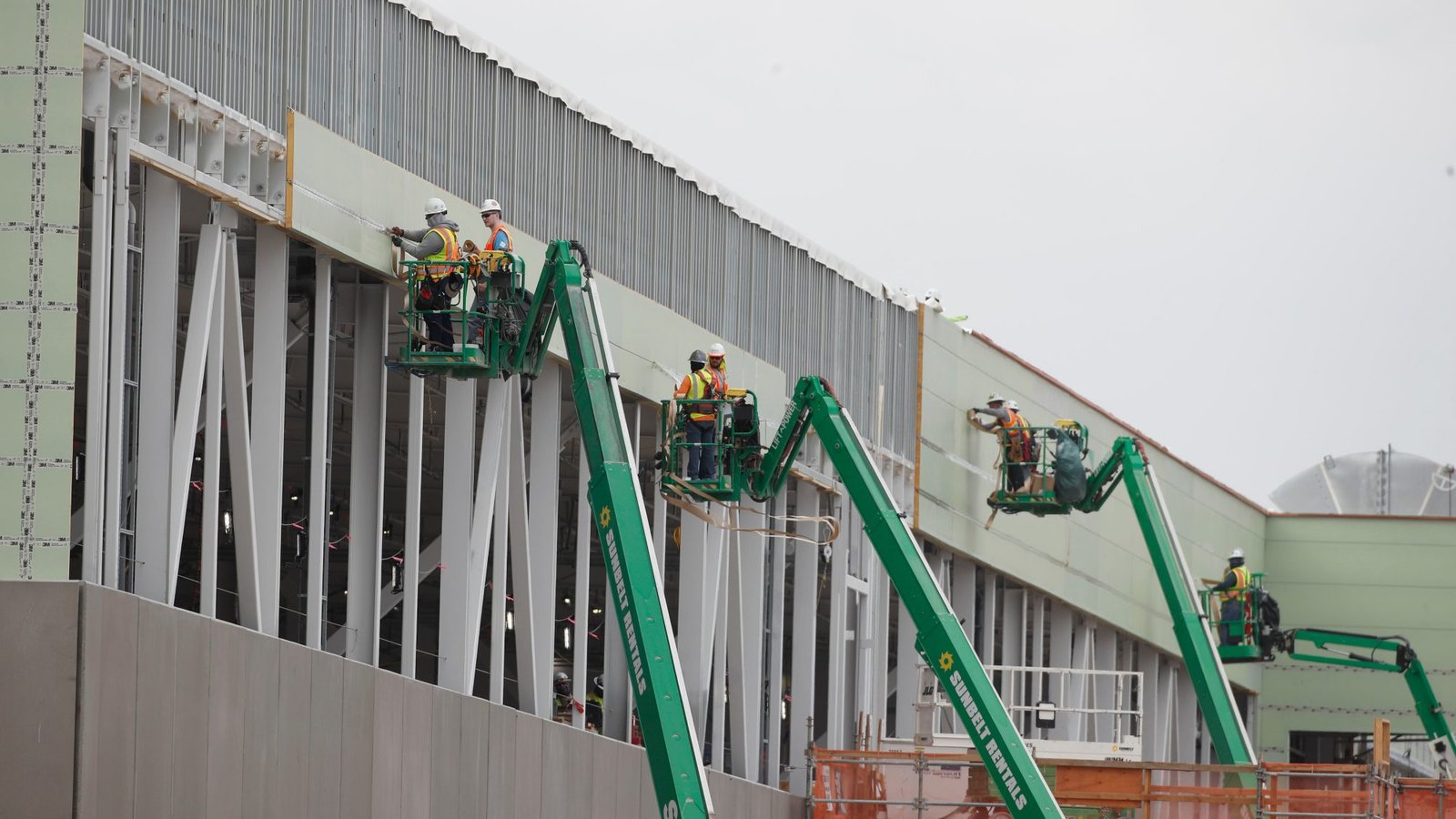
Last month, President Trump sat alongside executives of the largest tech companies in the country as they pledged to pay a fair share of the energy costs of their data center buildout. “Data centers … they need some PR help,” Trump said at the gathering. “People think that if the data center goes in, their electricity is going to go up.”
It’s not an entirely unfounded assumption.
As the tech industry has funneled billions of dollars into the AI boom over the last several years, it has simultaneously been expanding its fleet of computing powerhouses, which require vast amounts of energy to run. These facilities have been cropping up all over the country, from rural communities in eastern Pennsylvania to the cities of northern Utah.
This boom coincides with a dramatic rise in U.S. electricity prices, driven by inflation and the rising cost of adapting to wildfires, hurricanes, and other extreme weather. But these massive facilities have also strained the grid — and in some cases — contributed to rising prices. For instance, last year, an independent monitor for PJM, the grid operator that serves 13 northeastern states and Washington, D.C., projected that powering data centers would result in higher electricity generation costs, which would ultimately be passed on to consumers. And in cases where the buildout hasn’t yet led to price hikes, utilities and grid operators expect that it’s just a matter of time if tech companies follow through on their plans. Indeed, the Federal Reserve Bank of Dallas estimates that with data center electricity demand expected to double in the next five years, wholesale power prices could rise by as much as 50 percent.
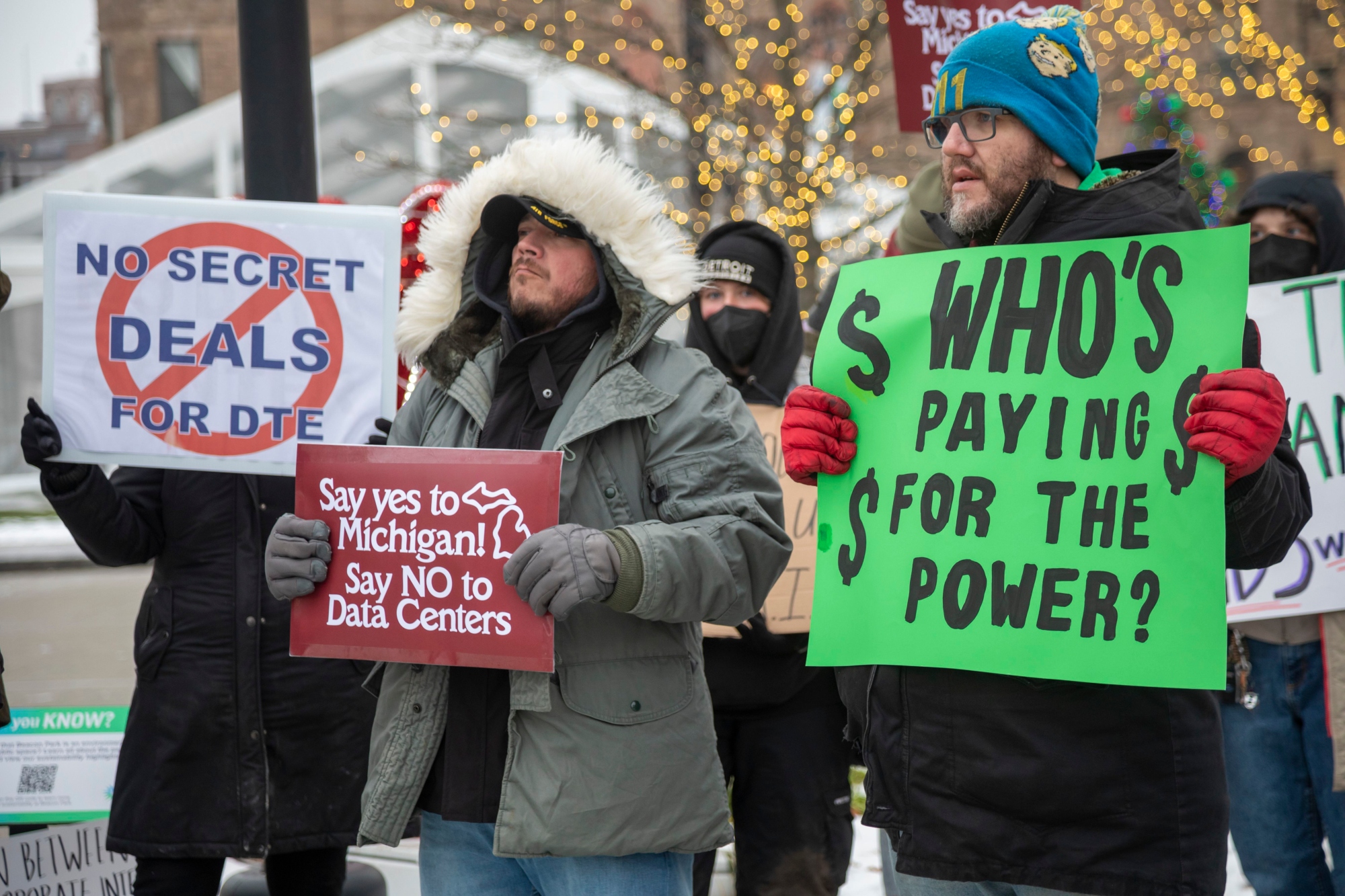
At a time when the cost of living has become untenable for many Americans, and consumers are setting aside ever greater shares of their income to pay energy bills, the possibility of further rate hikes to line the pockets of tech companies has prompted a massive backlash across the country. The White House gathering of tech executives appeared to be a response to the backlash. On March 4 at the event, they signed onto the “Ratepayer Protection Pledge.”
The pledge itself has few specifics or teeth. It’s a voluntary agreement by several prominent tech companies — including Microsoft, Meta, OpenAI, and Amazon — to secure their own power for data centers, pay for any powerlines or other infrastructure that utilities may need to build to move that power, and hire locally from the communities they build in. While in theory the agreement could help prevent Americans from having to bear the cost of the data center expansion, the White House hasn’t set up oversight mechanisms to ensure that they do. Several consumer and environmental advocates called the agreement “meaningless,” “unenforceable,” and ultimately, “nonsense.”
The United States has become ground zero for the global data center boom. The rapid buildout has left developers, tech companies, and the utility industry scrambling to secure more power. As a result, the wait for a data center to connect to the grid can be years in many parts of the country. Hyperscalers — companies that operate large data centers and provide vast computing power — have been trying to get around these wait times by signing long-term power purchase agreements with solar developers, building their own natural gas plants, and even retrofitting jet engines to generate electricity.
“Every single data center in the future will be power limited,” said NVIDIA CEO Jensen Huang last year. “We are now a power‑limited industry.”
Outside of the White House, utilities, local regulators, and lawmakers have also been proposing various solutions to address the community backlash and allow for the continued building of more data centers. Some have implemented measures requiring data centers to pay the costs of generating and moving the electricity they use. Others have suggested that data center developers install solar and battery systems on-site, or that rates should be frozen for residents while utilities figure out how to handle the additional costs. And at least 11 states are considering legislation to temporarily ban new data centers while their impact on electricity prices and other concerns are addressed.
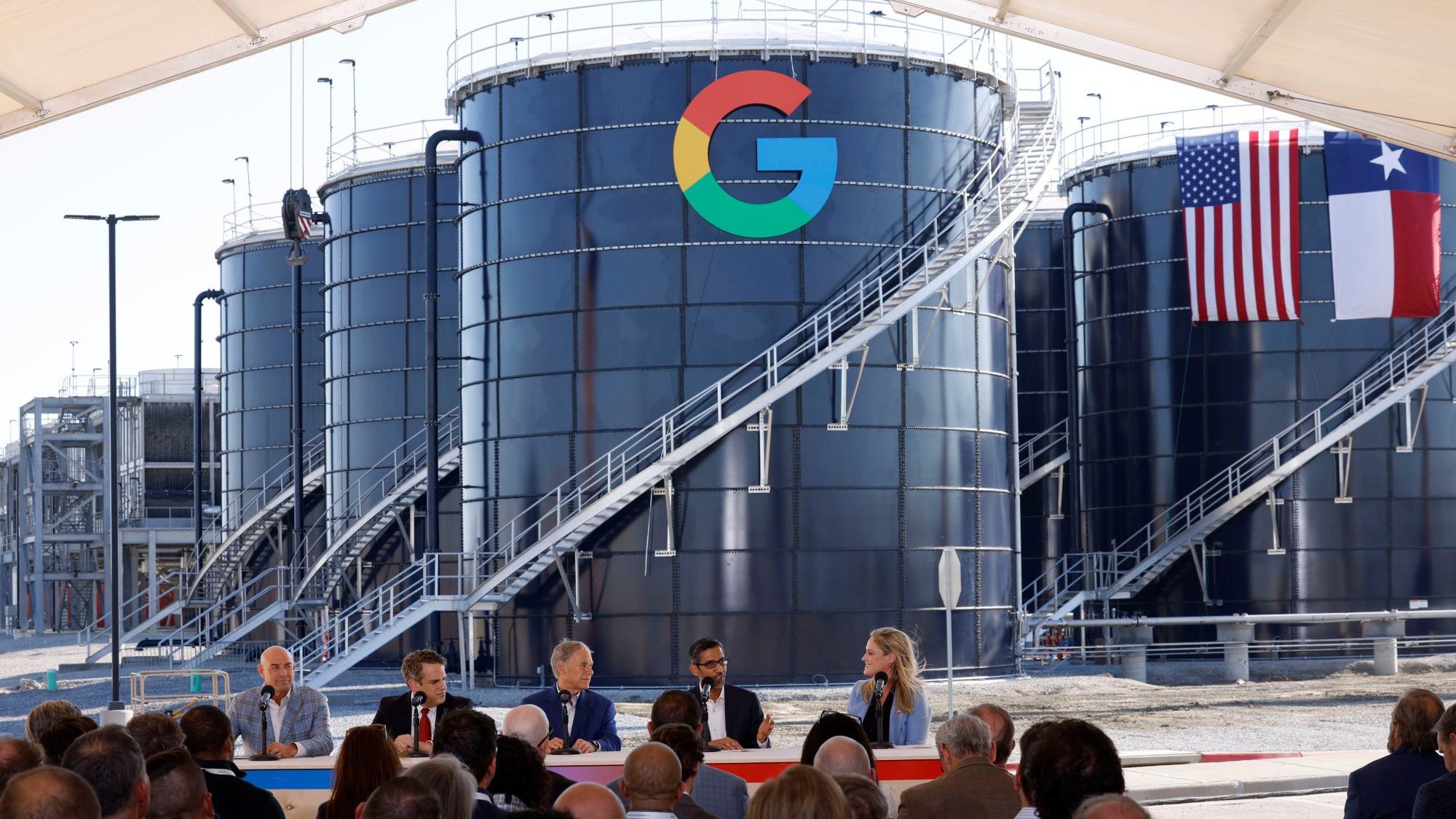 30 states have proposed or implemented measures of this sort.
Some hyperscalers are changing their approaches, too. In Minnesota, Google inked a deal with Xcel Energy, the state’s largest investor-owned utility, to bring 1,900 megawatts of clean energy onto the grid. The company is fully funding wind turbines, solar panels, and battery storage, as well as the costs of grid infrastructure upgrades to serve its data centers. And in Louisiana, Meta signed a deal with Entergy to help fund the construction of seven natural gas plants, more than 200 miles of transmission lines, and battery systems, among other infrastructure upgrades.
A recent report from the Searchlight Institute, a policy think tank, argues that this piecemeal approach to regulating the tech industry misses an opportunity to fund a large-scale upgrade of the grid. Although the surge in demand has largely been framed as a looming crisis, the report contends that the boom also creates a rare policy window: a chance to modernize the country’s electrical system and make long-delayed investments needed for the clean energy transition.
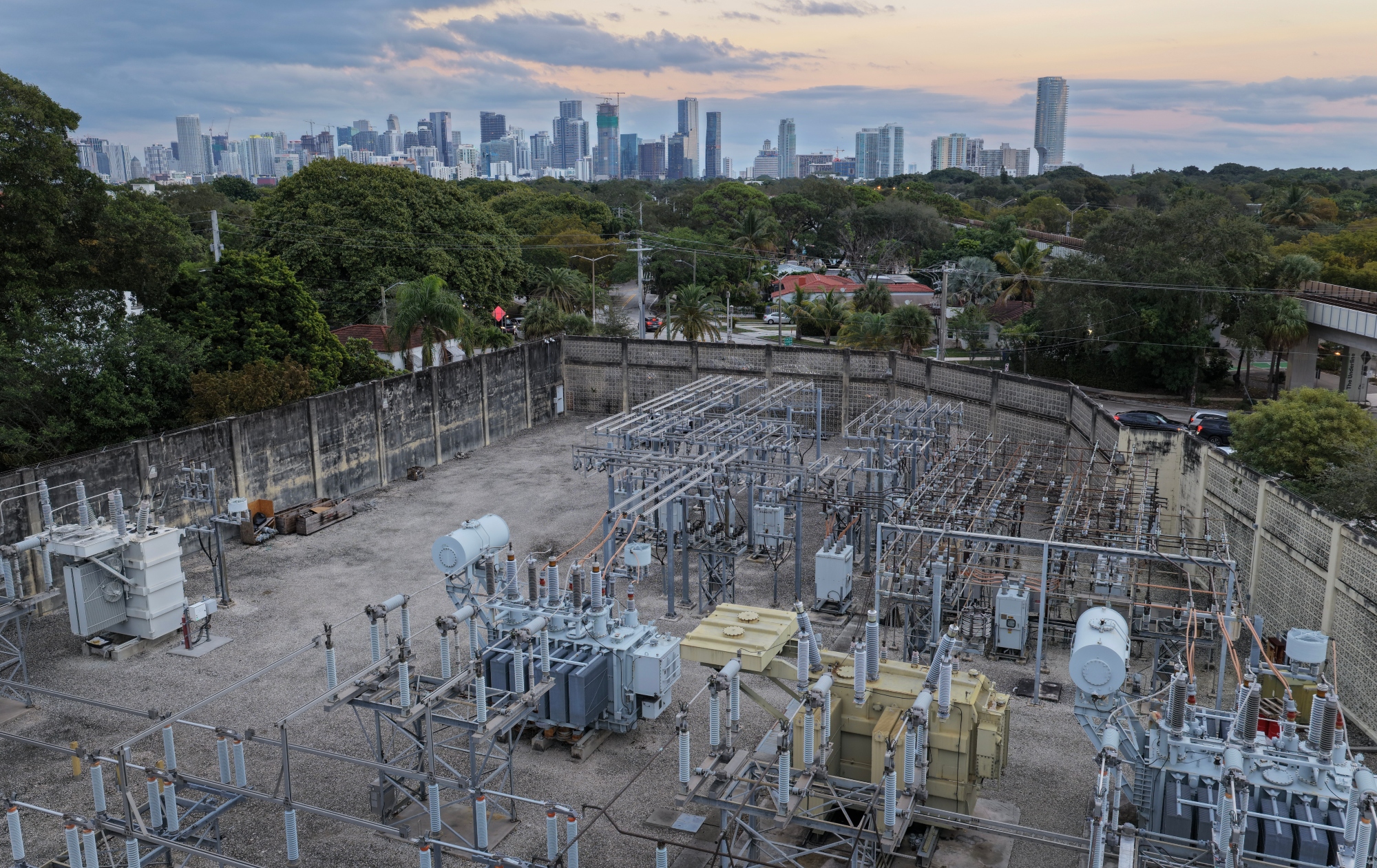
Utilities make roughly $35 billion in investments in transmission infrastructure every year — far short of what’s actually needed. Electricity demand is projected to double or triple in the next 25 years. The Searchlight Institute report proposes creating a dedicated grid infrastructure fund to accelerate the expansion. Under the plan, hyperscalers would pay into the fund in exchange for speedy connections. Money from the fund would be directed to utilities and other companies to build out the system, prioritizing clean energy along the way. And consumer and environmental advocates, along with other policymakers, would oversee the process to ensure funds are being distributed equitably and serve the needs of the public.
Such a mechanism would ensure increased investments in clean energy, rather than the natural gas projects many tech companies are currently backing, while protecting consumers from increases in electricity prices.
“The hyperscalers need power,” said Jane Flegal, a senior fellow at the Searchlight Institute and author of the report. “They have a ton of capital. And rather than letting them continue to cut these one-off deals with utilities, we’ve got to find a better way to take advantage of the potential upside here and avoid the downside of them basically building a secondary grid behind the existing grid that benefits only them.”
What to know about data centers
Data centers are warehouse-like facilities housing the servers needed to store and process huge amounts of digital information. They’ve existed for decades, but the rise of artificial intelligence over the past few years has triggered a surge in new construction. Here’s some of our latest reporting on the key issues surrounding their development.
-
Jobs: The tech industry is spending millions to rebrand data centers as job creators, but research shows they often create fewer jobs than other industries like manufacturing.
This information last updated Feb. 27, 2026