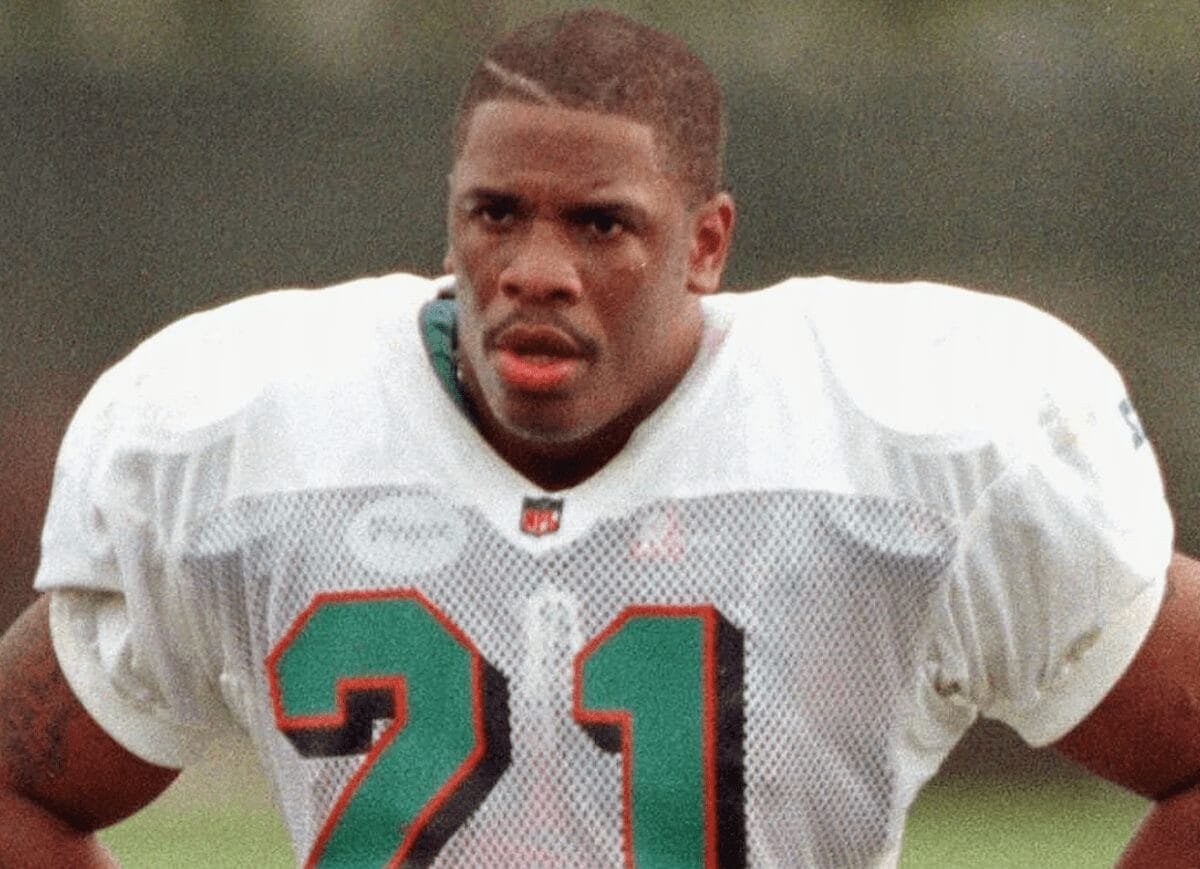
Once hailed as the next great NFL running back, Lawrence Phillips had the kind of talent that scouts dream about. Explosive speed. Raw power. Big-game dominance.
But his story didn’t end in glory. It ended in a prison cell.
Phillips rose to fame as the star running back for the Nebraska Cornhuskers, helping power the program to back-to-back national championships in 1994 and 1995. At his peak, he looked unstoppable.
NFL teams took notice. In 1996, the St. Louis Rams selected him sixth overall in the draft. It was a bold move — and a controversial one.
Even during his college years, Phillips’ talent was shadowed by troubling incidents off the field. In 1995, he was accused of dragging his ex-girlfriend down a flight of stairs. A year earlier, he had pleaded guilty to assault after grabbing a college student by the neck.
Still, his draft stock held.
Phillips’ rookie season never matched the hype. He rushed for 632 yards and four touchdowns, averaging just 3.3 yards per carry. The following season showed slight improvement statistically, but concerns about his behavior continued to mount.
Rams head coach Dick Vermeil eventually cut ties with him.
Short stints followed with the Miami Dolphins, NFL Europe’s Barcelona Dragons, and later the San Francisco 49ers. By the end of 1999, his NFL career was effectively over.
Phillips resurfaced in the Canadian Football League, helping the Montreal Alouettes win a Grey Cup in 2002. A year later, he joined the Calgary Stampeders.
But the off-field chaos never stopped.
In 2005, Phillips drove a car into a group of teenagers after a dispute during a pickup football game. He was convicted of assault. Later, he was also found guilty of assaulting a former girlfriend who said he choked her unconscious.
He was sentenced to 10 years in prison — later reduced to seven.
While incarcerated, Phillips’ legal troubles deepened.
In 2009, he was convicted again for assaulting another former girlfriend, Amaliya Weisler. That conviction added 25 more years to his sentence.
Then came the most shocking accusation yet.
In 2015, Phillips was charged with first-degree murder after authorities alleged he strangled his cellmate, Damion Soward, to death inside his prison cell.
The case never made it to trial.
Just months after being charged with murder, Phillips was found unresponsive in solitary confinement in early 2016. He had taken his own life. Authorities said he left a do-not-resuscitate note on his chest.
He was 40 years old.
Phillips’ story remains one of the most dramatic rises and falls in modern football history. From national championships and first-round NFL glory to prison violence and suicide, his life serves as a stark reminder that athletic greatness can’t shield someone from the consequences of destructive choices.
He once looked destined for superstardom. Instead, his legacy became one of what might have been.
function pinIt() { var e = document.createElement(‘script’); e.setAttribute(‘type’,’text/javascript’); e.setAttribute(‘charset’,’UTF-8′); e.setAttribute(‘src’,’https://assets.pinterest.com/js/pinmarklet.js?r=’+Math.random()*99999999); document.body.appendChild(e); }