At print time, the Israel-US-Iran war is no longer defined mainly by its opening airstrikes or its first rounds of retaliation. It has entered the phase that often shapes the outcome: the point at which military pressure, diplomacy, energy markets, domestic politics, and simple endurance begin colliding all at once.
Ceasefire feelers are real, but so is the fighting. Iran is still striking Israel. Israel is still striking Iran. The Strait of Hormuz remains under pressure. And Washington, Tehran, Jerusalem, and the Gulf capitals are all trying to avoid looking weak while also trying to keep the region from sliding into something even broader.
The war has entered a familiar phase in which diplomatic maneuvering and military pressure are unfolding at the same time. Reports indicate that the United States has sent Iran a ceasefire proposal through intermediaries, with Pakistan, Egypt, and Turkey involved in passing messages. Iran, however, has publicly denied that formal negotiations are underway and has hardened its terms, demanding security guarantees, compensation, and recognition of its position on the Strait of Hormuz. Tehran has also insisted that Lebanon be included in any broader ceasefire framework, signaling that it still wants to negotiate as the head of a regional camp, not simply as a state looking for a way out.
That is why ceasefire talks should be treated as a process, not a breakthrough. Messages are moving, but the parties are still trying to improve their positions through continued pressure. President Donald Trump is pushing Iran to move quickly, while Tehran appears determined to show that it still has leverage on the battlefield and at sea before yielding ground. That is coercive diplomacy in its oldest form: everyone speaks of de-escalation while continuing to fight for better terms.
The Strait of Hormuz remains the main pressure point. Iran has not restored normal freedom of navigation. Instead, it appears to be operating a partial and politically selective regime in which some vessels are allowed through while others face restrictions, uncertainty, or reported toll demands. Shipping companies are still relying on alternative land routes for essential goods, which says plenty on its own. When major carriers start rerouting through the desert, the strait is not truly open in any serious commercial sense.
The economic impact is already substantial. A prolonged disruption in Hormuz could remove a major share of global oil supply from the market, while crude prices have climbed sharply, and natural gas prices have also risen. The consequences are no longer confined to traders and energy analysts. Supply chains from Asia to Europe are being hit, governments are introducing emergency energy measures, and investors are increasingly pricing in both inflation and prolonged instability. In ordinary terms, the war is no longer only a military story. It is becoming a cost-of-living story, too.
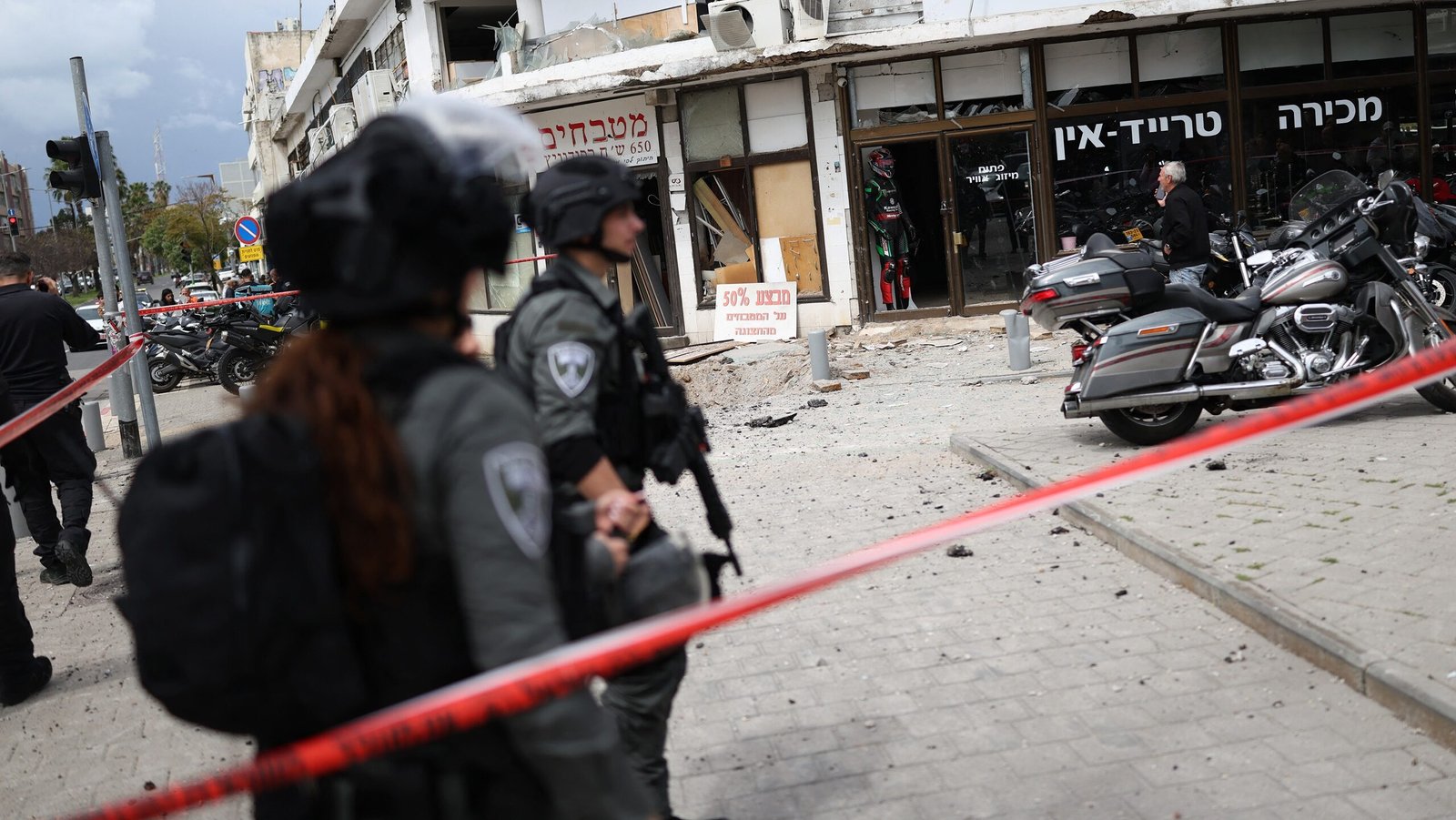
Israel, meanwhile, continues to face missile and drone fire. Iranian attacks are still reaching Israeli airspace, causing damage, injuries, and recurring disruption. These strikes matter politically as much as militarily. As long as Iran can keep launching projectiles at Israel, it can argue to its own public and to the wider region that it remains capable of imposing costs, even after the heavy blows it has absorbed.
Inside Iran, the picture is severe but still unresolved. Large numbers of civilians have reportedly been displaced, and internal security forces remain active despite Israeli strikes on commanders, infrastructure, and military assets. That matters because wars do not end simply because a regime has been hurt. They end when it loses either capacity or cohesion. Iran has plainly lost capacity. It has not yet clearly lost internal control. The state is still policing, still coercing, and still showing enough operational continuity to keep the war going.
Across the Gulf, the conflict has become both a security crisis and a strategic test. Iranian strikes on major energy sites in Saudi Arabia, the United Arab Emirates, Qatar, Bahrain, Kuwait, and Iraq have widened the war’s economic and geographic reach. Gulf governments want the fighting to stop, but not on terms that allow Iran to absorb the blows, declare survival, and resume the same regional methods a few months later. That tension helps explain the mood across the region: fear of escalation, anger at Iran, and deep skepticism toward any ceasefire that looks more like an intermission than a settlement.
American politics is becoming a larger part of the story as well. President Trump faces growing domestic pressure over fuel prices, the risk of a longer war, and the possibility of deeper US military involvement. Many Republicans still support strikes on Iran, but support is thinner when the discussion turns to broader escalation or any hint of a ground commitment. That creates a narrow lane for Washington: keep pressure on Tehran, avoid looking defeated, but stop short of a wider war that pushes fuel prices higher and worsens political backlash at home.
Over the next few days, the most likely scenario is not a clean turn toward peace but an overlap of diplomacy and continued escalation. Indirect messaging will probably continue through mediators. Iran may keep up limited but regular strikes on Israel and perhaps on Gulf-linked targets to preserve leverage. Israel is likely to continue attacking Iranian military, naval, and command assets while trying to lock in the gains of the opening phase of the war. At the same time, outside powers will keep preparing for the possibility of reopening Hormuz more fully if even a partial truce begins to take shape.
That leaves the war at a decisive and highly unstable stage. Every new Iranian missile barrage into Israel, every new Israeli strike deep inside Iran, and every further squeeze on Hormuz increases the stakes—not only militarily, but politically and strategically. Pressure for a ceasefire is clearly building, but that does not necessarily mean the war is yet ripe for one. Iran remains capable of inflicting damage, but it has also been significantly weakened. Israel and the United States, for their part, may calculate that stopping too early would leave key military and strategic objectives only half achieved. The real question over the coming days is not simply whether the fighting can be stopped, but whether the parties believe they have done enough to justify stopping.