Religious language aimed at both American supporters and Iranian audiences has become a central feature of the US president’s public posture
America and Iran have put a temporary ceasefire in place as they assess next steps in what some scholars describe as a holy war between Iran’s radical, messianic jihadist regime and Western powers.
President Donald Trump secured the ceasefire he sought. But judging by nearly every post he has shared on Truth Social in recent weeks, he appears to believe the conflict extends far beyond the Strait of Hormuz or economics and touches instead on the future of Western civilization.
At the same time, he seems to understand that he is speaking to multiple audiences. By invoking God and even Allah in his messages, he is appealing both to his evangelical base and to religious audiences in Iran.
47 years of extortion, corruption, and death will finally end. God Bless the Great People of Iran!
Just before the ceasefire agreement was established, President Trump issued a final threat on Truth Social: “47 years of extortion, corruption, and death will finally end. God Bless the Great People of Iran!”

That message followed another post just days earlier, as the deadline was fast approaching: “Remember when I gave Iran ten days to MAKE A DEAL or OPEN UP THE HORMUZ STRAIT. Time is running out—48 hours before all Hell will reign down on them. Glory be to GOD!”
On Easter, the president pointed to America’s military rescue of a pilot and navigator who had fallen over enemy territory, ending his message with: “God Bless our great MILITARY WARRIORS!”
President Trump, backed by an evangelical political base and some faith-focused advisers, has increasingly framed the conflict with Iran in spiritual and civilizational terms. Multiple members of the White House inner circle have suggested that the war could be a precursor to the end times, making it not only geopolitical and military but also eschatological.
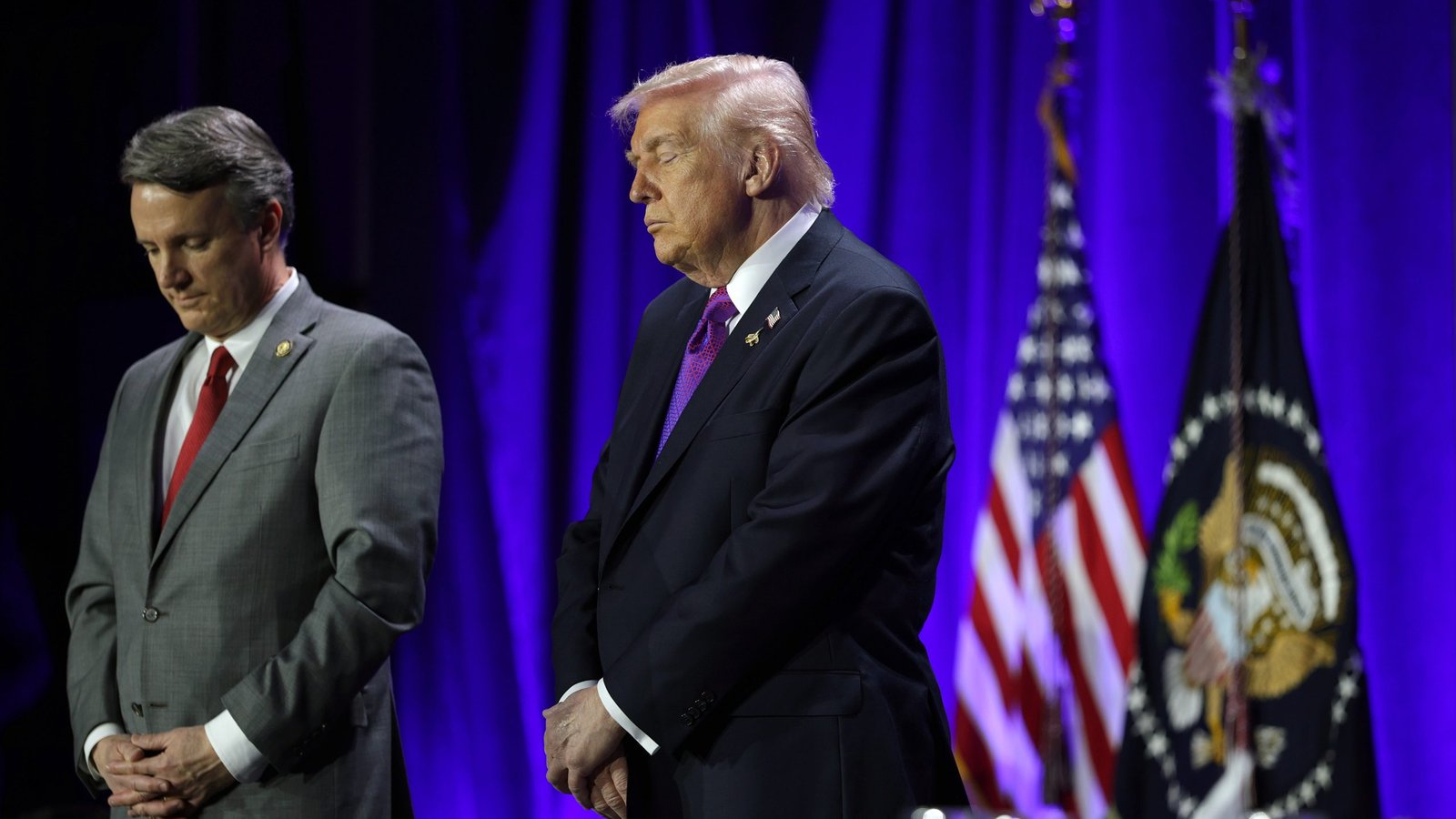
Toward the start of the war, the US president invited a group of evangelical Christian leaders into the Oval Office, where they gathered to pray for him and for the United States as it waged war against Iran.
During an Easter lunch event at the White House this week, Paula White, head of the White House Faith Office, delivered a controversial speech that drew comparisons between the commander in chief and Jesus.
“Jesus taught so many lessons through his death, burial, and resurrection,” she said in remarks widely shared on social media. “He showed us great leadership—great transformation—requires great sacrifice. And Mr. President, no one has paid the price like you have paid the price. It almost cost you your life.”
She also referenced President Trump’s legal battles, saying he was arrested and “falsely accused” in a “familiar pattern that our Lord and Savior showed us.”
White concluded by drawing a direct parallel: “Because of his victory, you will be victorious in all you put your hands to.”
“Trump realizes that the Iranian regime has been prosecuting a religious war for nearly 50 years,” Dan Diker, president of the Jerusalem Center for Security and Foreign Affairs, told The Media Line. “For the Iranians, this has been only a religious war. What Trump has done, in the finest manifestation of political warfare, is co-opt the lexicon, the nomenclature of his enemy.”
Diker said that each time the US president says “God bless” or “glory to God,” he places his message in a religious context. In doing so, he signals to Americans that the conflict with Iran is a war for Western civilization while also making clear to Iranians that he understands their framing.
It’s the Judeo-Christian civilization under attack by radical Islam
“It’s the Judeo-Christian civilization under attack by radical Islam,” Diker said. “Trump is telling the Iranians, ‘You can threaten us with your messianic, theological, end-of-day scenario. [But] I’m an ideological player, too!’”
President Trump appeared to take that approach a step further. On April 5, as he warned of “Power Plant Day” and “Bridge Day,” and said the people of Iran would be “living in Hell,” he ended with a new phrase: “Praise be to Allah.”

According to Diker, this marked a further co-opting, this time of Islamic language.
“It’s a threat,” Diker said. “He is denigrating the enemy, which is his strategy. … He was saying, “You’ve met your match culturally, you’ve met your match militarily, you’ve met your match ideologically, and, unless you take the deal that I’ve laid out on the table … you’re a dead man walking.”
Rabbi Tuly Weisz agreed and took it a step further, suggesting that the American president invoked the name of Allah to mock Iran. “Praise be to Allah who will fall when Trump attacks,” is how Weisz interpreted the message.
“America and Israel are fighting against radical Islam to save Judeo-Christian civilization,” Weisz said. “In order to fight them on their own terms, he is articulating a religious narrative and demonstrating that … they’re losing the war on their own terms.”
He added that Iran has supported the Muslim Brotherhood and its radical Islamic ideology since the revolution. He pointed to language such as “Al Aqsa Flood” to describe the Hamas massacre, as well as the labeling of Israel as the “little Satan” and America as the “big Satan.”
You don’t have to be an expert on Islamic theology to know this is a theological war for them
“You don’t have to be an expert on Islamic theology to know this is a theological war for them,” Weisz said.
Weisz also argued that President Trump’s role is part of a larger spiritual pattern. He pointed to how major milestones since October 7 have coincided with Jewish holidays, from the massacre on Simchat Torah to the start of the Iran war on Shabbat Zakhor, the Sabbath before Purim, to the rescue of the pilot during Passover and Easter. He noted that the president’s deadline to Iran coincided with the seventh day of Passover, which commemorates miracles such as the splitting of the sea and the final redemption of the Israelites from Egypt.
“It’s just pretty incredible how everything is lining up spiritually, in addition to militarily,” Weisz said.
For now, the ceasefire may hold, but the deeper narrative driving both sides may prove far harder to contain.