Expanding women’s political participation and grassroots cooperation can strengthen social justice and long-term stability across Israeli society
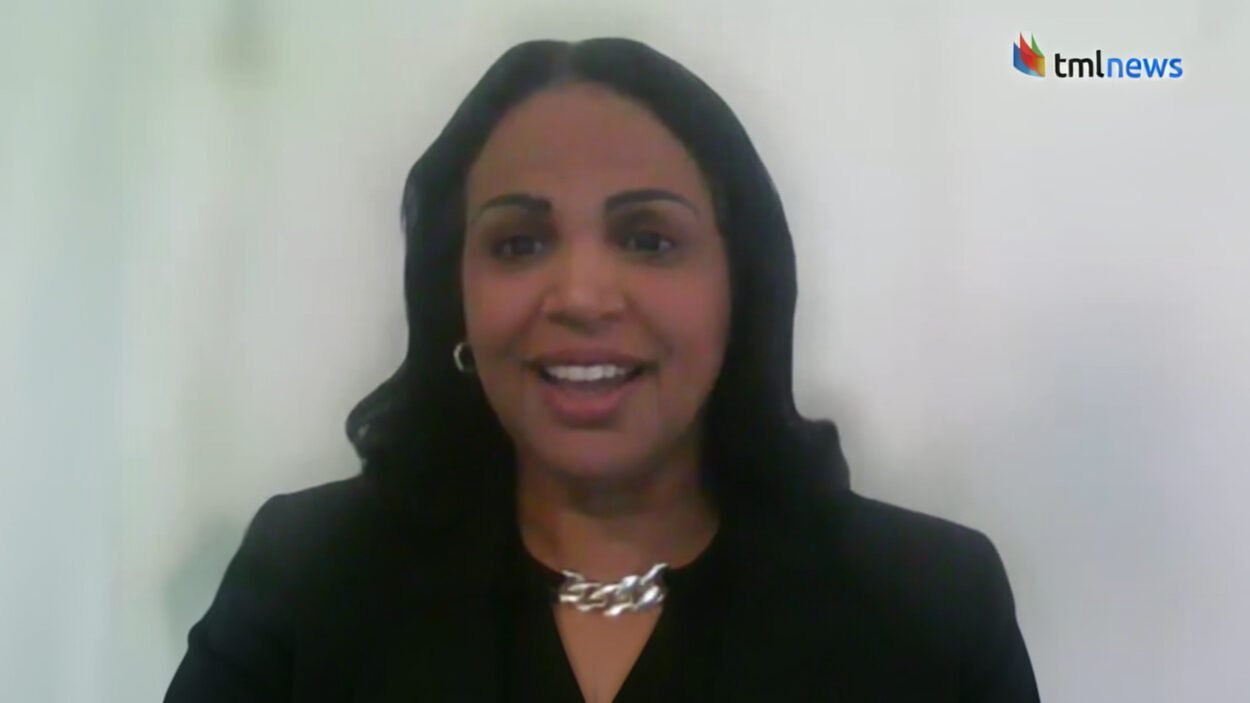
Bedouin feminist human rights lawyer Hanan Alsanah says decades of activism—from grassroots education programs in the Negev to emergency relief work after the October 7 attacks—have shaped her belief that women’s leadership and Arab-Jewish partnership are essential for advancing peace and social justice in Israel. In an International Women’s Day interview with Felice Friedson on Facing the Middle East, Alsanah reflected on her journey from a traditional Bedouin upbringing to becoming a prominent legal advocate, peace builder, and emerging political voice.
“I am a Bedouin feminist human rights lawyer as a peace builder,” Alsanah said at the outset, describing the identity she says she has “paid a very high price” to claim. Raised in Lakiya in southern Israel, she recounted being told repeatedly that pursuing education or leadership roles was impossible. “During all my life, in every step, I faced the main response that it’s impossible, you cannot do it, you are not allowed to do it,” she said. Becoming the only one among her sisters to attend university, she added, pushed her to widen opportunities for others: “After I fulfilled my dream, I said to myself that it is time also to fulfill the dreams of all the Bedouin women in the Negev.”
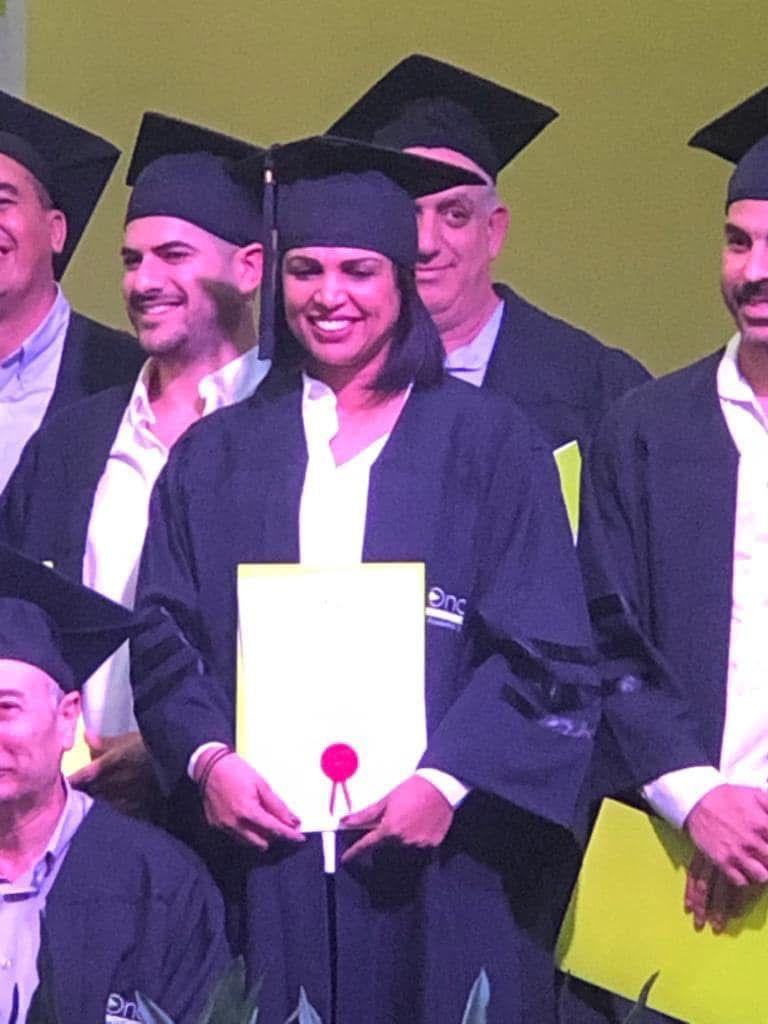
Hanan Alsanah is the only one among her sisters to attend university. (Courtesy Hanan Alsanah)
Her early work focused on literacy and economic empowerment initiatives, which she said reached thousands of women. Alsanah emphasized that she sought cooperation rather than confrontation with traditional authority figures. “I worked in cooperation with the men, with the leaders, with the sheikh … and together we built the programs,” she said, describing efforts that eventually included education, employment initiatives, and leadership training. Yet she concluded that access to education and economic opportunities alone was insufficient. “It’s not enough. … It’s not only [that] you want access to education and economic [power]; it’s not bringing women independence and leadership,” she said.
When local newspapers refused to publish women’s achievements or photos because of cultural norms, Alsanah helped launch a women-run newspaper highlighting female voices. The initiative closed after two years once mainstream media began covering women’s accomplishments. “We closed it not because we didn’t succeed,” she said, “but because we reached the target.”
They can accept everything, but not women in leadership
Alsanah also discussed the evolving role of Bedouin women. While earlier generations held important responsibilities within traditional life, she said they were excluded from decision-making. Women “had a very central role” in building tents and working in agriculture, she explained, but “she doesn’t have ownership in her personal decisions … she cannot be part of the decision-making.” She argued that the greatest resistance arises when women pursue political leadership. “They can accept everything, but not women in leadership,” she said.
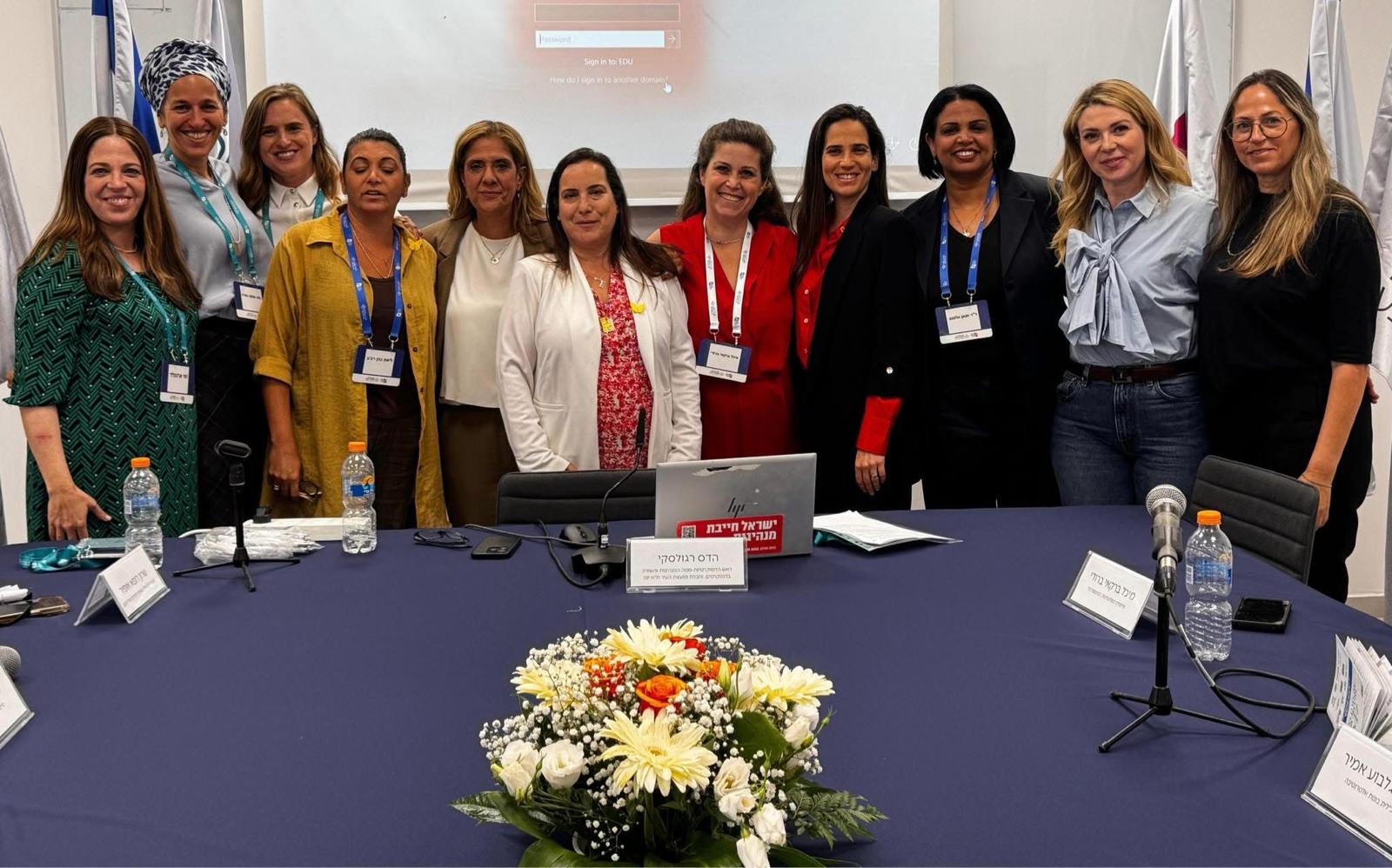
Hanan Alsanah (3rd R) at the Sderot Conference for Society and Education at Kay College, May 2025. (Courtesy Hanan Alsanah)
If one woman enters politics, the political system will change her
That tension helped shape her move to Itach-Ma’aki Women Lawyers for Social Justice, where she works in Arab-Jewish partnership to advance marginalized women’s rights. Alsanah emphasized the importance of expanding female representation in politics, saying one woman in office is not enough to transform political culture. “If one woman enters politics, the political system will change her,” she said. “But if more women enter politics, they will change the political system.”
We deserve a new political system, and we deserve peace
She confirmed she is considering a future political role but declined to name a specific party, outlining instead the principles she believes are necessary: equal gender representation, Arab-Jewish cooperation, and a commitment to peace agreements as the foundation for security. “We deserve a new political system, and we deserve peace,” she said.
The interview devoted significant attention to the aftermath of the October 7 attacks. Alsanah described initially feeling overwhelmed by the scale of the crisis but quickly shifting into action with colleagues to establish an Arab-Jewish Emergency Relief Center in Rahat. “We asked only 50 people, and 400 came,” she said, adding that volunteers helped thousands of affected families with humanitarian assistance and legal support. The experience, she said, showed that cooperation across communities is possible even during deep trauma. “In spite of everybody feeling there was no hope, we felt that we created hope,” she said.
Asked how the attacks affected perceptions of the Bedouin community, Alsanah stressed both pride and frustration. She highlighted the community’s efforts to help neighbors while pointing to ongoing discrimination, particularly for residents of unrecognized villages lacking infrastructure and protection. “In one hand, it’s your duty as citizens. … We were there to help our neighbors,” she said. “But in another hand, we cannot forget all this discrimination.” For her, the lesson of October 7 was clear: “The solution is to rebuild the state … to work together, Jewish and Arab, because we saw that there is a way.”
Alsanah also addressed the documentary film created about her work after the attacks. Though she was not the filmmaker, she said participating in the project allowed her to challenge stereotypes portraying Bedouins as outsiders or security threats. The film, she explained, presents a different narrative: “We are citizens of Israel. … We are here, and we work together,” highlighting cooperation in hospitals, volunteer networks, and crisis response.
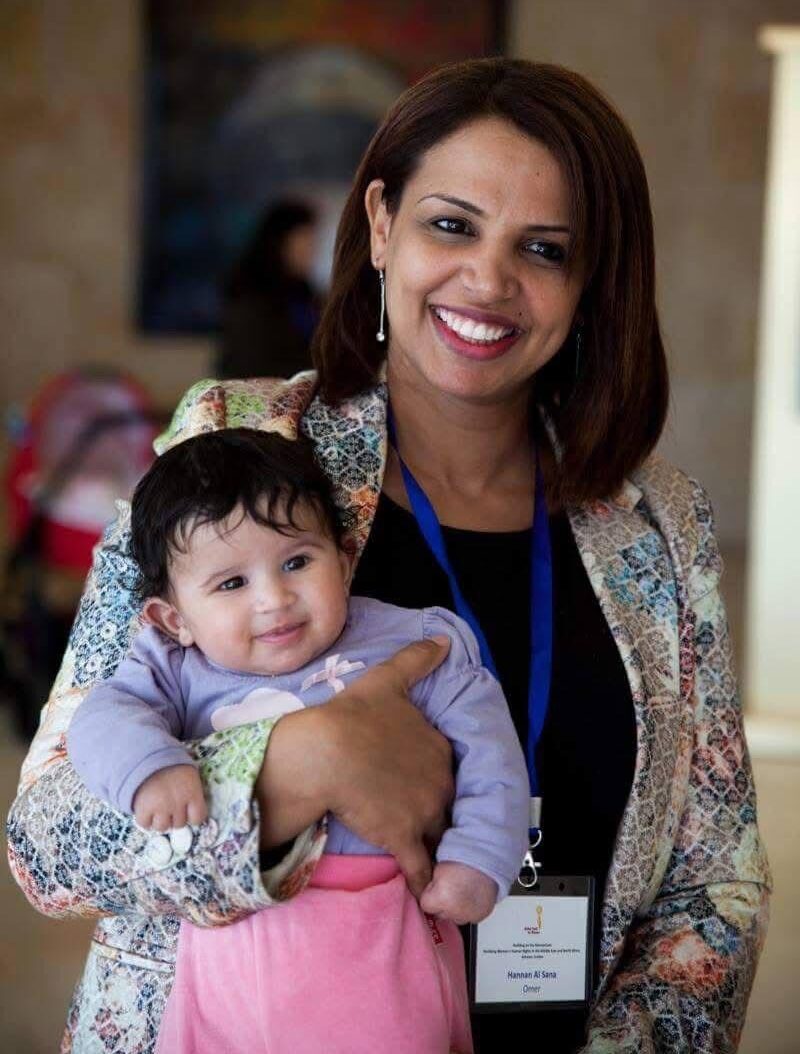
(Courtesy Hanan Alsanah)
The conversation touched on the complex position of Bedouins during wartime, including those serving in the Israeli army. Alsanah described navigating multiple identities and loyalties, noting that some Bedouins have tribal ties beyond Israel’s borders. “In one hand you want to protect your state,” she said, “but in another hand you also want to protect civilians in the region.” She acknowledged that this dual reality places Bedouins in a particularly sensitive position during conflict.
Throughout the interview, Alsanah reflected on the personal challenges of being a vocal advocate in a conservative society. “It’s very challenging,” she said, noting that negotiations with community leaders remain necessary, especially when promoting women’s leadership. She also recalled representing Bedouin women before the United Nations Committee on the Elimination of Discrimination Against Women as a pivotal moment. “When I arrived at the CEDAW Committee … our government opened their doors,” she said, describing it as a turning point that validated years of advocacy.
Looking ahead, Alsanah said her hopes for her two daughters are simple but profound: “I hope for them that they will live in dignity and freedom … and that they will have ownership over their decisions.” Her involvement in the regional Women Champions for Change network has strengthened her belief that peacebuilding must begin with people-to-people initiatives. “We need to practice peace,” she said, describing the group as a space where women across the Middle East collaborate on real-world projects rather than only discussing abstract ideals.
Despite the intensity of her work, Alsanah said she finds renewal through time in the Negev desert and through connections with fellow women leaders. Those moments, she said, reinforce her conviction that grassroots cooperation—especially among women—can reshape the political landscape and create a more inclusive future for Israeli society.