Analysts Warn IRGC Militia Networks May Fill the Vacuum Before Investment Does
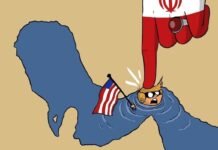
[BAGHDAD] From a country whose diplomats are careful by tradition and always conscious of Washington’s preferences, the language was striking. Bahrain’s Foreign Minister Abdullatif Al Zayani, whose country holds the rotating presidency of the UN Security Council, told the council this week that what began as Iranian threats to Hormuz shipping had evolved into a threat to the entire world.
Time, he said, was running out. “Closing the Strait does not target any one party,” Al Zayani said, “but constitutes a direct threat to the Global South, whose populations will bear the heaviest burden.”
The Security Council had already weighed in. Resolution 2817, co-sponsored by a record 136 member states, sent what Al Zayani called an unambiguous message that Iran’s actions were illegal and must cease. Iran has not complied. It is that defiance, he told the council, that makes further action not only justified but necessary. The United Nations has warned that an additional 45 million people worldwide could fall into acute hunger if the disruption continues—a figure that dwarfs even the Arab region’s own poverty projections.
In Najaf, Iraq, a law student named Ridha Al-Yaseri is watching the price of tomatoes — less than 60 cents a pound last month—climb to $1.34. Eggplant has gone from 57 cents to $1.53. Together they are the foundation of tepsi baytinijan, the baked dish that appears on Iraqi family tables from Basra to Mosul. His family’s salary arrived 40 days late. The power runs for eight hours and cuts for sixteen.
In my opinion, this is the worst period since 2003. In a few days, the situation will resemble the 1991 sanctions.
“In my opinion, this is the worst period since 2003,” Al-Yaseri, 22, a law student at Kufa University in Najaf, told The Media Line. “In a few days, the situation will resemble the 1991 sanctions.”
Since February 28, tanker traffic through the Strait of Hormuz has declined by more than 90%.The United Nations Development Program (UNDP) released its regional economic assessment on March 31, estimating that the conflict may cost Arab economies between 3.7 and 6.0% of their collective GDP—a loss of $120 to $194 billion that exceeds the region’s total economic growth in 2025.
The model was built on a four-week conflict scenario. The war has already outlasted it. More than 75% of new poverty across the Arab region is concentrated in the Levant—a subregion the UNDP defines to include Iraq, Jordan, Lebanon, the West Bank and Gaza, and Syria—where an estimated 2.85 to 3.29 million additional people face falling below the poverty line.
Iraq sits at the center of that figure. It is also the country in the subregion that has endured the longest period of permanent economic disruption. The war economy arrived in 2003. It did not leave.
Al-Yaseri can track the mechanism precisely. Almost all of Iraq’s fresh vegetables and fruit—he puts the figure at 97%—are imported from Iran. Iranian customs duties on trucks crossing into Iraq have risen from roughly $38 per truck to more than $1,500 since the escalation began on March 1. That fortyfold increase passed directly into market prices. A carton of eggs has risen from $39.80 to $57.40. A gas cylinder now costs $11.48. Iraq, Al-Yaseri told The Media Line, is a consumer country, not an agricultural or industrial one. It has no buffer to absorb the difference.
The salary delays compound everything. Oil covered 88% of total Iraqi government expenditures in 2025. What makes the current crisis different from the revenue collapses of 2016 and 2020 is that this time the problem is not falling prices but the loss of export corridors. Iraqi crude exports collapsed by roughly 97% in March, rerouted through the Turkey pipeline to Ceyhan as Gulf routes closed. The Ministry of Finance announced only on March 24 that it had begun processing March salaries.
For Mohammed Al-Hamdan, a teacher at a public school in Mosul, the delay extends a longer slide. When he started work in 2020, salaries were paid on the 20th or 22nd of each month. Now the 28th or 29th—or the following month, he told The Media Line.
“You can silence debtors and tell them to wait for your paycheck,” Al-Yaseri told The Media Line. “And some might wait. Still, someone with a small public salary is better off than someone with nothing.”
Qaysar Asghar has run a home appliance shop in Baghdad’s Karrada district since 2000, through the fall of Mosul in 2014, through COVID. He has a reference point for each disruption. This one reads differently. The market was already under strain from a new customs law implemented in January 2026, pushing prices upward before the escalation began.
When salaries are delayed, a recession follows. Prices increase.
“When salaries are delayed, a recession follows,” Asghar told The Media Line. “Prices increase.”
In Mosul, the effects arrive through different channels. Ahmed Al-Mosully works as a tourist guide. March and April are peak season. His scheduled tours were canceled, in most cases because of flight disruptions, not the security situation inside the city, which he describes as stable. His generator bill has risen from roughly $130 to $175 per month. His daily vegetable spending has risen from $7.60 to $12. He had been considering buying a car. He has canceled the idea.
“There are zero tourists in Iraq right now,” Al-Mosully told The Media Line. “It is springtime, the season of errands and adventures. But even locals are afraid to go to the city outskirts.”
Maysoon Hattab, a Baghdad-based entrepreneur, has three stalled projects across different countries, two in tourism and one in robotics in a Gulf state. Capital is frozen across all three while operating costs continue to drain resources.
“Life is almost at a standstill,” she told The Media Line. “We fear the situation will drag on and we will incur further losses.”
Life is almost at a standstill. We fear the situation will drag on and we will incur further losses.
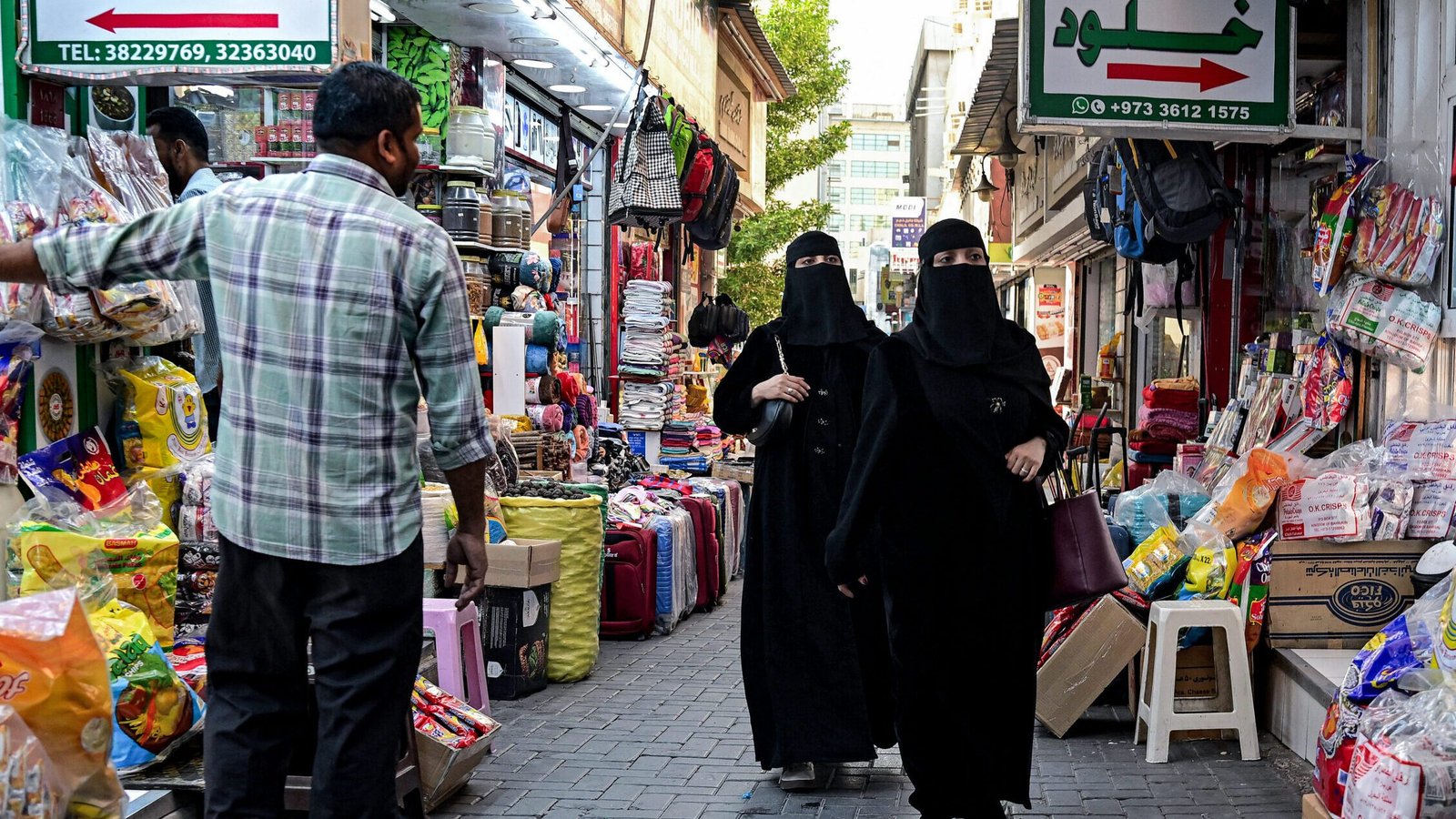
Jordan raised fuel prices 11% on April 1, the first in a series of gradual increases the government linked directly to the war’s economic impact. Fresh food prices moved immediately: tomatoes reached $2.15 a pound, cucumbers $1.99. At the subsidized military supermarket where retired infantry corporal Ali Khair shops for his family of five, corn oil has risen from $10 to $17 for a two-and-a-half gallon jug. A bag of rice has gone from $1 to $3. Foreign tourism flows have been decimated, according to Khader Salem, a Jordanian travel agent, who pointed to the cancellation of most international flights into the kingdom.
Jordanian Prime Minister Jaafar Hassan ordered government departments to tighten spending days after electricity production costs rose $140 million due to a halt in Israeli gas supplies. Most of Jordan’s $18 billion budget goes toward salaries and debt servicing. Average incomes stand at $4,600 per year. The government has moved to cover borrowing costs for hotels and restaurants to preserve jobs, but the budget room is narrow. The economy has been stagnant for 15 years.
Syria enters the crisis from a more exposed position still. Damascus confirmed a 2026 state budget of $10.5 billion—smaller than what Iraq’s Ministry of Finance releases in a single oil-backed salary cycle during a functioning month. Syria launched a new currency in January 2026, meaning its population was already navigating a monetary transition when the escalation began. Economic researcher Karam Khalil, writing in Levant24, put it directly: “This is no longer purely economic. It is becoming a matter of national economic security.”
In Lebanon, where successive crises had already pushed unemployment above 40% before the current escalation, economist Jassem Ajaka told Asharq Al-Awsat that 30% of small and medium businesses have permanently closed since the new war started. Those still operating have shifted to emergency cash flow management, some paying wages worth no more than 40% of previous levels.
Even Israel, the region’s most developed economy and a direct party in the conflict, is absorbing measurable damage. The Bank of Israel cut its 2026 GDP growth forecast to 3.8% from a previous 5.2% in its March 30 assessment, describing the forecast as carrying an “exceptionally high level of uncertainty”—language that echoes what UNDP Assistant Secretary General Abdallah Al Dardari told Asharq Al-Awsat: that 4 million people could fall into poverty in a single month, a rise that would normally take years.
The UNDP’s Levant figure of 2.85 to 3.29 million additional people in poverty applies across all five territories. The baseline in Iraq, where disruption has been the operating condition for more than twenty years, is categorically different from the baseline in Jordan, Syria, or Lebanon.
Before the current escalation, a Gallup survey found that Iraqis named the economy and unemployment—not security—as their country’s top concerns for the first time in a generation. In 2025, 81% of Iraqis said they felt safe walking alone at night, one of the largest sustained increases in personal safety ever recorded in the Gallup World Poll.
The Gulf states absorbing Iran’s attacks enter the crisis from positions of unequal strength. The UNDP estimates the GCC stands to lose between 5.2 and 8.5% of GDP—the largest absolute losses in the Arab region, totaling up to $168 billion. But financial reserves vary sharply.
Saudi Arabia and the UAE have massive national savings funds and oil pipelines that bypass the Strait. Bahrain does not. Goldman Sachs projects Bahrain may struggle to absorb the shock without the reserves its larger neighbors can deploy. Its public debt stood at 133% of GDP—meaning it owes more than its entire economy produces in a year—before the first missile flew, and its credit rating held after the war began only on the assumption, S&P noted explicitly, that richer Gulf neighbors would intervene if necessary. The same country whose foreign minister is pressing the Security Council for urgent international action is itself one emergency away from requiring a bailout.
Not everyone reads the current moment as a permanent setback. Shad Karim, an Erbil-born legal advocacy and international affairs analyst who has advised members of Congress on Iraq policy, argues that the fall of Iran will not by itself unlock the investment Iraq needs.
Militia networks that derived their legitimacy from Tehran have spent years embedding themselves in Iraq’s key economic sectors, public institutions, and infrastructure. Without genuine regulatory and security controls free from the influence of the Islamic Revolutionary Guard Corps (IRGC), he warns, those networks adapt rather than dissolve.
Iraq might become the future home of the IRGC itself
“Iraq might become the future home of the IRGC itself,” Karim told The Media Line. Before this war, he notes, international trade had already generated an economic boom running parallel to Iraq’s turbulent politics. Iraq’s oil remains indispensable to global markets. “Any economic investment and growth in Iraq will also play a key role in any geopolitical shift in Iraqi society,” he said.
Al-Yaseri recalls 2014, when the security situation deteriorated but most families had savings. He recalls COVID, when salaries were guaranteed and the shock was containable.
“During the ISIS [Islamic State] invasion in 2014, most people had money, and even when a crisis occurred, they did not worry because they had more than enough,” he told The Media Line. “During the 2019 COVID crisis, it was relatively stable because salaries were guaranteed.”
Both crises passed. This one has not.
“This nation is strange,” he said. “I only care about my country. My country’s interests are above all other considerations.”