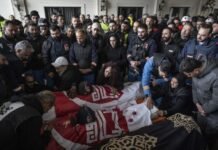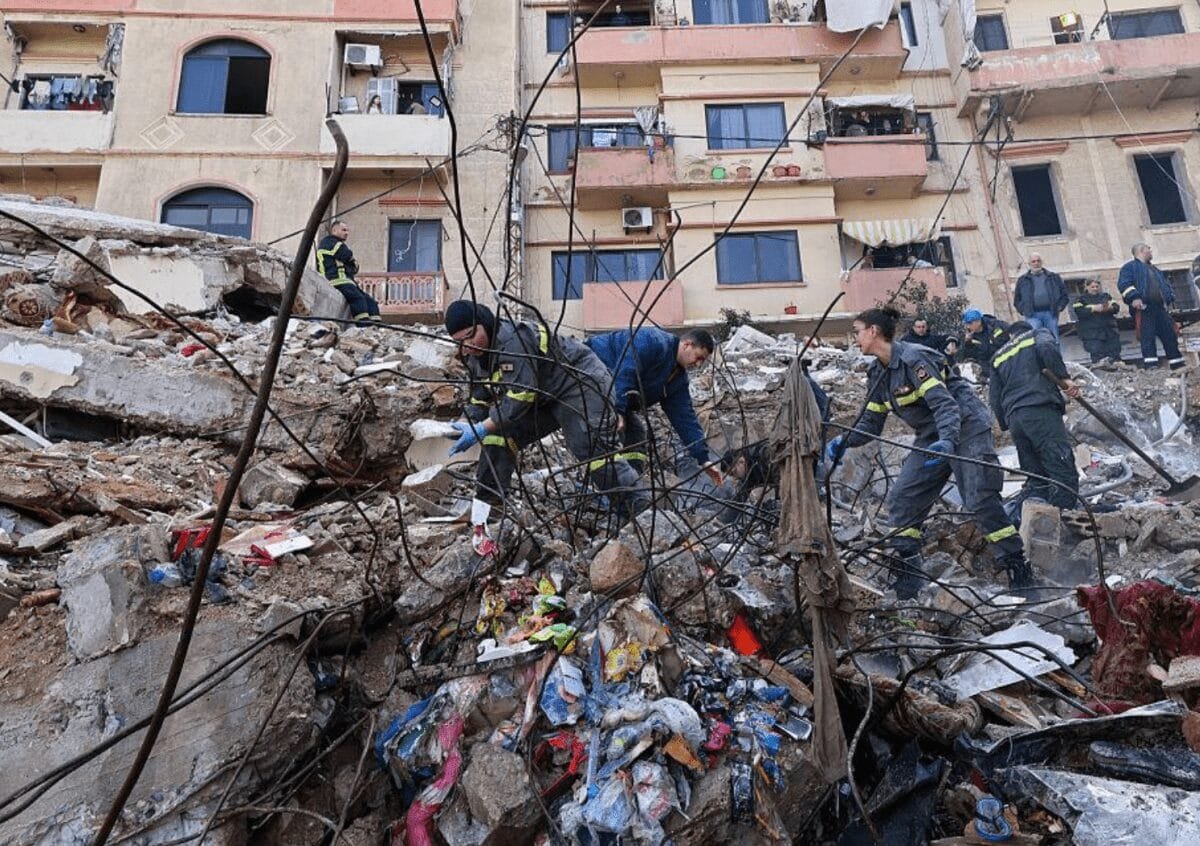
At least 14 people are confirmed dead after two adjoining residential buildings suddenly collapsed in northern Lebanon, triggering frantic rescue efforts and renewed anger over years of neglect.
The collapse happened around 4:30 p.m. Sunday in a densely populated neighborhood of Tripoli, Lebanon’s second-largest city.
The Lebanese Civil Defense said Monday that 14 bodies had been recovered from the wreckage. Rescuers continue to search for survivors, though officials warned the death toll could rise.
In an initial statement, Civil Defense officials said the structure consisted of two connected six-story sections that collapsed without warning, trapping residents beneath concrete slabs and twisted steel.
Video shared by responders showed crews pulling at least eight people alive from the ruins. Their conditions were not immediately disclosed.
Tripoli municipal council head Abdel Hamid Karameh said it remains unclear how many people are still unaccounted for, according to Reuters.
Local officials told reporters the buildings were home to roughly 22 residents at the time of the collapse.
“We are still working with limited equipment,” one rescue official said. “Every minute matters.”
Lebanon’s prime minister, Nawaf Salam, described the collapse as a “humanitarian catastrophe,” according to the BBC.
“The government is fully prepared to provide shelter for residents of buildings that must be evacuated,” Salam said.
He added that the tragedy was “the result of years of accumulated neglect.”
Minister of Social Affairs Haneen Sayed echoed those concerns in a post on X.
“What happened today in Tripoli is painful and alarming,” she wrote. “It shows how fragile life has become for many families. Our hearts are with the victims and their loved ones.”
The disaster did not come out of nowhere.
Just days earlier, residents were forced to evacuate a nearby building over safety fears. Two weeks ago, another collapse in the region killed a father and his daughter.
Engineers and residents have long warned that aging buildings, poor maintenance, and Lebanon’s ongoing economic crisis have turned entire neighborhoods into potential death traps.
As night fell over Tripoli, rescue teams continued digging through the rubble, hoping to hear signs of life — and fearing what they might find next.
function pinIt() { var e = document.createElement(‘script’); e.setAttribute(‘type’,’text/javascript’); e.setAttribute(‘charset’,’UTF-8′); e.setAttribute(‘src’,’https://assets.pinterest.com/js/pinmarklet.js?r=’+Math.random()*99999999); document.body.appendChild(e); }