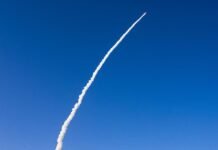
As the Artemis II lunar mission moved into its third day on Friday, and with the spacecraft’s big engine firing behind it, the four astronauts on board had a little more downtime.
So the four crew members—Reid Wiseman, Victor Glover, Christina Koch, and Jeremy Hansen—had their first opportunities to speak with their families at length, and also did a couple of media events. They held medical conferences with physicians back in Houston, although these were apparently routine since none of the crew members were experiencing space adaptation sickness.
And they had some time to take pictures. Wiseman, the mission’s commander, sent a particularly spectacular image on Friday morning that showed our planet’s night side (with a relatively long exposure). Among the beautiful details in this image were not one but two auroras, as well as zodiacal light in the bottom right of the image. The Sun is visible in the distance, lighting the far side of the Earth.
No corrective burn needed
“They are in great spirits,” said Lakiesha Hawkins, a senior exploration official at NASA, of the crew during a news conference on Friday afternoon. “Obviously, they’ve been very, very busy, especially leading up to the translunar injection.”
That firing of Orion’s main engine occurred on Thursday evening, setting Orion on course for a pass around the Moon. They will make their closest approach on Monday afternoon before splashing down in the Pacific Ocean, off the coast of Southern California, on Friday, April 10.
Because that engine firing was so successful, NASA waved off the opportunity to perform a “corrective” burn on Friday.
During their daily briefing with reporters, NASA officials had almost no issues of any significance to report. Howard Hu, the program manager for Orion, said NASA was tracking an issue with the helium system that pressurizes Orion’s service module propulsion system to deliver fuel and oxidizer to the engine. However, he said, Orion no longer needs to use this helium regulator for the remainder of the mission, and moreover, a backup system is working as intended.
Other minor issues
There have also been some “false alarms” in the cabin from various environmental sensors. However, Hu said, these are not at all a threat to the crew but rather reflect conservative limits set for those systems. He characterized this as a “learning” that will be adjusted for the Artemis III mission, which could take flight next year.
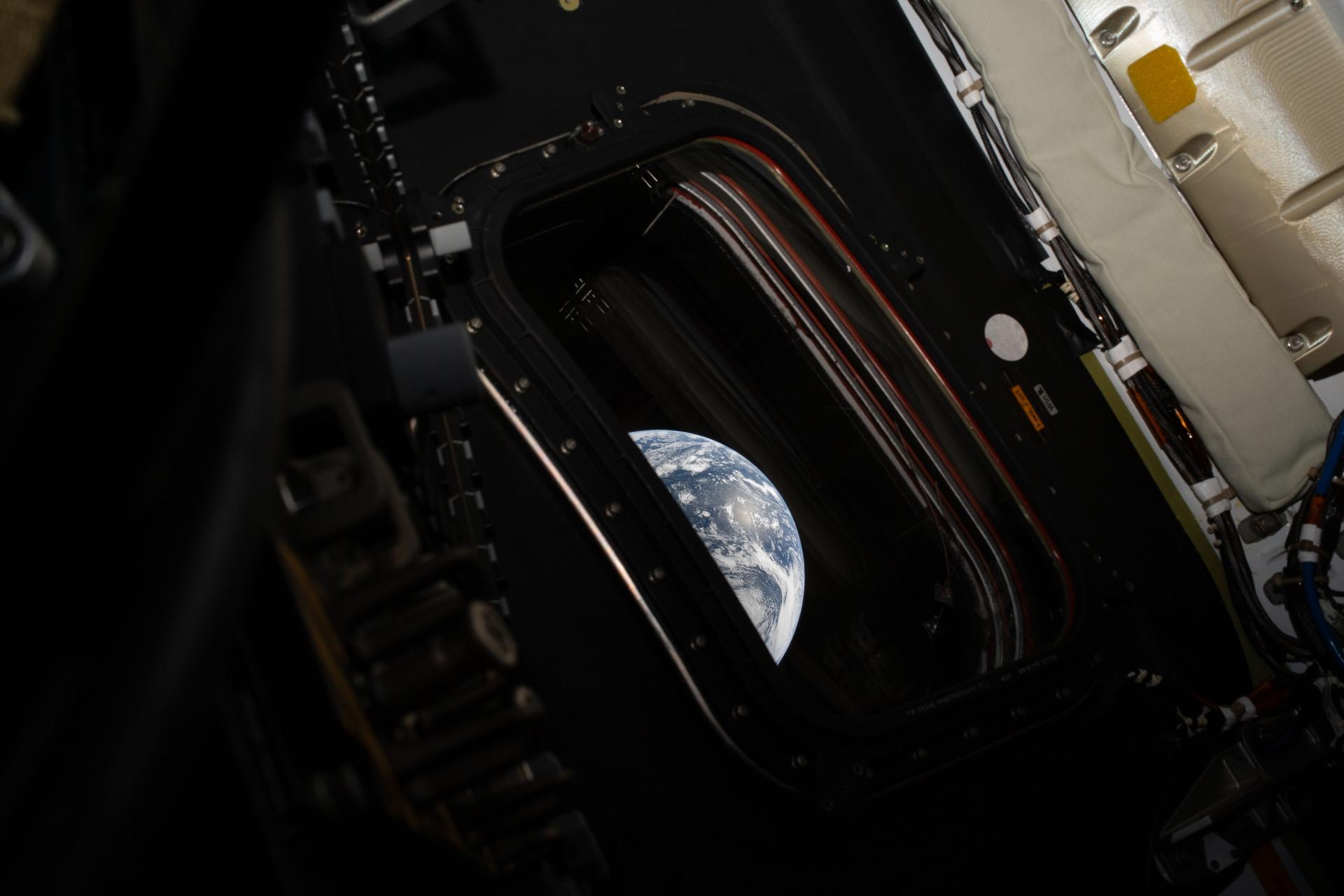
The only other real issue experienced by the crew has been cabin temperatures, which were described by the astronauts as a little chilly overnight. One of the mission’s flight directors, Judd Frieling, said the crew started off with temperatures in the mid-70s, but after several “shell heaters” were turned off, it got about 10° F colder. A number of factors influence cabin temperature, and flight controllers were able to adjust the cabin atmosphere to a more comfortable level.
Similarly, humidity levels were slightly below optimal for devices that remove carbon dioxide from the atmosphere. These “scrubbers” work better with higher humidity, and the crew has been able to find a comfortable level of humidity between “desert dry” and “Houston humid,” Frieling said.
So the crew is comfortable as they fly farther from Earth than anyone else has in half a century.