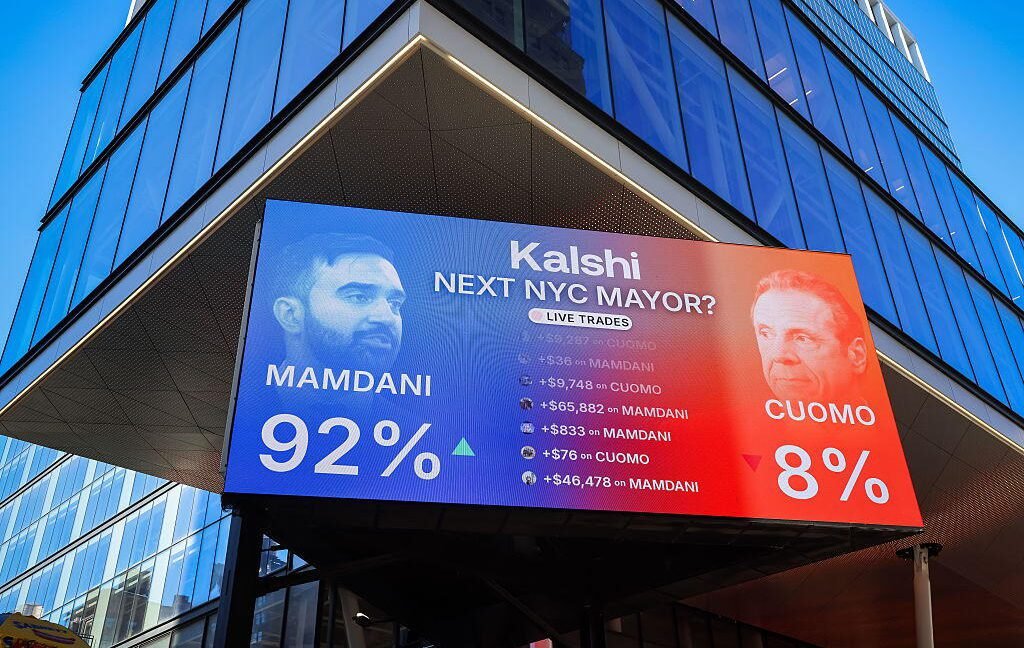
Arizona’s attorney general filed criminal charges against prediction market Kalshi, accusing it of operating a gambling business without a license and offering illegal wagers on elections.
“Kalshi may brand itself as a ‘prediction market,’ but what it’s actually doing is running an illegal gambling operation and taking bets on Arizona elections, both of which violate Arizona law,” Attorney General Kris Mayes said in a statement on Tuesday.
While Arizona’s case is the first time criminal charges have been brought against the company, several other US states have alleged that Kalshi’s markets constitute illegal and unregulated sports betting.
“There’s clearly going to be a domino effect,” said Daniel Wallach, a lawyer who specializes in gaming law. “These are the first criminal charges filed against Kalshi anywhere in the US but they may not be the last.”
In a statement, Kalshi said: “Sadly, a state can file criminal charges on paper-thin arguments. States like Arizona want to individually regulate a nationwide financial exchange, and are trying every trick in the book to do it.”
Prediction market platforms such as Kalshi offer shares in binary outcomes, such as a certain team winning or losing a football match. Kalshi has argued that these contracts should continue to be regulated as derivatives by the federal Commodity Futures Trading Commission, enabling it to bypass states’ sports-gambling bans or regulations by arguing that its regulatory status under the CFTC preempts state-level laws.
Arizona’s case focuses on betting contracts Kalshi offered on four separate elections, including the 2028 US presidential race and 2026 race for Arizona governor. Gambling on elections is illegal under Arizona state law.
But sports markets have become Kalshi’s central business. They account for about 90 percent of the site’s trading volume and collected fees. Trading on the platform’s Super Bowl markets last month topped $1 billion. Sports gambling generates annualized revenues of about $1.3 billion for Kalshi, according to an FT analysis.
Several states have sent Kalshi cease-and-desist letters, arguing essentially that it has been operating as an illegal sportsbook. Ordinarily sports betting is overseen by a state’s own regulators and taxed by the state.
In February, a judge in Massachusetts barred Kalshi from offering sports markets in that state on public health and safety grounds.
The latest charges come after Kalshi last week sued Arizona’s gaming regulator for an injunction against future enforcement action. Mayes, the attorney general, accused the company of “suing states rather than following their laws.”
Courts have so far taken various approaches to Kalshi’s attempts to seek injunctions against states’ current and future cease-and-desist orders. The decision over whether prediction market platforms should be subject to state gambling regulations is expected to ultimately fall to the US Supreme Court.
© 2026 The Financial Times Ltd. All rights reserved. Not to be redistributed, copied, or modified in any way.