For weeks, Israelis were asking, “When will the war finally begin?” Now, a few days into the conflict with Iran, they’re asking, “When will the war end?”
Unlike the classic kids’ backseat whine—“Are we there yet?”—those two questions are neither frivolous nor childish. Both reflect concrete concerns about Israel’s second war with Iran in less than a year.
Other legitimate concerns are these:
- Why are US and Israeli warplanes back in action over Iran yet again?
- Is regime change in Iran a realistic goal?
- How did US President Donald Trump come to control Israel’s war decisions?
Let’s start with those three.
We heard that Iran’s nuclear weapons program had been “obliterated” after the 12-day war last June. We were told that significant damage had been done to Iran’s ballistic missiles and other military capabilities. Yet here we are.
This time, Israel and the US are going deeper and hitting harder, eliminating most of the Iranian political, religious, and military leadership, as well as more of its weapons and missiles. The implication is that this is a war to end the wars with Iran—that the violent Shiite Islamist regime is finished.
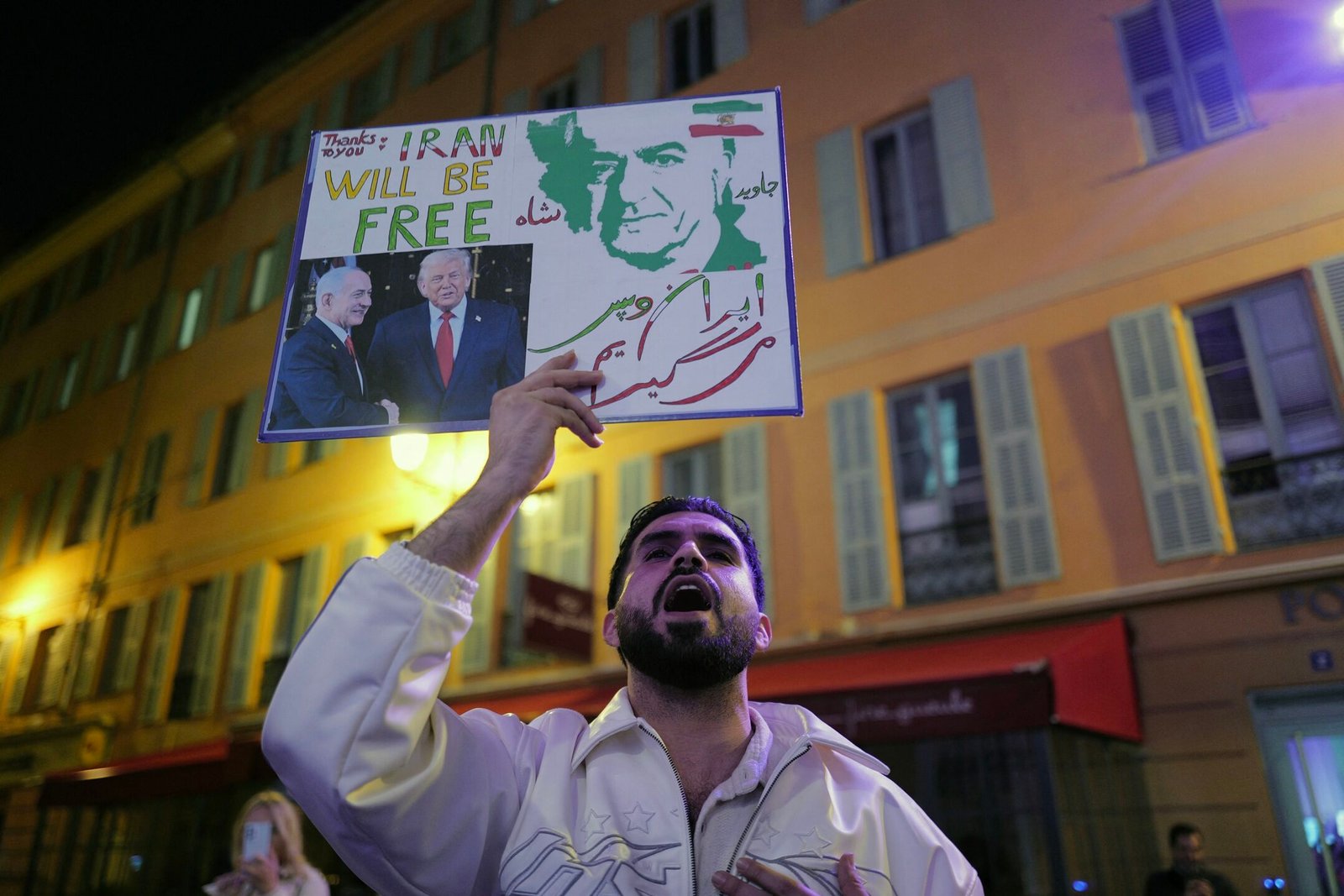
Neither the US nor Israel has declared regime change as its goal, and wisely so. After bitter experiences in Iraq, Afghanistan, and elsewhere, the US appears to have learned that regime change cannot be imposed from outside—it has to come from within. Anyone with experience in the Middle East, especially after the Arab Spring, understands that regime change is not a one-and-done project. It has to move through stages that can include military rule and could easily get stuck there, as it has in Egypt. President Trump and Netanyahu have both called on the Iranian people to rise up and take control, but that is probably impossible at this point, given how entrenched the repressive, cruel Islamist regime is. Maybe someday.
Meanwhile, President Trump and Netanyahu are tightly bound together in this war, and it is clear that the US president is making the rules. How did Israel relinquish, for all practical purposes, its power to decide its own future?
“Everything depends on where you start your history,” said a wise man—my eighth-grade history teacher—many years ago. You can trace the first clear sign of Israel’s romance with American Republicans and Donald Trump to a White House meeting between Israeli Prime Minister Benjamin Netanyahu and then-President Barack Obama on May 19, 2011.
At that meeting, Netanyahu lectured President Obama on camera in the Oval Office, rejecting the president’s concept of peace with the Palestinians. President Obama visibly seethed over the insult, and relations between the two leaders never recovered.
Nor was there any effort by Netanyahu to repair them. Quite the opposite. On March 3, 2015, when President Obama’s nuclear restriction accord with Iran was completed and ready for signature, Netanyahu flew to Washington to address a joint meeting of Congress. There, he outlined in strident terms why the accord should not be implemented.
Even if he was right, his timing and choice of words amounted to a second slap in the face not only to the president of the United States but also to the Democratic Party. By then, Netanyahu was a highly experienced diplomat, so this was clearly no accident—it was an intentional insult.
That decision helped turn support for Israel, which had historically been nearly unanimous, into a partisan issue. Republicans backed Israel, while angry Democrats—slowly at first, then with growing momentum over the past decade—turned against Netanyahu and then against Israel.
Now that shift has led directly to Israel’s dependence on the whims of the mercurial President Trump. So far, it has been a beneficial partnership, but President Trump’s history shows how quickly that could reverse. All it would take is one disagreement or one act of defiance. Netanyahu knows that, so he will not let it happen.
As for those first two questions: The war started when President Trump wanted it to start, based on joint intelligence from US forces and Israel, and will end when President Trump wants it to end. After alienating at least half of the American political spectrum, along with many other allies around the world, Israel will be dragged along.
Politics and personalities aside, the Iran threat is real. Iran attacks Israel both directly and through its proxy terrorist forces on Israel’s borders. It has also infiltrated and taken control of entire countries, including Lebanon, Iraq, and Yemen. Loosening Iran’s grip on those countries and neutralizing its proxies are vital steps toward regional stability.
Bottom line: Eliminating the Iranian nuclear and terrorist threat is the right thing to do. The question remains: Will this war solve the Iran problem once and for all? Probably not. At best, that is a process, not a one-and-done—or even a two-and-done.
With this war, chances are that the Trump-Netanyahu team has fired its last salvo. President Trump has angered legions of leaders and ordinary people around the world with his heavy-handed tactics, threats, lies, and authoritarian moves. His decision to ignore Congress has clouded the Iran mission. Netanyahu, for his part, has alienated half of the once-solidly pro-Israel American political world, not to mention a majority of his own people, through his refusal to accept responsibility for the failures that led to the Hamas massacre of October 7, with elections looming.
Still, stopping Iran stands apart as a justifiable goal for the tainted President Trump and Netanyahu. As the old adage goes, “Even a broken clock is right twice a day.”