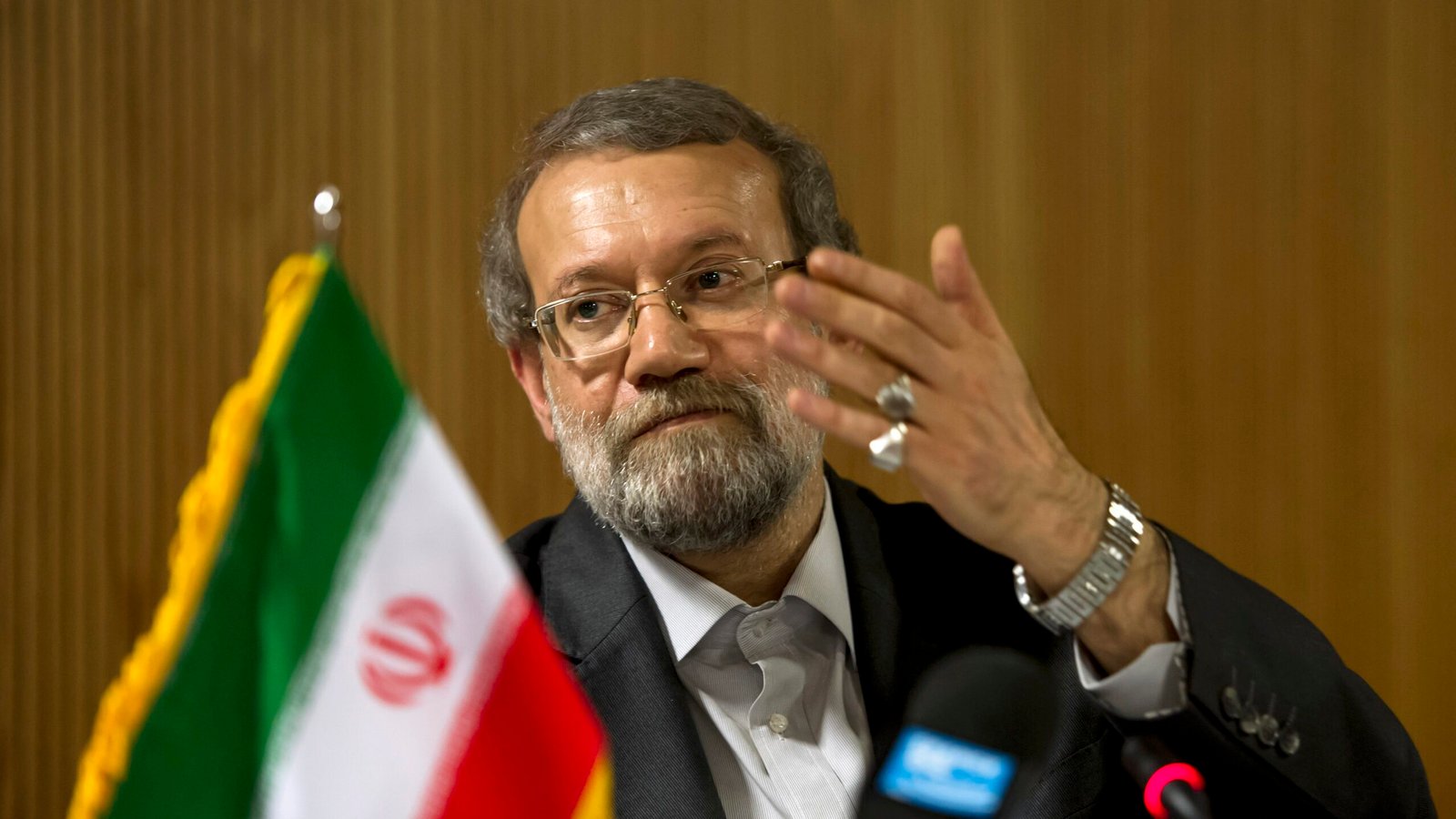
The Media Line tells the story of Ali Larijani as both biography and bill of indictment: a polished regime insider with philosophical training, a long résumé in Tehran’s power structure, and a direct hand in one of the bloodiest crackdowns in the Islamic Republic’s recent history. If Iran’s ruling class often tries to dress brutality in bureaucratic language, Larijani was one of its master tailors.
Reportedly killed in an Israeli strike on March 16 alongside Gholamreza Soleimani, the head of the Islamic Revolutionary Guard Corps Basij force, Larijani was no minor official caught near the blast. He was one of the central managers of the regime at a moment when the system was under wartime pressure, internal unrest, and leadership uncertainty. Early reports left some doubt about whether he had survived, which only added to the sense of chaos at the top.
Larijani’s path to power was classic Islamic Republic fare, though with a more polished finish than most. Born in Najaf in 1957 to a clerical family, educated in philosophy at the University of Tehran, he developed a reputation as an intellectual operator who could speak the language of ideology and statecraft at the same time. He ran state broadcasting, handled nuclear negotiations, and later served for 12 years as speaker of parliament, building an image as a pragmatic conservative who could work across factional lines when it suited the regime’s interests.
That image collapsed where it mattered most. During the January 2026 protests, Larijani aligned himself squarely with Supreme Leader Ali Khamenei and became one of the top officials linked to the decision to use lethal force against demonstrators. The crackdown killed thousands, by some estimates far more, and brought US sanctions down on him within days. Washington accused him of coordinating the suppression and ordering force against protesters.
Near the end, Larijani was seen as the regime’s chief mechanic, keeping the machine running after the reported death of the supreme leader and while Mojtaba Khamenei remained wounded, hidden, or both. The Media Line presents him not as a footnote, but as a key architect of repression whose removal may deepen the regime’s instability. Read the explainer for the fuller portrait of the man, the system he served, and the vacuum his death may leave behind.