Israeli authorities barred Muslim worshippers from entering Jerusalem’s Al-Aqsa Mosque compound for Eid al-Fitr prayers on Friday, marking a rare and highly contentious closure of one of Islam’s holiest sites during a major religious holiday.
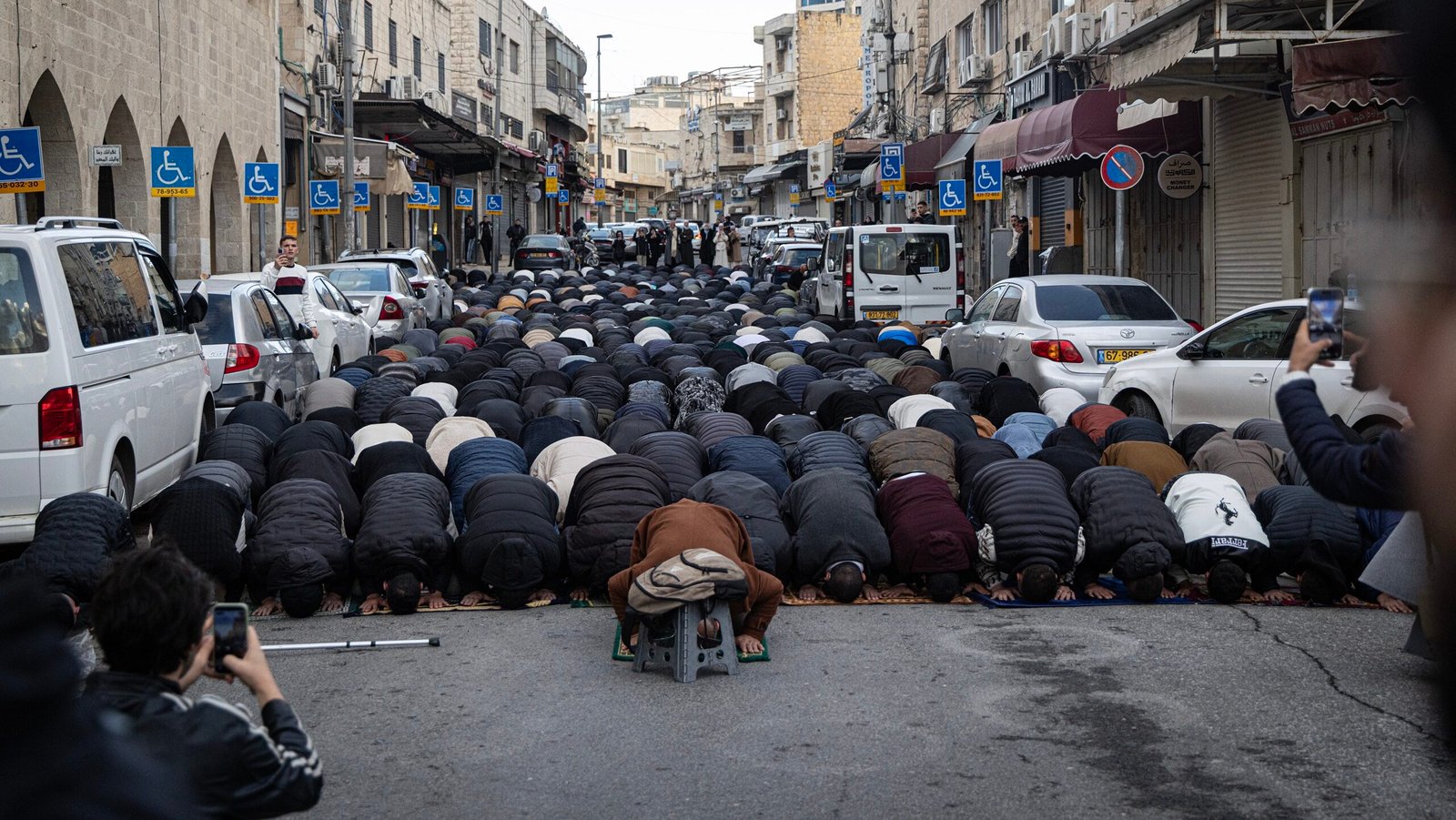
The restrictions, imposed amid heightened security concerns linked to the ongoing US-Israel conflict with Iran, prevented thousands of Palestinians from accessing the mosque. Many instead gathered for prayers in the streets surrounding the Old City under heavy police presence.
The closure comes against the backdrop of escalating regional violence that reached Jerusalem itself on Friday afternoon, when fragments from an Iranian ballistic missile struck the Old City. According to Israeli military reporting, the missile was intercepted, but debris fell near the Jewish Quarter, roughly 400 meters from the Western Wall and the Al-Aqsa compound, causing localized damage.
The incident underscored the volatile security environment cited by Israeli authorities, who said restrictions on access to the site were necessary to prevent mass-casualty events. Similar incidents earlier in the week saw missile shrapnel land near major religious landmarks, including areas around the Al-Aqsa compound and the Church of the Holy Sepulcher.
Still, the decision to close the mosque during Eid drew sharp criticism from Palestinian officials and religious leaders, who described it as a violation of freedom of worship and a departure from longstanding arrangements governing access to the site.
Witnesses described a subdued and tense atmosphere in Jerusalem, where Eid prayers typically draw tens of thousands to the compound. Instead, worshippers prayed near gates and checkpoints, with some attempting to approach the site before being turned back by police.
The closure is widely described as unprecedented in recent decades, with reports indicating it is the first time since 1967 that Eid prayers were prevented at Al-Aqsa.
The combination of restricted access and missile activity in and around Jerusalem has heightened fears that the already fragile situation surrounding the city’s holy sites could further deteriorate as the regional conflict continues.