The US and Israel’s conflict with Iran has drained munitions at an astonishing rate. This is placing pressure on the supply of a crucial metal: tungsten.
Tungsten is used in armor-piercing munitions and in components that need to withstand high levels of heat. It is an important additive in steel. Militaries around the world would grind to a halt without this strategically important element.
Yet, despite the current demand, the amount of tungsten mined each year is dwarfed by other metal ores, such as iron and aluminium (bauxite).
In addition, most of the world’s tungsten comes from China, which has recently placed restrictions on supplies. For some countries, including the UK, the push to secure new tungsten resources has never been more vital.
The English name for tungsten, comes from the Swedish “tung sten”, meaning heavy stone. Tungsten’s extreme hardness and resistance to thermal shock are what make it sought after for military technology.
In armour piercing munitions, dense tungsten alloy rods use the sheer velocity of their impact to tear through the armour on fighting vehicles and other hardened targets.

When purified, tungsten has the highest melting point of all metals: 3,422°C (6,192°F). Unsurprisingly, it is used in components that need to withstand high temperatures, such as those inside aircraft engines.
Tungsten, along with other metals such as molybdenum, is added to steel to improve its “hot hardness.” Where normal steel would deform at high temperatures, adding the other metals improves steel’s resistance to deformation at high temperatures.
They form carbides with the carbon in steel, making it more resistant to wear – and resistant to “creep,” in which where steel deforms in response to constant stress at high temperatures.
Because the tungsten and molybdenum atoms are significantly larger than iron atoms, they improve the “yield strength” of steel, preventing defects in the metal lattice from spreading. Steel is used to make lots of military hardware, so tungsten is vitally important.
Limited availability
All that being said, the global tungsten market is small. Tungsten is what is known as a “minor metal,” because it isn’t traded openly on exchanges like the London Metal Exchange. This makes pricing data opaque. While mining operations around the world produce around 2.6 billion metric tons of iron ore every year they only produce around 84,000 tonnes of tungsten.
Tungsten is also considered (alongside tin, tantalum and gold – which form a group often known as the 3TG metals) a conflict mineral. A significant quantity is mined in regions plagued by violence, forced labor and human rights abuses.
China produces around 80% of global tungsten – and does it so cheaply that it is hard for Western firms to compete. In the US, commercial tungsten mining ceased in 2015.
China produces around 80% of global tungsten – and does it so cheaply that it is hard for Western firms to compete. In the US, commercial tungsten mining ceased in 2015.
Beijing is leveraging its dominant position to control tungsten supply through a sophisticated state trading and licensing regime. Exports of critical derivatives are restricted to a “whitelist” of authorized state-owned firms.
This funnels a huge supply of the metal through a government monitored pipeline. In February 2026, China imposed export controls and reduced mining quotas, limiting tungsten availability. Beijing’s actions have introduced significant friction into Western supply chains for military and aerospace applications of tungsten.
Draining stockpiles
Amid the geopolitical turmoil that is unfolding in the Middle East, there is a newfound gargantuan appetite for tungsten, with every bomb, missile and kinetic interceptor further draining stockpiles.
This presents an intractable problem for the defense industry. There has been a 12% increase in the use of military tungsten this year alone – in helicopters, fighter jets and munitions. This is hard to accommodate in a market with no availability.
Global logistics are further complicated by the challenges to global shipping created by the war. This puts a strain on the movement of mining equipment and supplies for processing by the handful of mines outside of China.
UK is getting back in the game

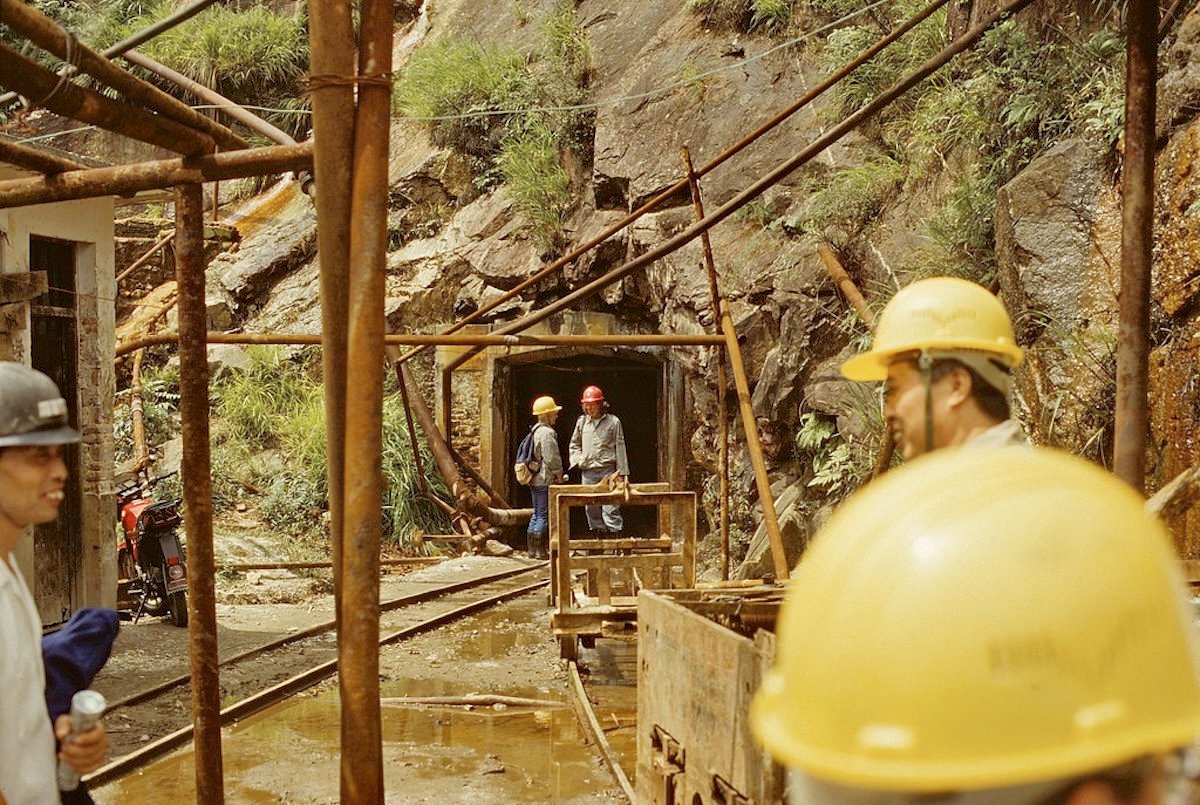
Today, there is an economic and strategic opportunity for the UK. The Hemerdon mine in Devon hosts the fourth-largest tin-tungsten deposit in the world, and is a “shovel ready” project being revived by Tungsten West, a mining development company.
Farther south, Cornwall Resources’ Redmoor site has revealed high-grade tungsten, tin and copper deposits. This could give the UK a competitive edge in mining and primary extraction, given the current market conditions.
Tungsten also has a recycling rate of 42%, which is higher than for many other critical materials. The recycling rate is the proportion of end-of-life tungsten that is diverted from landfill and made available for reuse. Around 30-35% of the global tungsten supply is derived from scrap (which is to say the proportion of new material made from recycled content).
In western markets, this figure is approximately double – around 70%, because of China’s dominance of the tungsten market. This scrap comes from both manufacturing waste and end-of-life products.
However, supply shortages can often be a catalyst for innovation. In the second world war, metallurgists faced a critical shortage of molybdenum. German U-boat attacks on shipping convoys stymied supplies of this material. This forced metallurgists at UK engineering company Vickers to innovate, and recycle molybdenum from mining drill bits.

In the past, war has forced innovation to ensure the flow of critical materials. We can learn lessons from Britain’s response to molybdenum shortage in the second world war.
The limited global tungsten supply continues to present significant challenges for many countries. One factor that limits stocks is deteriorating ore grades from primary supply (which is to say the concentration of valuable metal inside mined rock is dropping over time). Another is the restrictive export licensing from China.
The current situation has pushed prices to historic highs and challenges the just-in-time nature of many supply chains.
Gavin D. J. Harper is a research fellow, Birmingham Centre for Strategic Elements & Critical Materials, University of Birmingham.
This article is republished from The Conversation under a Creative Commons license. Read the original article.