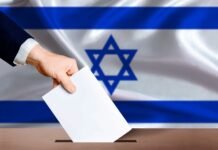
Municipal elections in the occupied West Bank and in the central Gaza city of Deir al-Balah on April 25 have been quickly framed by Fatah, the dominant faction within the Palestinian Authority (PA), as a sweeping victory.
But it’s worth taking a closer look at how the election was organised. Candidates were required to commit to the political programme of the Palestine Liberation Organisation (PLO), which which includes the recognition of Israel, the renunciation of terrorism and the pursuit of a two-state solution. It was a condition that was widely seen as effectively excluding Hamas, which does not support these policies.
Hamas – which is understood to be preparing to hold elections for its leadership, which has been decimated during the 30-month conflict in Gaza – did not field candidates. A number of other groups, including the People’s Front for the Liberation of Palestine, the Democratic Front for the Liberation of Palestine, the Palestine People’s Party, FIDA, and Palestinian National Initiative, also opted not to field candidates in the election.
It’s important, when looking at the turnout and results, to bear this in mind. In the West Bank, turnout reached around 56%, but Fatah-affiliated lists were elected unopposed in 197 councils, roughly half of all municipalities in this round.
In the Gaza Strip, voting took place only in the central city of Deir al-Balah. Here, turnout was significantly lower, at around 23%, reflecting the mass displacement, incomplete voter registries and widespread loss of life. The Fatah-backed list won six of 15 seats. A list widely seen as aligned with Hamas secured two seats, with the remainder going to non-affiliated groups.
For the Fatah-dominated Palestinian Authority, these municipal elections serve several purposes. They are presented as a way to reaffirm a political link between the West Bank and Gaza, and to signal a continued role in Gaza’s future governance. They also offer a platform promising reforms to the watching world at a moment when the PA faces pressure to demonstrate political legitimacy.
While regular municipal elections have been held in the West Bank, presidential and legislative elections have not been held since 2005 and 2006. In the intervening two decades, concerns over the concentration of power under Fatah leader Mahmoud Abbas have intensified. In this context, the municipal elections represented a lower-stakes form of participation. It was a way to show electoral activity without reopening the broader question of national leadership.
Rather than a clear mandate, the results point to a constrained political landscape, shaped as much by exclusion and limited participation as by electoral competition. What these elections will change on the ground is unclear, particularly in Gaza, which remains stricken by 30 months of war.
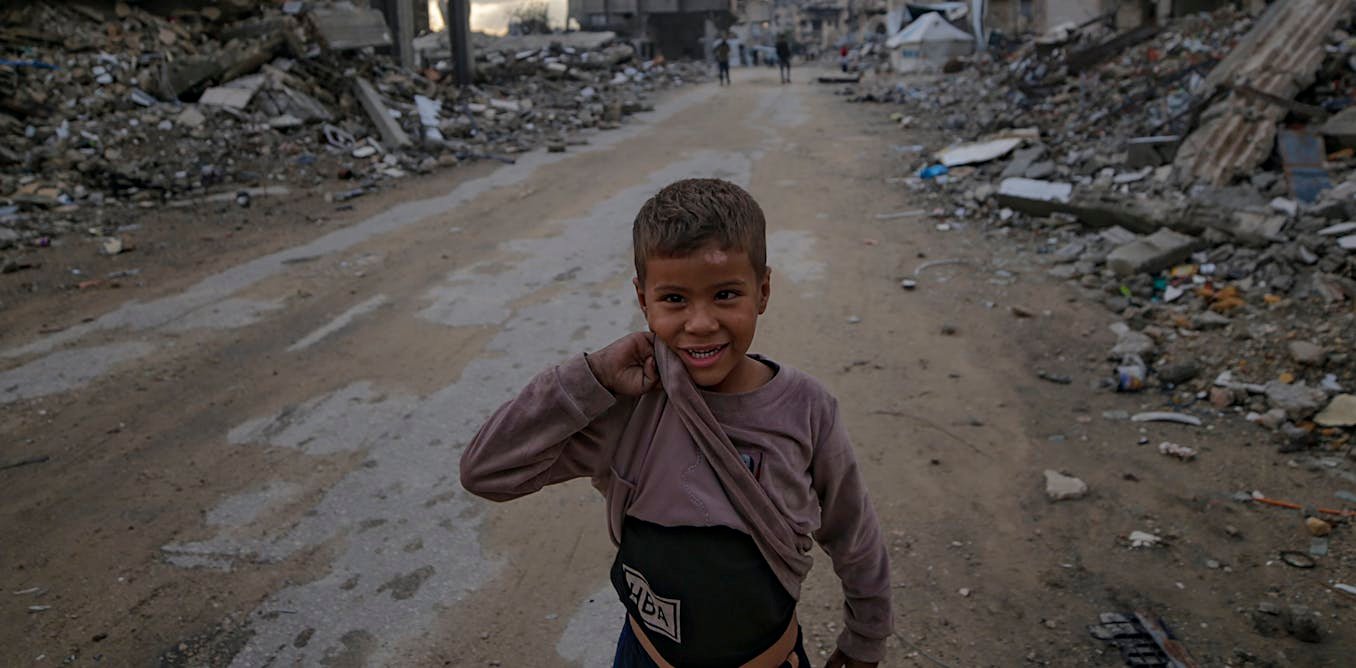
Gaza in ruins
According to the UN, over 1.9 million people – between 80% and 90% of Gaza’s population – are displaced – six months into what is supposed to be a ceasefire. Families live in damaged homes, tents or overcrowded shelters, without reliable access to clean water, electricity, food or healthcare.
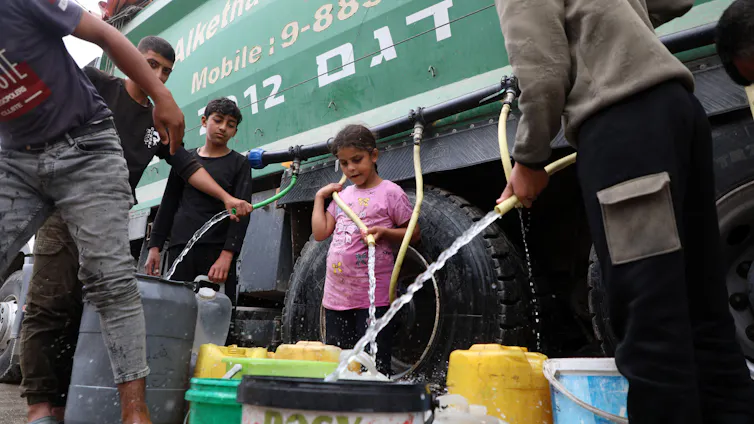
According to the World Health Organization, only 19 of Gaza’s 36 hospitals function even partially and nearly half of essential medicines have run out. Conditions in displacement sites are deteriorating. Around 81% of sites show signs of rodents or pests, affecting 1.45 million people and increasing public health risks.
A recent joint World Bank–EU–UN assessment estimates that the recovery and reconstruction of the Gaza Strip will cost more than US$70 billion (£52 billion). The restoration of housing alone accounts for US$18 billion in damage, while more than 68 million tonnes of debris will need to be removed before rebuilding can begin.
But reconstruction depends on access to materials, land and infrastructure and Israel continues to control all of these. Israeli authorities control the entry of aid into Gaza, funnel deliveries through a single crossing, impose inspection regimes that delay or halt shipments, and close crossings altogether. Aid entering Gaza fell by 37% in the three months to April 2026, as raids and other ceasefire violations continue.
Reconstruction without Palestinians
While the people of Gaza remain in these conditions, outsiders are moving ahead with plans to shape Gaza’s future. In November 2025, the UN Security Council endorsed resolution 2803, backing a US-led initiative known as the Board of Peace to oversee the territory. When it first met on February 19, the Board of Peace pledged around US$17 billion – including US$10 billion from the US and additional commitments from Gulf states such as the UAE, Qatar, Saudi Arabia and Kuwait.
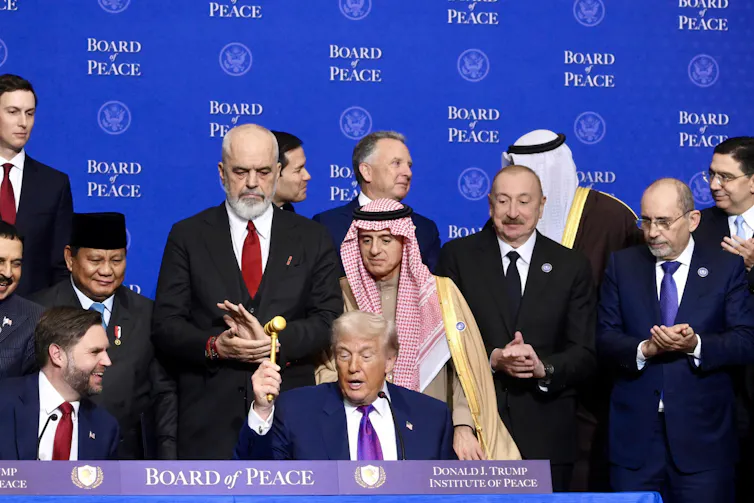
Palestinians have no representatives on the Board of Peace, which is chaired by the US president Donald Trump, who also sets the agenda and calls meetings. Israel, however, does, as do Trump’s most prominent envoys, Jared Kushner and Steven Witkoff, who both have considerable business and real estate interests in the Middle East.
Palestinian civil society organisations have warned that the Board of Peace excludes Palestinians from meaningful decision-making and undermines their right to self-determination. European governments have also raised concerns about the concentration of authority in the hands of the US president and the lack of oversight.
Control over funding is also taking shape. The Gaza Reconstruction and Development (Grad) fund is structured as a World Bank Financial Intermediary Fund, with the bank acting as “limited trustee”. In practice, this means the World Bank manages donor money but has no say in how the money is spent. But World Bank president Ajay Banga also sits on the Board of Peace executive board, placing the institution inside the political structure that sets priorities.
In documents related to the Grad, the World Bank describes this moment as an opportunity to “fundamentally reshape” Gaza’s economy through private investment. The vision, as has been widely covered in the media, is to transform Gaza into a “hub” in the Imec development corridor that links India to the Middle East and beyond. The rebuilt Gaza would include a major port, high-tech industrial development, data centres and tourism resorts. Little provision has been made for the restoration of Palestinian homes, healthcare or water and power infrastructure.
Read more: Donald Trump’s vision for Gaza’s future: what a leaked plan tells us about US regional strategy
Recent discussions with the Dubai-based port operator and logistics company DP World appear to highlight Board of Peace priorities. In April 2026, representatives linked to the board explored bringing the company in to manage key parts of Gaza’s supply chains, including warehousing, tracking systems and the movement of both humanitarian and commercial goods.
The talks also included proposals for a new port in Gaza or on the Egyptian coast, as well as a free-trade zone. It’s a plan for market-led development in its most concentrated form, which envisages the reconstruction of Gaza to serve regional and global economic interests. It reflects external priorities, not the needs on the ground in Gaza.