From the outset of the war between the United States and Israel and the announcement of a ceasefire, approximately six weeks elapsed. After the third week, a noticeable shift emerged in the war policies of the United States and Israel, one that appeared to reflect a change in their strategic objectives.
Following mass protests by millions of Iranians across the country rejecting the Islamic Republic at the call of Crown Prince Reza Pahlavi on January 8 and 9, and demonstrations by approximately 1.5 million Iranians worldwide on February 14 in support of the Iranian people’s struggle, it seemed that President Trump and Prime Minister Benjamin Netanyahu had come to believe that the people of Iran, under unified leadership, both desired and were capable of overthrowing the Islamic Republic.
Accordingly, during the second and third weeks of the war, the focus shifted toward targeting the Islamic Republic’s repressive apparatus. Members of the Islamic Revolutionary Guard Corps (IRGC) and Basij who had established checkpoints were struck by Israeli drones and micro aerial vehicles. By the third week, conditions had become so perilous for these forces that, fearing for their lives, many avoided sleeping in their homes. Instead, they took shelter in tents, under bridges, or even on cardboard along the streets of Tehran.
Beginning in the fourth week, the trajectory of the war changed. It appeared that President Trump and Netanyahu had become resigned to the continuation of the Islamic Republic’s rule over a devastated Iran. The objectives of the war shifted from dismantling the regime’s repressive machinery to targeting Iran’s economic infrastructure. Facilities such as the Qeshm desalination plant, steel factories, bridges, and railway lines were struck.
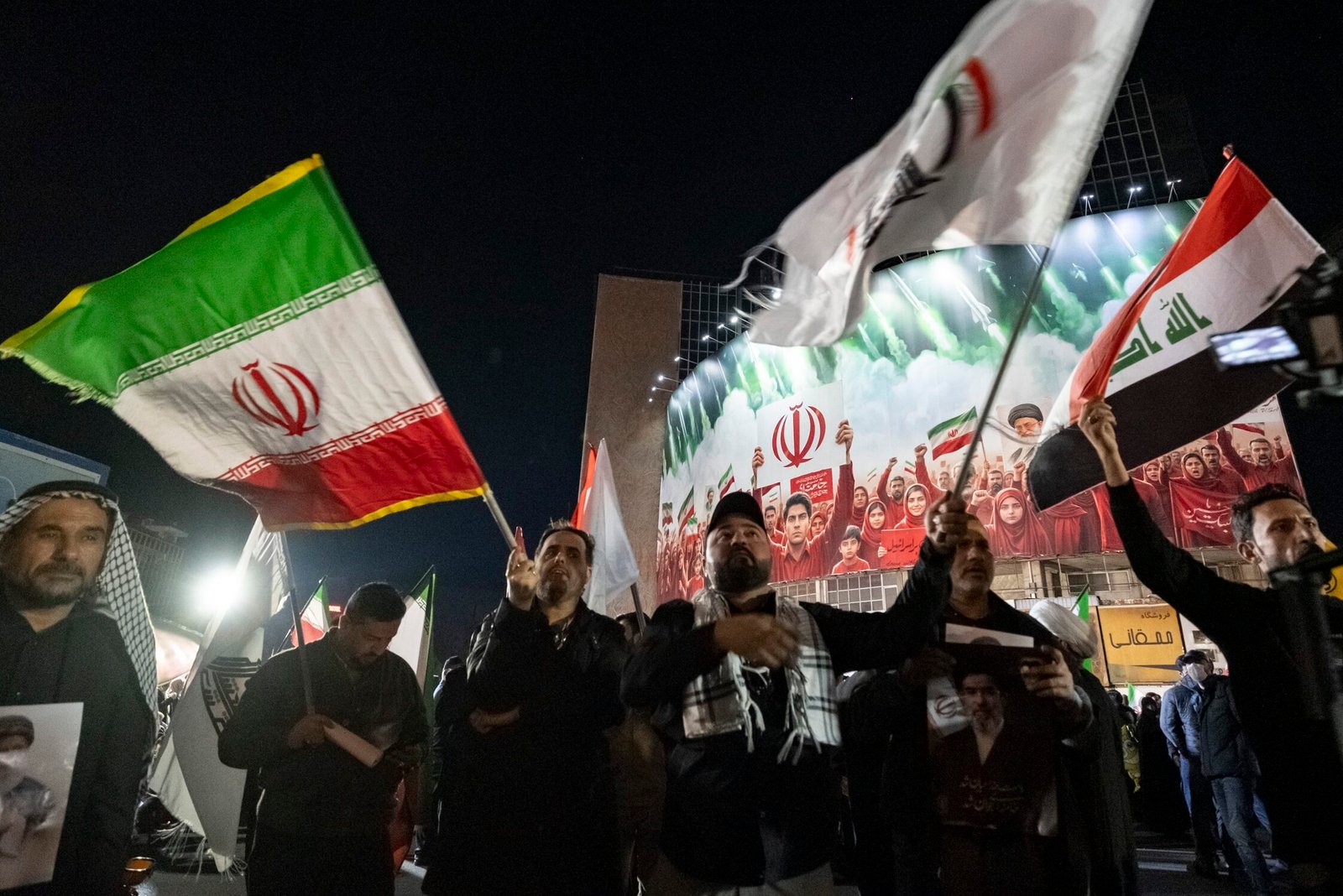
This deprioritization of dismantling the regime’s repressive apparatus became increasingly evident. In the fifth week of the war, on April 3, a convoy of approximately 15,000 armed members of the Popular Mobilization Forces, an IRGC proxy force, entered Iran from Shalamcheh with around 1,500 pickup trucks flying Iraqi flags, without resistance. They were publicly received by a cleric in front of the Islamic Republic’s propaganda cameras. The following day, April 4, thousands of members of the Afghan Fatemiyoun and Pakistani Zainabiyoun brigades paraded through Tehran in their own vehicles in complete security in support of the IRGC. These developments clearly signaled a shift in the war policies of the United States and Israel.
This shift occurred even as US and Israeli forces intensified their bombardments and expanded their target set to include nonmilitary infrastructure. It suggested that empowering the Iranian people to overthrow the Islamic Republic was no longer a central objective. Instead, it appeared that the United States and Israel had concluded that allowing the Islamic Republic to rule over a severely weakened and economically crippled country would limit its ability to pose a serious regional threat. President Trump’s references to a “Venezuela model” for Iran seemed to reinforce this interpretation.
Most Iranians support a strategy that weakens the Islamic Republic to the point of collapse through a mass uprising, while opposing any approach that would reduce Iran to a nonindustrial wasteland. A devastated Iran in which a wounded and embittered Islamic Republic continues to survive would likely resort to the mass killing of its own citizens to maintain control, while simultaneously escalating external tensions to manage internal unrest, thereby remaining a persistent threat to both Israel and neighboring countries.
It is likely that US negotiations with the Islamic Republic in Pakistan will not produce the desired outcome and that hostilities may resume. We therefore respectfully urge that, if the war recommences, efforts be made to avoid damage to Iran’s civilian and economic infrastructure. Instead, as in the first three weeks of the war, the focus should return to weakening the Islamic Republic’s repressive apparatus. By diminishing the regime’s capacity for repression, and with timely logistical support from Israel, the people of Iran can ultimately free themselves and, in doing so, eliminate the threat posed by the Islamic Republic to both themselves and the people of Israel.