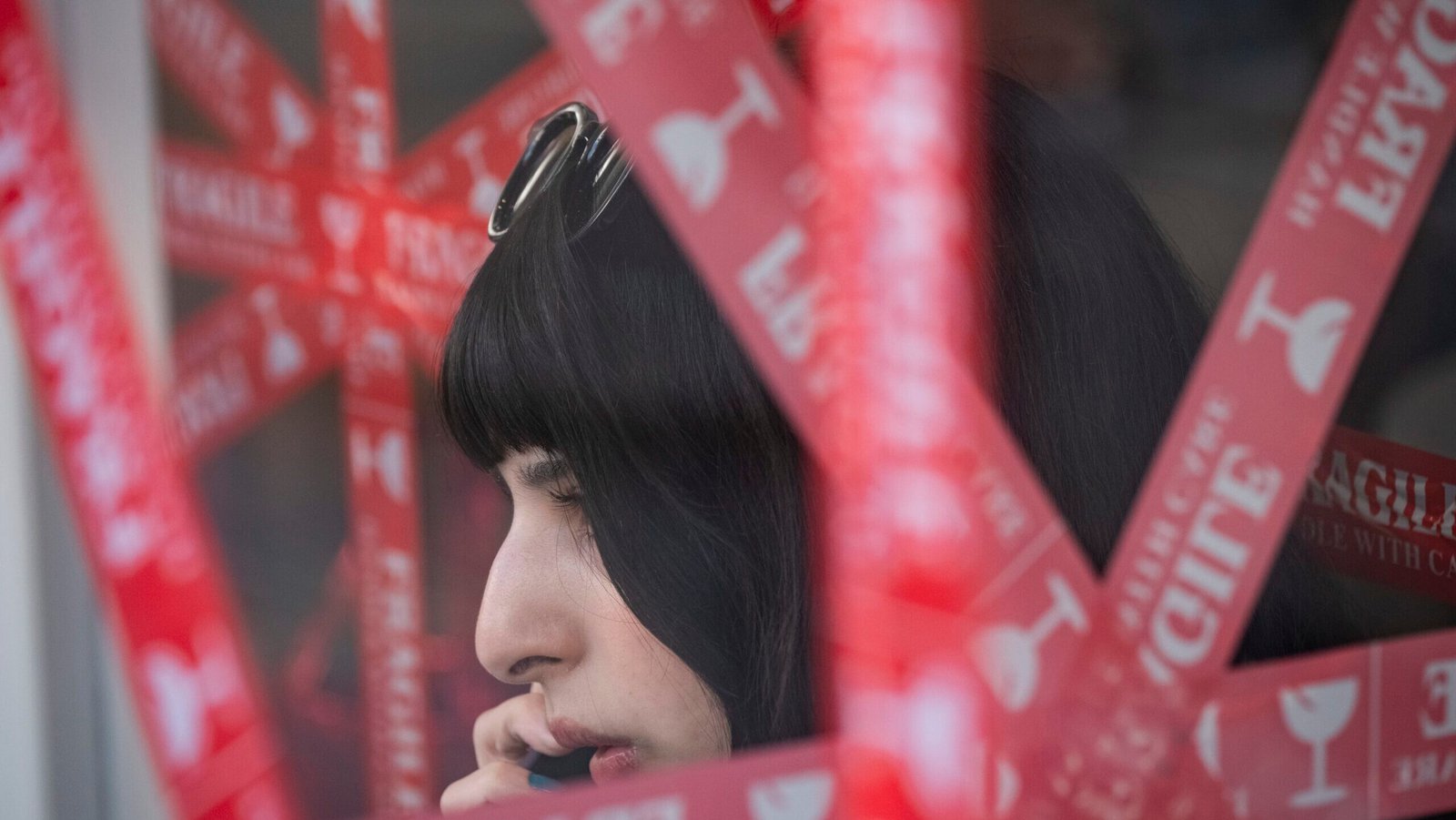
The Islamic Republic has intensified executions of opponents, with at least 15 individuals publicly executed. Human rights groups warn that the true number may be significantly higher.
Exclusive information obtained by The Media Line reveals that sexual assault and abuse of detained women—particularly young women—has sharply increased in prisons and detention centers run by the Islamic regime in Iran.
One young woman told The Media Line that she was sexually assaulted during interrogation, and that heavily-built officers used batons to carry out the abuse.
Despite the temporary ceasefire extension, many in Iran fear further escalation. At the same time, repression has intensified. Communications have been severely restricted both inside and outside the country, with widespread internet shutdowns. Reports also include arrests, enforced disappearances, kidnappings, and sexual assault in detention, along with increased threats against journalists and dissidents abroad and a surge in sudden executions of opponents.

Since the ceasefire, the repression of opponents has intensified, and cases of rape and sexual assault against detained women have increased significantly. (Morteza Nikoubazl/NurPhoto via Getty Images)
Kamelia, a female protester recently released from detention in one of Iran’s cities, told The Media Line that she was violently arrested during a midnight raid on her home by masked, armed men in front of her partner. Despite her repeated protests, she said she was sexually harassed, and her partner was severely beaten after objecting to the abusive arrest.
According to Kamelia, she was held for two weeks in a 20-square-meter room with eight other women, including a 16-year-old girl who had been shot in the face with pellet ammunition by security forces and arrested in that condition. She reported that the girl’s wounds were merely bandaged, with no effort made to remove the pellets.
After two weeks, Kamelia was transferred to solitary confinement and interrogated for the first time by a man and a woman who verbally abused her, calling her a prostitute and a spy, despite the absence of formal charges beyond participation in anti-regime protests. They pressured her to falsely confess to links with opposition groups and to organizing demonstrations.
When she refused, Kamelia says she was attacked in the interrogation room by several heavily-built officers who appeared unstable. They tore her clothes, raped her with a baton, violently handled her body, beat her severely, and threatened her with gang rape.
She was eventually released on heavy bail following pressure from her family. She asked her lawyer to file a complaint over sexual assault, but was told doing so could worsen her sentence. Now suffering from severe psychological trauma, she is under psychiatric and clinical care and is receiving strong antidepressant medication.

Ahmad Khodaei, whose wife was killed by regime agents during his arrest, had said that after receiving messages stating that his wife’s body had been sexually desecrated by agents in the morgue, he intended to take his own life, but was ultimately saved from death. (Social media)
In recent days, Ahmad Khodaei, a protester, attempted suicide after posting on Instagram that security agents told him they had sexually violated the body of his wife, Saleheh Akbari, an operating room technician who was killed during protests in Ardabil. He said agents sent him messages claiming they had desecrated her body in the morgue and shared images. Khodaei described this as worse than the torture he endured in detention, which left him with broken ribs and kidney damage.
According to reports, agents raided their home to arrest Khodaei after he and his wife had publicly offered medical assistance to injured protesters. Saleheh Akbari defended her husband and was shot dead in the chest in front of her husband and child.
After his release, Khodaei became severely distressed upon receiving the messages and images and called for justice in a farewell post. Authorities later denied both the killing and his suicide attempt, claiming he was a fugitive and accused him of spreading false information.
However, human rights activists in the region confirm that Saleheh Akbari was killed by security forces in her home and that her husband was detained and later released on bail.
In recent weeks, the Islamic Republic has intensified executions of opponents, with at least 15 individuals publicly executed. Human rights groups warn that the true number, including secret executions or deaths caused by denial of medical care, may be significantly higher. Among those executed are members of the Mojahedin-e Khalq and protesters from the January uprising.

Narges Mohammadi was violently arrested and imprisoned after delivering a speech in Mashhad. She suffered a heart attack in prison, but authorities are refusing to provide medical treatment, and her life is in danger. (Instagram)
Narges Mohammadi, the Nobel Peace Prize laureate, is among those whose lives are at serious risk. She, who suffered a heart attack in Zanjan prison, has been left without medication or treatment. On Tuesday, she spent her 54th birthday in prison without any contact with the outside world, having already spent ten years of her life in various prisons of the Islamic Republic.
After being attacked by pro-monarchist supporters in Mashhad, where she was delivering a speech at a ceremony marking the suspicious death of lawyer Khosro Alikordi,
Narges Mohammadi was subjected to a brutal assault by the regime’s security agents, who arrested her along with several well-known female activists, including Sepideh Qolian, after beating them. Some eyewitnesses say that individuals who were posing as supporters of Reza Pahlavi and throwing stones at Narges Mohammadi were cooperating with security agents to suppress and arrest those present at the ceremony.
Nasim, a student activist in Tehran, told The Media Line that although both monarchists and supporters of the Islamic Republic are in favor of war, the repression of the people has intensified following the outbreak of the war.
Universities, factories, commercial and production centers, and bazaars—which had been the main centers of protest in recent months—have been shut down. Islamic Revolutionary Guard Corps and Basij forces, armed with heavy weapons, have been widely deployed across all city streets alongside various security forces and police, and the regime has brought its armed supporters into the streets to prevent protesters from appearing in public spaces.
In addition, the number of arrests of opponents has increased dramatically, with dozens of people detained every day across the country on various pretexts, including espionage or links to Persian-language media abroad. Some are forced into making fabricated confessions, which are broadcast on state media to intimidate the public.
According to Nasim, if the January protests and strikes had continued their course without calls from outside the country, the regime would not have found a pretext for the mass killing of people on January 8 and 9. Over time, the continuation of these protests would not only have deepened and expanded but also would have caused many of the regime’s supporters to question their continued backing of the regime.
More than 100 days after what activists describe as an unprecedented crackdown—where thousands were reportedly killed in just two days, and total fatalities have been estimated as high as 33,000—the full scale of the violence continues to emerge. A 19-year-old girl, Noush Afarin Mohitian, described in a video how she and her mother were shot after returning from a birthday party by security forces, leaving her wounded while her mother was killed by a gunshot to the heart. Shortly after posting the video, which received significant attention on social media, she apparently deleted it from her page due to threats and pressure.
The harrowing account of Noush Afarin, a young pianist who was shot five times by military and security forces, and whose mother was killed. #Iran #IranMassacre pic.twitter.com/J5gTM1wqZN
— Omid Habibinia (@omidhabibinia) April 21, 2026
During the uprising, tens of thousands were also injured. The Media Line had previously revealed in an exclusive report that some of the wounded were taken from hospitals by military and security forces while they were still alive, transferred into body bags, and left to die.
Related Story: Exclusive to TML: Iranian Protesters Shoved Alive Into Body Bags
Repression has also targeted minorities, including religious groups. In recent weeks, many Baha’is have been arrested, including Shakila Ghasemi, who has been held for over 11 weeks without access to a lawyer.

Shaqayeq Ghasemi, the twin sister of Shakila Ghasemi, told The Media Line that her sister has been imprisoned for about 11 weeks and is being held in Kerman in poor physical and psychological condition, without being allowed to consult with a lawyer. (The Media Line)
Shaqayeq Ghasemi, her sister, told The Media Line: “My sister has insisted that she did not participate in the protests, and it remains unclear what charges have been brought against her.” She says that her twin sister has been held in solitary confinement since her arrest and was recently transferred to the prison infirmary, but the family has no precise information about her condition. During this time, they have only been allowed one visit, during which their mother realized that Shakila’s physical and psychological condition was extremely serious.
My sister has insisted that she did not participate in the protests, and it remains unclear what charges have been brought against her
Baha’is are regarded as an illegal minority in the Islamic Republic. They are not permitted to study at universities, work in government jobs, and face other restrictions, despite the fact that they are the largest religious minority in Iran. A large number of religious minorities left Iran after the establishment of the Islamic Republic and emigrated abroad, including many Iranian Jews—once numbering around 100,000—who settled in Israel or the United Kingdom.
Meanwhile, intense drone and missile attacks on the Kurdistan Region and against Kurdish parties continue, resulting in the killing and wounding of several peshmerga in recent days. Rada Fatehi, a human rights activist, told The Media Line that a number of Kurdish political prisoners are at risk of execution.
She also said that many political prisoners in both official and secret prisons across the country have been deprived of regular meals, drinking water, medical care, access to prison stores, in-person visits, and basic items such as soap and shampoo, or that access to these necessities has been severely disrupted, putting the lives of prisoners with chronic and serious illnesses at risk. Human rights activists say that three Kurdish prisoners have been sentenced to death by a court in Mahabad.
Related Story: The Tragedy of Ghazal: Youngest Kurdish Female Peshmerga Dies After IRGC Drone Strike and Medical Neglect
Azadeh Pourzand, Head of the State–Society Relations Unit at the Center for Middle East and Global Order, told The Media Line that the human rights situation in Iran has deteriorated further since the outbreak of the war: “Rather than a sudden shift, what we’re seeing is a continuation of an already deteriorating trajectory. Even before the war, there were serious abuses—including the January 2026 massacre, a high number of executions, and widespread arrests.”

Azadeh Pourzand, a Senior Fellow at the Center for Middle East and Global Order, told The Media Line that the human rights situation and the repression of opponents have worsened in Iran since the outbreak of the war. (The Media Line)
She continued, “What the war has done is intensify this pattern: it has strengthened the state’s propaganda apparatus, enabled further securitized charges and prosecutions, and taken place alongside internet shutdowns—altogether creating and sustaining an atmosphere of profound fear.”
Certain groups are particularly at risk of execution, Pourzand explained; “Ethnic minorities—particularly Kurds and Baloch—have long accounted for a disproportionate share of executions in Iran, including on security and drug-related charges. Protesters have also faced execution in the past, but in the current war context, they appear increasingly vulnerable, with detainees from before the escalation now being systematically given death sentences and, in some cases, executed.”
The Human Rights Organization of Iran declared that repression of opponents has intensified significantly following the war, and that at least 3,646 people have been arrested and imprisoned in cities across Iran since the outbreak of the conflict. However, the real number of detainees may be far higher, as in addition to internet shutdowns, phone communication between inside and the outside world has been severely restricted, greatly limiting access to reliable information.

Bita Hemmati, along with her husband Mohammadreza Majidi-Asl, has been accused of attacking security agents during the January uprising and has been sentenced to death. (Social media)
On Tuesday, US President Donald Trump, in a post that was also republished by the White House, called on the authorities of the Islamic Republic to release eight women reportedly at risk of execution. One of them is Bita Hemmati, who is said to have been sentenced to death on charges of “enmity against God” (Moharebeh) alongside her husband and two other protesters.
“To the Iranian leaders, who will soon be in negotiations with my representatives: I would greatly appreciate the release of these women. I am sure that they will respect the fact that you did so. Please do them no harm! Would be a great start to our negotiations!!!” – President… pic.twitter.com/pxU8xZFvAh
— The White House (@WhiteHouse) April 21, 2026
Some human rights activists say that other female protesters, including 18-year-old Melika Azizi, who was arrested after being beaten during the January 8 protests in Rasht, also face the risk of a death sentence on charges of “enmity against God” for burning the flag of the Islamic Republic.
The judiciary immediately denied issuing death sentences for these eight women following President Trump’s request, and said that some of them had been released. However, sources familiar with the cases of political prisoners told The Media Line that the death sentence issued for Bita Hemmati—whose case includes charges of attacking regime agents, along with her husband and two others—is accurate.
On Tuesday, the Islamic regime executed Amirali Mirjafari on charges of setting fire to Qolhak Mosque in north Tehran during the January uprising. It is reported that, in recent weeks, summary courts—reportedly acting on the orders of Gholam-Hossein Mohseni-Eje’i, head of the judiciary—have issued dozens, or even hundreds, of death sentences against protesters and opponents of the regime. Above all, there is growing concern for those whose death sentences have received final approval.

Three women—Sharifeh Mohammadi, Pakhshan Azizi, and Varisheh Moradi—are at risk of death following the confirmation of their death sentences. (Social media)
At present, among female prisoners, three leftist detainees—labor activist Sharifeh Mohammadi, along with Pakhshan Azizi and Varisheh Moradi, who are accused of links to Kurdish opposition parties and whose death sentences have been confirmed—are at risk of being killed by the Islamic Republic.