Pakistan Takes a Leap into Human Spaceflight with Landmark China Collaboration
By Arshad Mehmood/The Media Line
Pakistan’s Space and Upper Atmosphere Research Commission (SUPARCO) on Wednesday announced a landmark advancement in the country’s Manned Space Mission Program.
Two astronaut candidates, Khurram Daud and Muhammad Zeeshan Ali, are set to depart for the People’s Republic of China to begin advanced astronaut training. The training will take place at the Astronaut Center of China.
This development builds on the bilateral Astronaut Cooperation Agreement signed in February 2025 between SUPARCO and the China Manned Space Agency (CMSA).
After initial screening in Pakistan and comprehensive medical, psychological, and aptitude assessments, two candidates were shortlisted in line with international human spaceflight standards.
According to Pakistan’s Ministry of Information and Broadcasting, this is a significant step forward in Pakistan’s space exploration journey, positioning the country among a select group of nations actively engaged in human spaceflight programs.
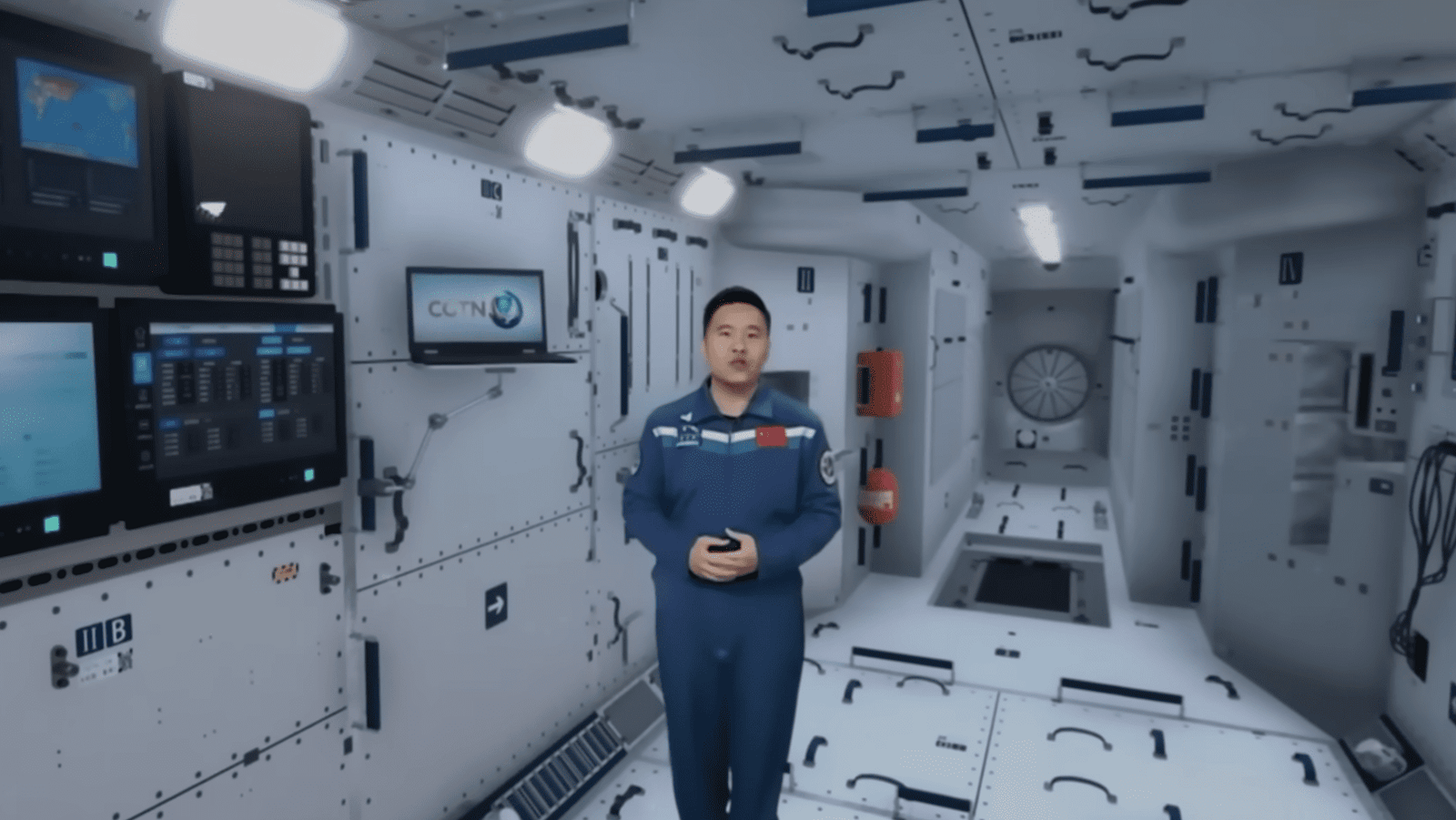
Under this collaboration, Pakistan is preparing for its first-ever mission to the China Space Station (CSS).
The mission is currently planned for launch in late 2026, with a Pakistani astronaut serving as a payload expert.
During the mission aboard the CSS, the Pakistani astronaut will conduct several scientific experiments in microgravity.
These experiments span critical areas including materials science, fluid physics, life/bioscience, and biotechnology, with potential applications for climate resilience, food security, and industrial innovation.
This milestone reflects the deepening Pakistan-China strategic partnership in space exploration and highlights SUPARCO’s progress toward independent human spaceflight capabilities. Prime Minister Shehbaz Sharif and other leaders have highlighted it as a testimony to bilateral friendship and a harbinger for future deep-space endeavors.
This milestone places Pakistan among a select group of nations involved in human spaceflight and is expected to contribute to areas such as climate research, food security, and industrial innovation.
Pakistan–China cooperation in space technology has evolved into a long-term, strategic partnership built on concrete milestones and shared capabilities.
China has supported Pakistan’s satellite development through projects such as PakSat-1R and the more recent PakSat-MM1, while also collaborating on remote sensing and communication technologies.
The February 2025 astronaut cooperation agreement between SUPARCO and the CMSA marked a new phase, extending collaboration into human spaceflight.
Under this framework, Pakistan is preparing to send its first astronaut to the China space station by 2026, alongside joint research in microgravity sciences.
This ongoing cooperation includes technology transfer and capacity building, while also highlighting China’s role as Pakistan’s main partner in developing its space program and helping it build its own capabilities in satellite systems and human space exploration.