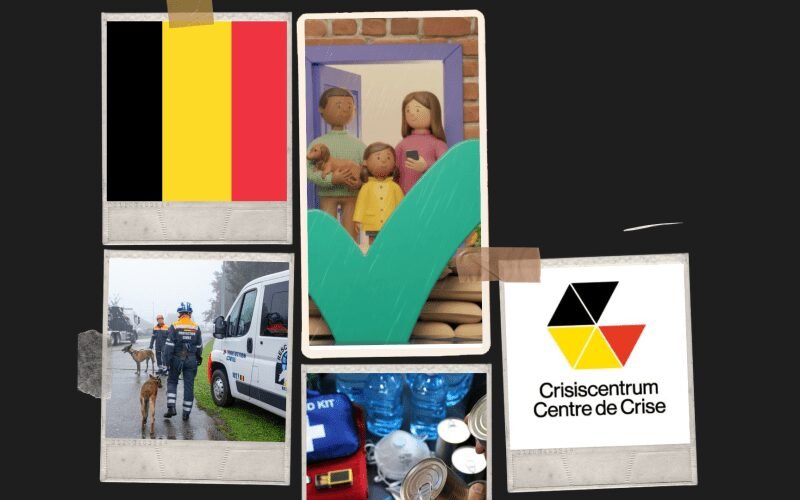
Belgium’s National Crisis Centre has launched a nationwide campaign urging citizens to be ready to cope independently for up to 72 hours in the event of an emergency. The initiative formalises earlier EU guidance and reflects a broader shift in how European governments approach civil preparedness.
Authorities stress the message is precautionary rather than alarmist. Citizens are encouraged to keep basic supplies at home—such as water, non-perishable food, medicines, and lighting—so they can manage short-term disruptions without immediate state support.
The campaign, titled “Prepared Together,” will run over four years and focuses first on ensuring people know where to access reliable information during a crisis, including official alert systems. Officials warn that misinformation can spread quickly in emergencies, making trusted communication channels essential.
The push comes against a backdrop of evolving risks, including cyberattacks, extreme weather, and wider geopolitical instability. Belgian officials argue that stronger individual preparedness not only improves personal resilience but also allows emergency services to prioritise the most vulnerable during crises.
A strong emphasis is placed on community awareness, encouraging citizens to consider how they can support neighbours and at-risk groups.
The aim is to help everyone in Belgium develop the right habits. To achieve this, the Crisis Centre has set up several phases.
The first phase focuses entirely on finding the right information quickly during an emergency. This includes signing up to the BE-alert warning system, local communication channels and the Crisis Centre’s own website.
Knowing where to find reliable information in the event of a disaster is crucial. “At such times, fake news spreads quickly, and some people even try to profit from it.”
“In an emergency, reliable, accurate information makes the difference between ignorance and taking appropriate action,” they added.
What should be in an emergency kit?
- Basic first-aid package (bandages, plasters, compresses, scissors, tweezers, safety pins, painkillers, disinfectants), including an extra supply of any essential medicines;
- Bottles of water;
- A mobile phone charger or power bank;
- Important documents (copies of identity documents and insurance contracts);
- A torch, preferably a wind-up with a handle. If you prefer a battery-operated torch, make sure you also have spare batteries;
- A battery-powered radio. This will allow you to listen to the media even during a power cut;
- A lighter or matches;
- A multifunctional pocket knife;
- An evacuation checklist: a list of personal items, e.g. toiletry bag, identity card.
The Crisis Centre stressed that people should put “whatever they need” in their emergency kit, but added that this is not the same for everyone. Families with small children could also put toys in there, for example.
The kit should be stored in an accessible place in the home, and its contents should be regularly checked to replace used or expired items. All family members should know where the kit is.
More information about the campaign can be found on the Crisis Centre website.
Read via Brussels Times