As prophesied by more than a few analysts along the years, China’s full-hearted embrace of electric vehicles has paid dividends. Starting with also-rans that required joint ventures with Western automakers, Chinese OEMs now make world-leading EVs crammed full of smartphone-like features that we’re told are the best thing since sliced bread. I remain skeptical about that for now, but I don’t need to be convinced about the advanced state of Chinese EV powertrain technology.
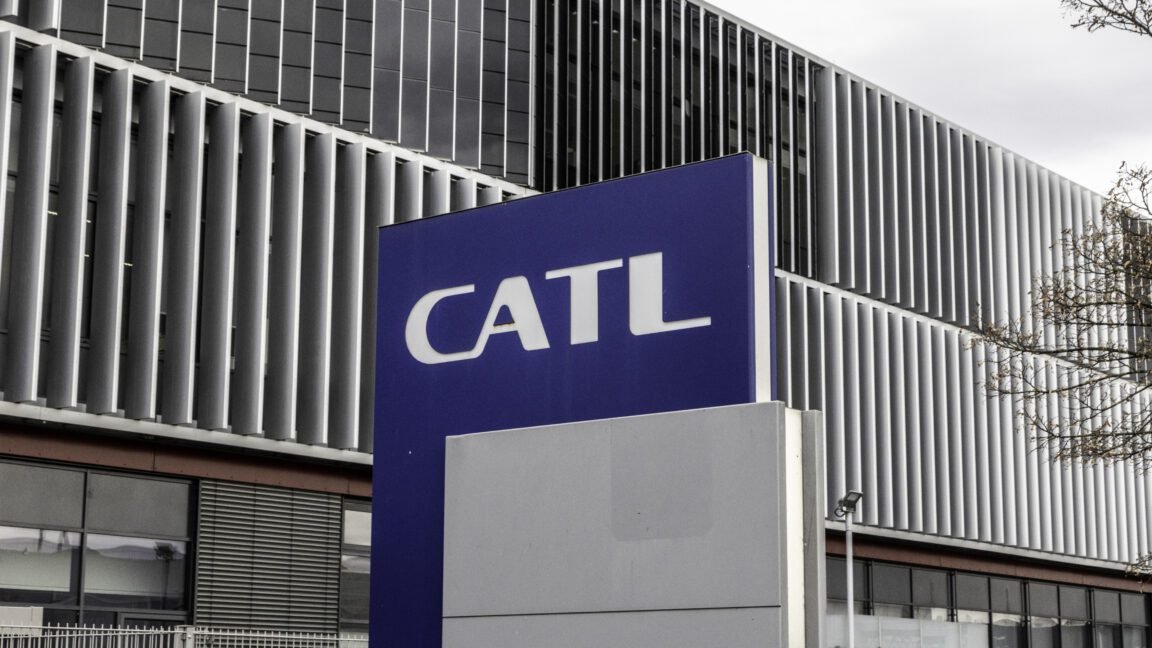
For instance, earlier today, the battery giant CATL unveiled an impressive new lithium-iron phosphate battery at a tech event in China. The third-generation Shenxing battery is CATL’s answer to BYD’s recently announced Blade Battery 2.0, and like BYD, CATL has focused on improving a couple of big pain points.
One is charging speed. Humans have long been conditioned to expect pumping an energy-dense liquid fuel into a vehicle to be quick. Batteries, meanwhile, can have non-linear charge curves depending on cell chemistry, and they behave differently at different temperatures and starting states of charge. OEMs like Hyundai and Porsche have 800 V nickel manganese cobalt battery packs that can charge from 10 to 80 percent in as little as 18 minutes. But according to a report in CarNewsChina, CATL’s Shenxing 3.0 is nearly five times faster.
LFP batteries have more linear charging curves than NCM batteries, and unlike the latter, they don’t mind being fully recharged by a DC fast charger. Charging from 10 to 98 percent took just six minutes and 27 seconds. The more standard 10–80 percent time takes just three minutes, 44 seconds. Only have a minute to plug in? Still sufficient to get from 10 to 35 percent state of charge.
Another issue is cold-weather performance, and even electromobility evangelists must concede that EVs suffer more when temperatures drop. An internal combustion engine’s efficiency also degrades below freezing, but the waste heat offsets this a little and also lets you stay nice and warm in the cabin for free. But even at -22 F (-30 C), the Shenxing battery charged from 10 to 98 percent in 9 minutes.
That’s as long as BYD’s Blade 2.0 takes to charge to 98 percent at room temperature; at -22° F, the Blade requires 12 minutes to charge from 20 to 98 percent, according to its maker. CATL credits its battery’s cold-weather performance to very precise temperature control of the individual cells and an ability to heat itself in pulses. An extremely low internal resistance of just 0.25 milliohms also plays an important role.
CATL demoed fast-charging booths and a battery-swap system, though with charging speeds this fast, there seems little point in swapping packs in and out. After 1,000 fast charges, the battery should retain more than 90 percent of its original state of charge, the company said.