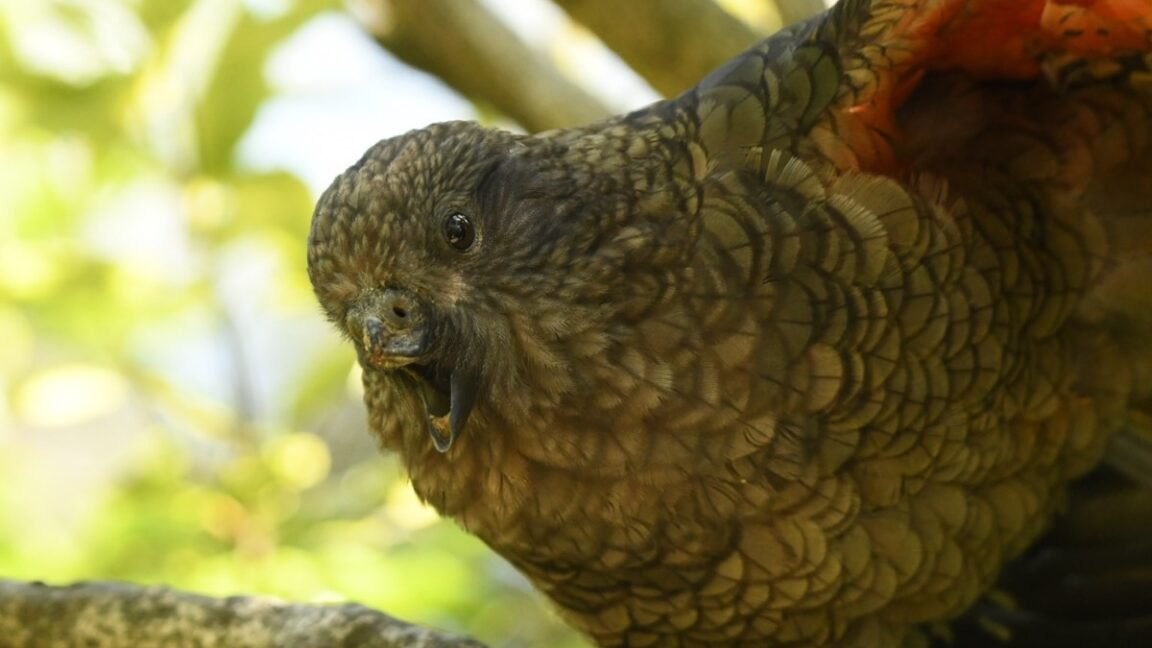
Bruce the kea—a species of alpine parrot native to New Zealand—lost his upper beak in an accident as a young bird. But that hasn’t stopped him from becoming the dominant male in his kea community (known as a “circus”) at the Willowbank Wildlife Reserve. According to a new paper published in the journal Current Biology, Bruce achieved his alpha status via a unique fighting method, essentially “jousting” with what remains of his beak.
Researchers already knew Bruce was special. Back in 2021, scientists at the Kea Animal Minds Lab at the University of Auckland studied Bruce and other non-disabled kea and found that Bruce exhibited unusual preening behavior to compensate for his missing upper beak. He figured out how to use small pebbles for that purpose, wedging them between his lower jaw and tongue and then rubbing them along his feathers. Other non-disabled keas occasionally played with pebbles, too, but they chose larger ones and never used them for preening.
So Bruce didn’t learn this behavior by watching other birds; he figured it out on his own. The authors concluded this was evidence of keas’ high problem-solving abilities and possibly an example of deliberate tool use. It’s also why Bruce’s caretakers at the reserve have never fitted him with prosthetics, believing it would only cause him stress and force him to re-adapt his behavior all over again.
No contest
Now Bruce is challenging a fundamental assumption of so-called “contest theory”: that the larger, better-armed opponent in a conflict will usually win the fight. Bruce’s circus consists of nine males and three females, and the researchers observed 162 male-vs-male interactions over four weeks. Bruce was involved in 36 interactions and won them all, thereby cementing his alpha status. Bruce also had the lowest levels of stress hormone metabolites, was given priority access to the four central feeding stations on account of his rank, and even had a non-mate remove debris from his lower beak, the only individual in the circus to be so honored.
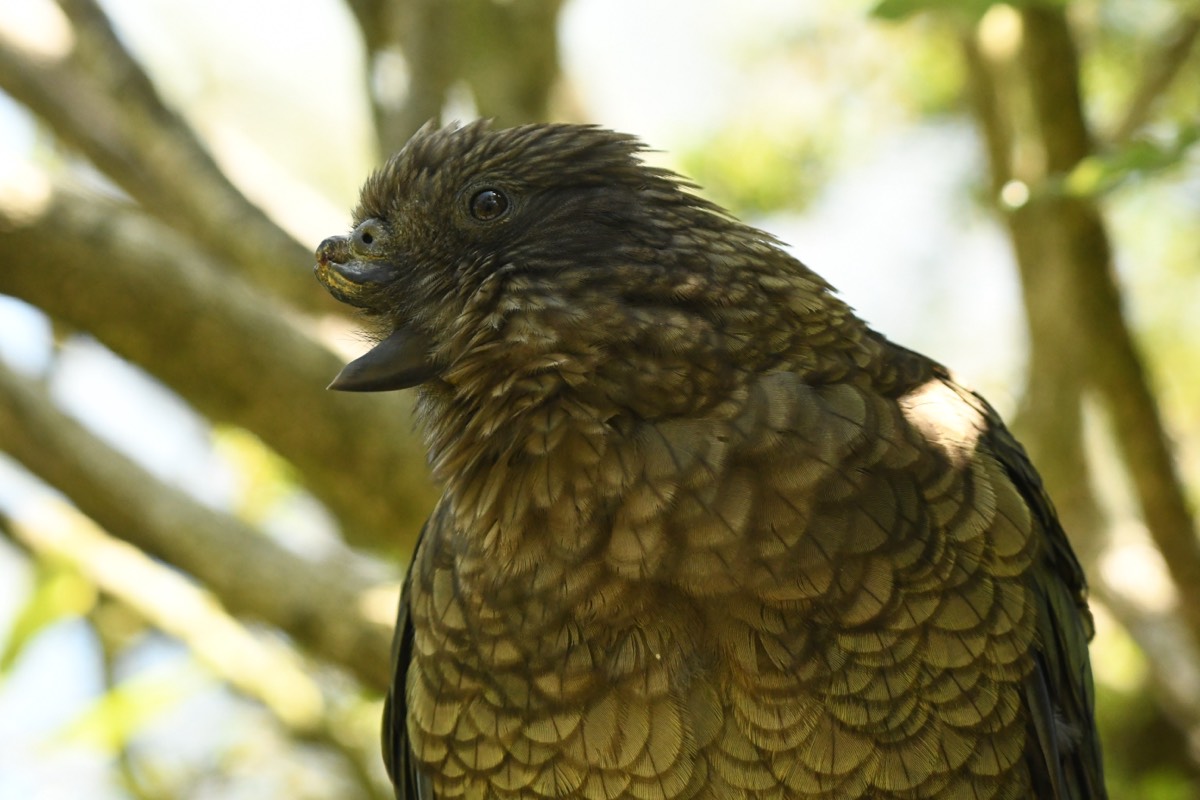
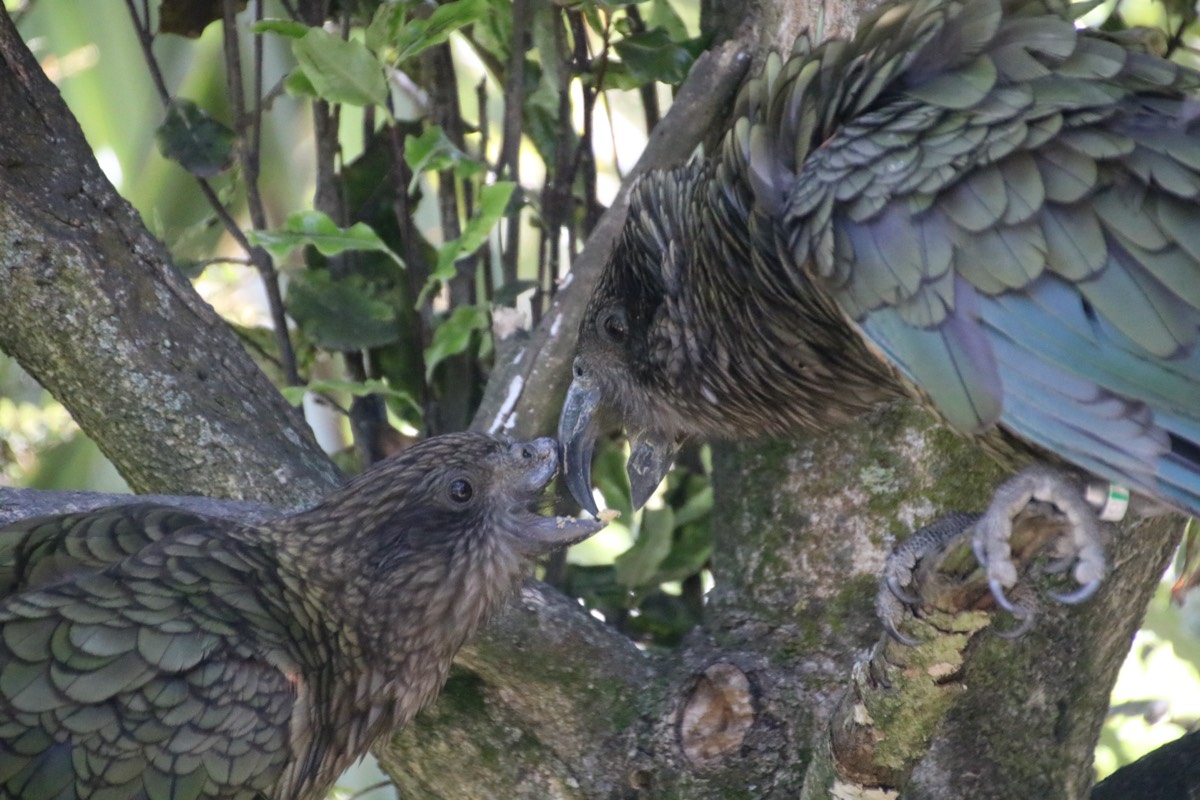
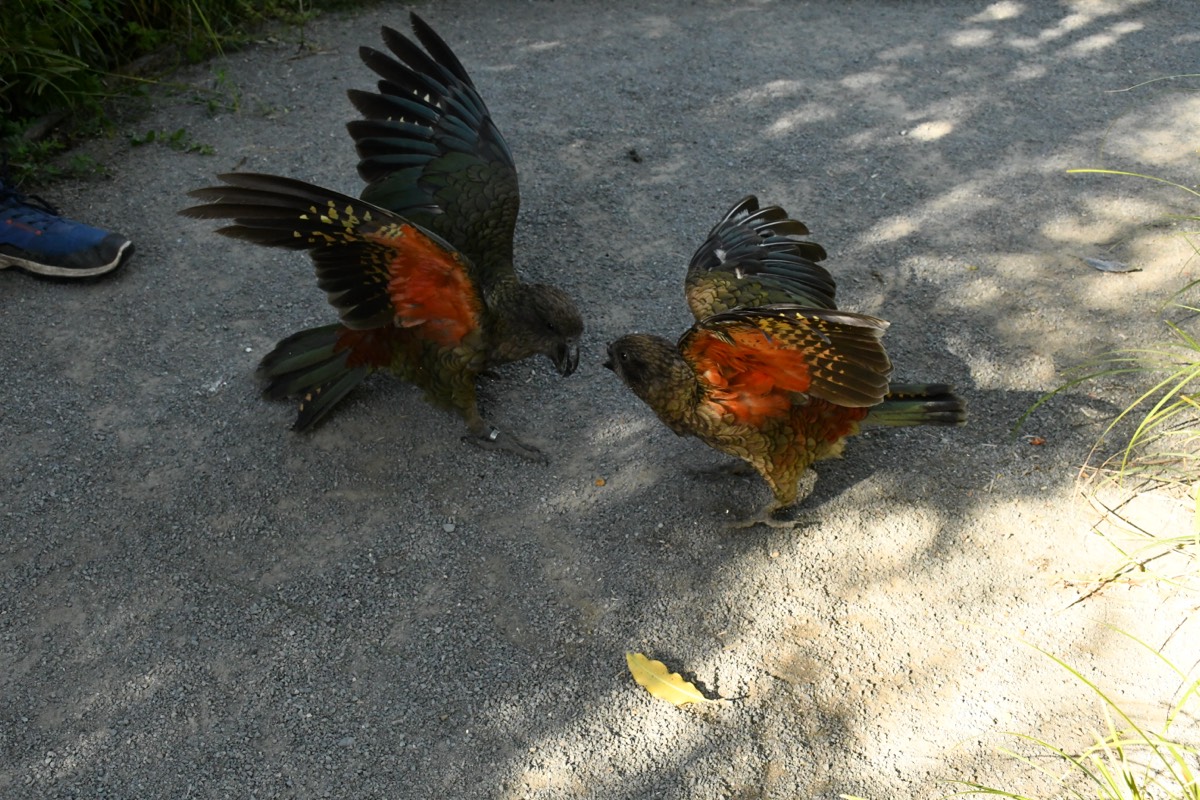
The key to Bruce’s success and overall chill mood? His unique beak-jousting technique, which enabled him to quickly displace his rivals. At close range, Bruce would extend his neck to thrust at opponents, adding a run or jump to the motion when attacking from farther away. Other non-disabled males mostly bit downward onto an opponent’s neck, while Bruce mostly engaged in forward thrusts and targeted the back, head, wings, and legs of his opponents. He kicked at the same rate of other kea but used his half-beak much more frequently.
According to the authors, there are only two other cases in the scientific literature that are comparable to Bruce’s ingenious adaptation. In one case, the late Jane Goodall observed an alpha male chimpanzee named Fabian who lost the use of his arm due to polio; his brother became the new alpha male. Fabian managed to achieve “beta” status via association, and also by developing unusual charging displays. The other case concerned an old Japanese macaque whose ability to walk gradually deteriorated; the macaque maintained his alpha status by allying with the alpha female. But Bruce achieved his alpha status on his own through dominance, not via a useful alliance.
“Bruce shows us that behavioral innovation can help bypass physical disability, at least in species with the cognitive flexibility to develop new solutions,” said co-author Alexander Grabham of Te Whare Wānanga o Waitaha/University of Canterbury in New Zealand. “Previous research has shown links between large brains, behavioral flexibility, and survival at the species level. Bruce demonstrates how those links play out in a single individual, on traits that matter day-to-day, like social dominance. Our findings also raise an important welfare question: if a disabled animal can innovate its way to success, well-intentioned interventions like prosthetics might not always improve their quality of life. Sometimes the animal can do better without help.”
DOI: Current Biology, 2026. 10.1016/j.cub.2026.03.004 (About DOIs).