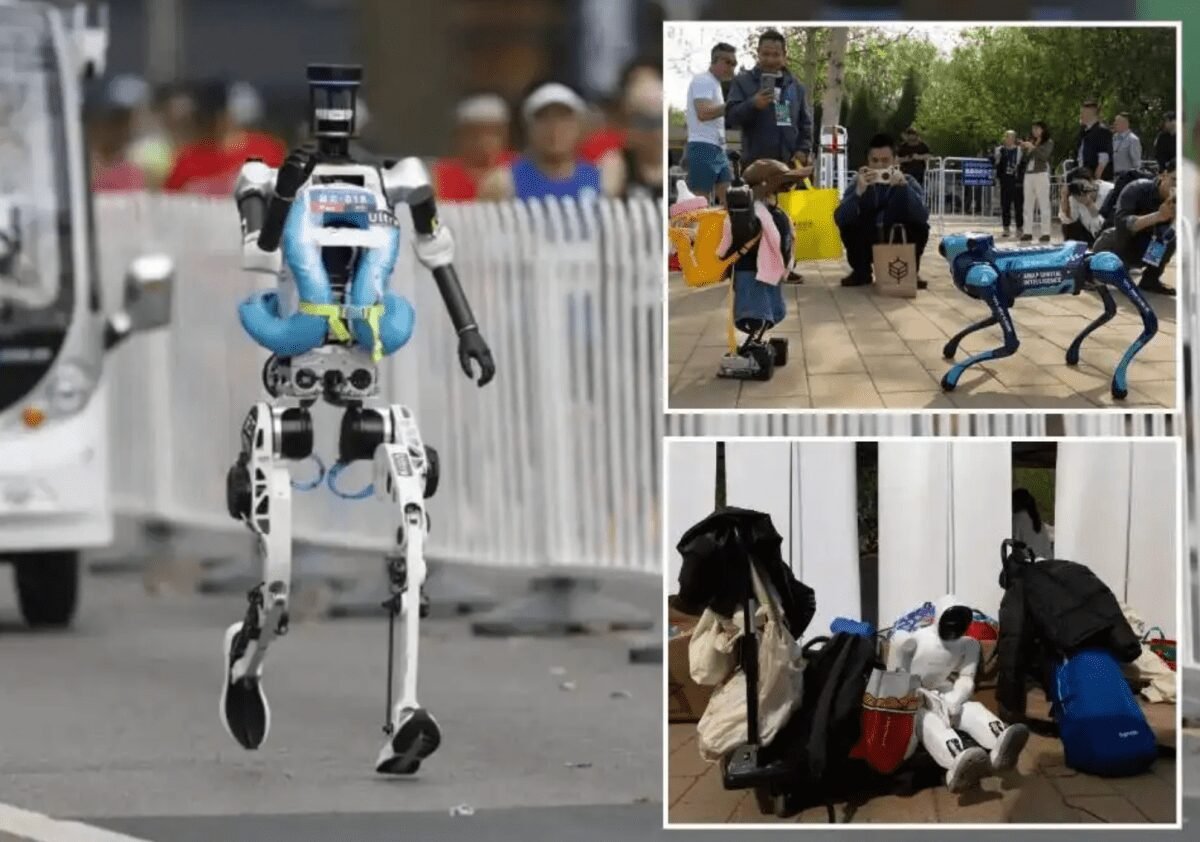
In a scene that felt ripped straight out of a sci-fi blockbuster, humanoid robots didn’t just compete with humans in a Beijing half-marathon — they absolutely smoked them.
Dozens of Chinese-built bots tore through the 13-mile course on Sunday, clocking times that left even elite human runners trailing behind. The standout moment? A sleek red robot developed by tech brand Honor crossed the finish line in a blistering 50 minutes and 26 seconds — not just beating the human field, but crushing the official half-marathon world record set just weeks ago.
Yeah, you read that right. Machines are now outrunning the fastest humans on Earth.
And this wasn’t some gimmick race. More than 100 robotics teams showed up — a massive jump from last year’s shaky debut, where most robots couldn’t even finish. This time, nearly half of them navigated the course entirely on their own, no remote controls, no human guidance — just raw AI power making real-time decisions.
Meanwhile, over 12,000 human runners competed alongside them on parallel tracks, safely separated as the bots zoomed past, leaving stunned spectators scrambling to capture the moment on their phones.
The winning robot wasn’t just fast — it was engineered like a high-performance athlete. With elongated legs designed to mimic elite runners and advanced cooling systems borrowed from smartphone tech, it powered through the race like something out of the future.
And if that future feels a little unsettling, you’re not alone.
Spectators watched in awe — and maybe a bit of disbelief — as child-sized humanoids and even robotic dogs strutted around like they belonged there. One engineering student admitted he was “very impressed” by how quickly AI has evolved, while another young spectator said the race inspired him to pursue robotics himself.
But beneath the excitement lies a bigger, more unsettling reality.
Experts say this kind of rapid progress could soon reshape entire industries — from factories to front-line combat zones. While today’s robots still struggle with complex human-like tasks, their explosive gains in speed, balance, and autonomy are turning heads for a reason.
China, for its part, is going all-in — pouring resources into robotics in a bid to dominate the next technological frontier. From flashy TV showcases featuring sword-wielding humanoids to real-world endurance races like this one, the message is clear: the robot era isn’t coming… it’s already here.
And after watching machines outrun humanity this weekend, one question suddenly feels a lot more real:
How long before they outwork us too?