In March, the UK foreign secretary Yvette Cooper made a statement to parliament setting out the government’s international aid priorities. With an aid budget significantly smaller than it was five years ago, Cooper proposed which countries and programmes would receive support.
This was the first time MPs and the public heard any spending detail after the latest round of cuts to aid.
To allow more money for defence in an increasingly volatile world, in 2025 the UK cut its aid budget from 0.5% to 0.3% of gross national income (GNI). The cut now leaves international aid spending at £9.2 billion per year. It followed a similar reduction in 2021, when the government cited post-COVID financial pressures.
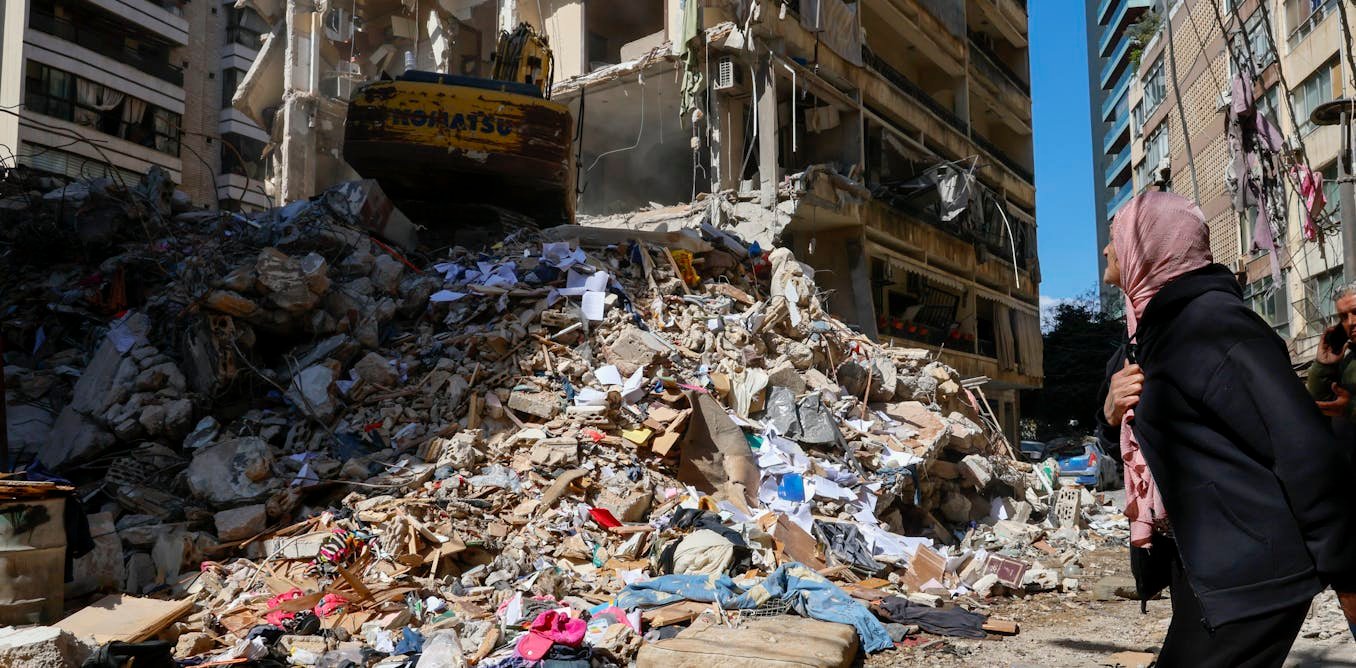
Conflict is a central theme in the government’s priorities, with support maintained for fragile and war-torn states: Palestine, Sudan, Ukraine and Lebanon (albeit only for this year for Lebanon due to the Israeli bombardment). It means that by 2028-29, 70% of UK aid spending will be spent in conflict zones.
So inevitably there were regions that were de-prioritised. Support for many African states has been reduced. Bilateral aid to the region is set to reduce by more than £800 million, or 56% by 2028-29.
And with 20% of the aid budget already designated for domestic refugee spending and housing – £2.8 billion was spent on this in 2024 – the amount of aid available to some of the world’s poorest countries is coming under increasing pressure. Unfortunately, this reflects a global trend.
Cooper argued that countries receiving aid do not want to be in a dependent relationship with the UK. Instead, she said the situation could be reimagined as “partnership not paternalism”. This is certainly an idea that responds to criticisms of aid as neocolonial, fragmented and of little use in addressing the root causes of poverty.
And with challenges remaining across developing economies even after decades of aid, this argument should not be discounted – even if evidence shows aid saves millions of lives every year.
Who should pay?
But across the world, talk has turned to the alternatives for developing countries to finance the processes of development. While the options are limited, there is some consensus.
Discussions have focused on how to plug the aid gap by supporting governments in recipient states to collect more tax domestically, while increasing private finance.
Raising taxation sustainably was already a central pillar of the UN’s Sustainable Development Goals. But the need to do so has gained momentum as development organisations push finance ministries to adopt more resilient “fiscal roadmaps”. Yet raising revenue through taxation is especially difficult for governments in poorer nations.
A major issue is the disconnect between policy and politics. Taxation is often seen as a technical challenge, when the reality is that it is deeply political. While wealth redistribution through taxation has reduced poverty and inequality in regions of the developing world, progressive taxation can be hampered by a lack of political will to implement it.
The ability of governments to tax is also undermined when those with the means to do so move their wealth across borders to pay less tax.
Negotiations are under way within the UN to create a more effective global system for taxation that will be fairer and reduce inequality across developing countries. Inevitably, these proposals face resistance from wealthy nations with large corporate bases.
Aside from tax reform, the need to attract private investment is high on the agenda. With this in mind, governments and development organisations have adopted increasingly creative means to make this attractive. It came as no surprise that Cooper referred to the UK government’s global role as an “investor” rather than just a donor, when wealthy and emerging economies have been moving in this direction for some time.
The moral case
But it is a shift that is not without social and political risks. First, the projects that are attractive to financiers rely on significant public subsidy, referred to as “blended finance”. This diverts public resources from other causes that may create greater social value but are considered less profitable for investors. There has been criticism of the impact on poverty and inequality from these developments in the spheres of education and health.
Second, there are few public scrutiny mechanisms for private investment. Financial information is treated as commercially sensitive, posing a severe challenge to effective governance and accountability.
And crucially, neither of these modes of financing offers a quick-fix solution to the aid cuts. Ultimately, what is key is rebuilding a moral case for aid that has been lost in recent years.

The UK government has made the case that rather than bilateral direct aid, international cooperation through institutions and joint initiatives such as Gavi, The Vaccine Alliance are critical to multiply the impact of the support. And there are many who would agree that aid in its current iteration is unsustainable. So a shift away from a traditional framework has support.
But there remains a moral case for aid – and the pace and scale of the cuts has caused concern. In fact, the UK foreign secretary acknowledged this in a newspaper column that accompanied the statement. In it, she argued that reducing aid to fund defence was not walking away from the Labour party’s values and responsibilities.
But this is a difficult sell when the alternatives take time to implement and there are questions about why increased funding of defence should come at the expense of the aid budget. Taxing those with the broadest shoulders more could better exemplify the values Cooper argued for. It could be said there is a moral case for that.