TOKYO – Amid all the smoke surrounding a Chinese slowdown, economists are getting a view of some serious fire this week.
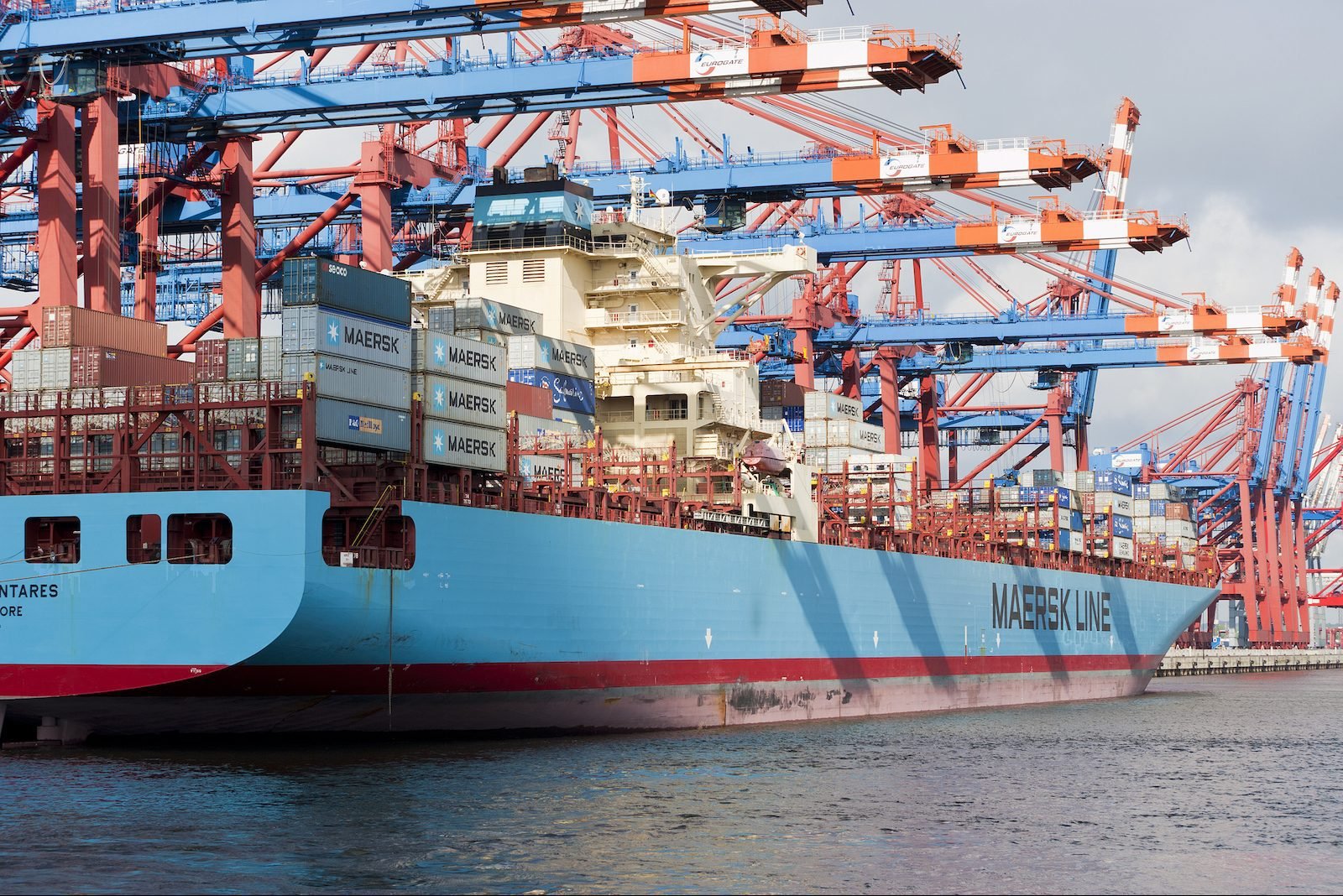
Case in point: exports grew just 2.5% year-on-year in March, a rate markedly below the previous few months. It’s the clearest indication that fallout from the Iran war, and its impact on energy prices and global demand, is hitting Asia’s biggest economy.
From here, the risks will “arise from a persistent global slowdown in overall demand if the conflict lasts longer than currently expected,” Bank of America economists led by Helen Qiao say.
True, there’s an argument China is better placed to weather the storm than many top-10 economies. As Qiao points out, oil and gas supply shortages caused by the Iran war could be a long-term boon for China’s burgeoning renewable energy sector.
“Despite the energy price shock, exports should stay solid in the coming quarters, thanks to strong demand for semiconductors and green technologies,” notes Zichun Huang at Capital Economics.
China has enjoyed cheaper access to oil thanks to its close ties with Iran and Russia. Beijing also has a degree of monetary policy latitude that others don’t.
As Gustavo Medeiros, emerging markets analyst at asset manager Ashmore, tells CNBC: “Importantly, the main problem of this crisis was the inability of countries to react effectively, given very stretched fiscal deficits and debt levels and inflation at uncomfortable levels. China has been struggling with deflation, so its bond market was less exposed than other major markets. Lower yields mean there was a smaller tightening of financial conditions in China than in other countries.”
Yet, China’s pre-existing conditions are now coming back to haunt President Xi Jinping’s economy. A once-in-a-century property crisis continues to undermine consumer confidence. Weak local-government finances are limiting municipalities’ ability to invest in deeper social safety nets, thereby prompting households to spend more and save less.
Now, new headwinds are blowing China’s way as the global economy weakens amid the Iran war. This week, the International Monetary Fund warned that continued war in the Middle East could trigger a global recession.
“The global outlook has abruptly darkened following the outbreak of war in the Middle East,” the fund said in a report on Tuesday. “Prior to the war, we were poised to upgrade our global growth forecast, reflecting continued momentum in the global economy supported by a tech investment boom, some moderation in trade policy tensions, fiscal support in some countries, and accommodating financial conditions.”
The IMF slightly trimmed China’s 2026 growth forecast to 4.4%. Yet the combination of weak housing, a declining labor force, slowing productivity and lower returns on investment could push 2027 growth down to 4.0%.
China’s recent trade data could be an omen of things to come. A prolonged Iran conflict — a distinct possibility — would ravage China’s export-driven growth model.
As disruptions to tanker traffic through the Strait of Hormuz persist, higher costs of oil, gas, fertilizer and other basic products will pass through to Chinese manufacturers, pumping up prices and undermining export
competitiveness at a precarious economic moment.
Unlike previous economic cycles, this 2026 scenario brings higher costs and weak domestic demand. It’s a combination that can squeeze profit margins and slow economic growth to below-target levels.
For Xi, the specter of energy-driven cost-push inflation mixed with weakening global demand for exports is a clear and present danger to China’s export-dependent economy.
Though China has substantial energy reserves, a prolonged Middle East war lasting more than six months could devastate corporate profits and stunt GDP growth.
It hardly helps that some economists think the IMF is being way too optimistic about what’s to come. The IMF’s “latest forecasts anticipate global GDP growth slowing less sharply this year than our own baseline,” says analyst Ben May at Oxford Economics. “This may reflect the IMF’s forecasts being conditional on a slightly lower oil price path than ours.”
Yet, May adds, “they agree with our assessment that the downside risks are sizeable. The higher energy prices rise and the longer they remain elevated, the greater the likelihood of non-linear spillover effects.”
May notes that the “severe oil price scenario paints a similar picture to our own prolonged Iran War scenario published last month. Were the oil price to average substantially more than $100 per barrel this year, it could plausibly push the world economy into recession.”
It’s clear that the steep rise in global energy prices has begun to be reflected in inflation data for March, notes Zazral Purewsuren, an analyst at Fitch Ratings.
Prices rose by an average of 0.8% month-on-month in the major developed economies where data are available, the steepest monthly rise since 2022, Purewsuren points out. The average rise in the annual inflation rate across all markets was 0.3 percentage points, with the shock yet to fully work its way through to consumer prices.
As such, Purewsuren adds, “government bond yields have risen across the board, as market participants priced in a possible fiscal and monetary response as well as higher inflation.”
Tighter global credit conditions would add to China’s woes. On Tuesday, the Monetary Authority of Singapore became the first Asian central bank to respond directly to the inflationary shock triggered by the Iran war by hiking rates. Singapore is often a bellwether of economic pivots to come.
“Past policy episodes illustrate how large swings in global energy prices can influence Singapore’s inflation outlook and, by extension, monetary policy settings,” says Oversea-Chinese Banking Corp strategist Christopher Wong.
China’s export downshift in March is huge, following a combined 21.8% surge in the first two months of the year. To be fair, as Wang Jun, China’s customs vice minister, told reporters on Tuesday, the ways in which global oil prices have experienced “fierce fluctuation” are creating a “complex and severe” trade environment that’s proving hard to measure.
Yet, there’s no doubt that “the uncertainty of the global macro outlook, driven by the conflict in the Middle East, likely weighed on the demand side” in ways that strain exports, says economist Zhiwei Zhang, CEO at Pinpoint Asset Management.
It’s noteworthy, Zhang adds, that Beijing’s total trade surplus shrank 3% year-on-year to just $264.3 billion. It followed a record high surplus in the first two months of 2026.
The upshot is that “China can’t pass through the higher energy prices completely to the foreign consumers,” says Zhang, which is sure to narrow the trade surplus.
It’s worth noting, too, that China Inc. wasn’t exactly state-of-the-art before bombs fell on Tehran on February 28. As 2026 unfolds, global investors are watching to see if Xi, in year 14 of his reign, will act to end the property crisis that is causing deflation, reduce opacity, level playing fields so that the private sector can thrive, address dangerously high youth unemployment, repair the finances of local governments buckling under trillions of dollars of debt and build vibrant social safety nets to prod households to spend more of their $22 trillion of savings.
Any of these upgrades is challenging enough, never mind several at once, amid war in the Middle East. Or against the backdrop of a government under extreme pressure to meet this year’s official 4.5% to 5% growth rate.
Having to achieve some arbitrary number year after year warps all economic incentives. It forces municipal leaders across China’s 22 provinces to prioritize stimulus short-term sugar highs over big-picture reforms to craft a more dynamic economy.
This dynamic explains why China finds it so hard to pivot away from rapid, debt-fueled growth. The way local government officials with national ambitions get on Beijing’s radar screen is by producing above-target GDP year after year.
The odds are exceedingly low that the giant infrastructure projects on which municipalities rely to fuel growth are necessary or financed productively.
Any shot China has to grow better, not just faster, relies on breaking this cycle. Granted, efforts by Xi and Li Qiang, premier since March 2023, to deleverage the economy have gained traction.
Also, the “Made in China 2025” extravaganza Xi rolled out in 2015 had quite a year. It set out to expand China’s footprint in artificial intelligence, biotechnology, electric vehicles, renewable energy, semiconductors and other future technologies.
In 2025, the strategy put some major wins on the scoreboard. Case in point: the runaway success of EV-maker BYD and AI sensation DeepSeek. The trouble is that the financial system underneath China Inc’s tech ambitions is being held back by the slow pace of reforms.
As the headwinds now zooming Beijing’s way intensify, Xi’s party is likely to be even more focused on shoring up growth in the short run than economic retooling aimed at longer-term prosperity.
In this way, the Iran war may be ushering in a lost period for economic reform at a moment when China can least afford to waste time.
Follow William Pesek on X at @WilliamPesek