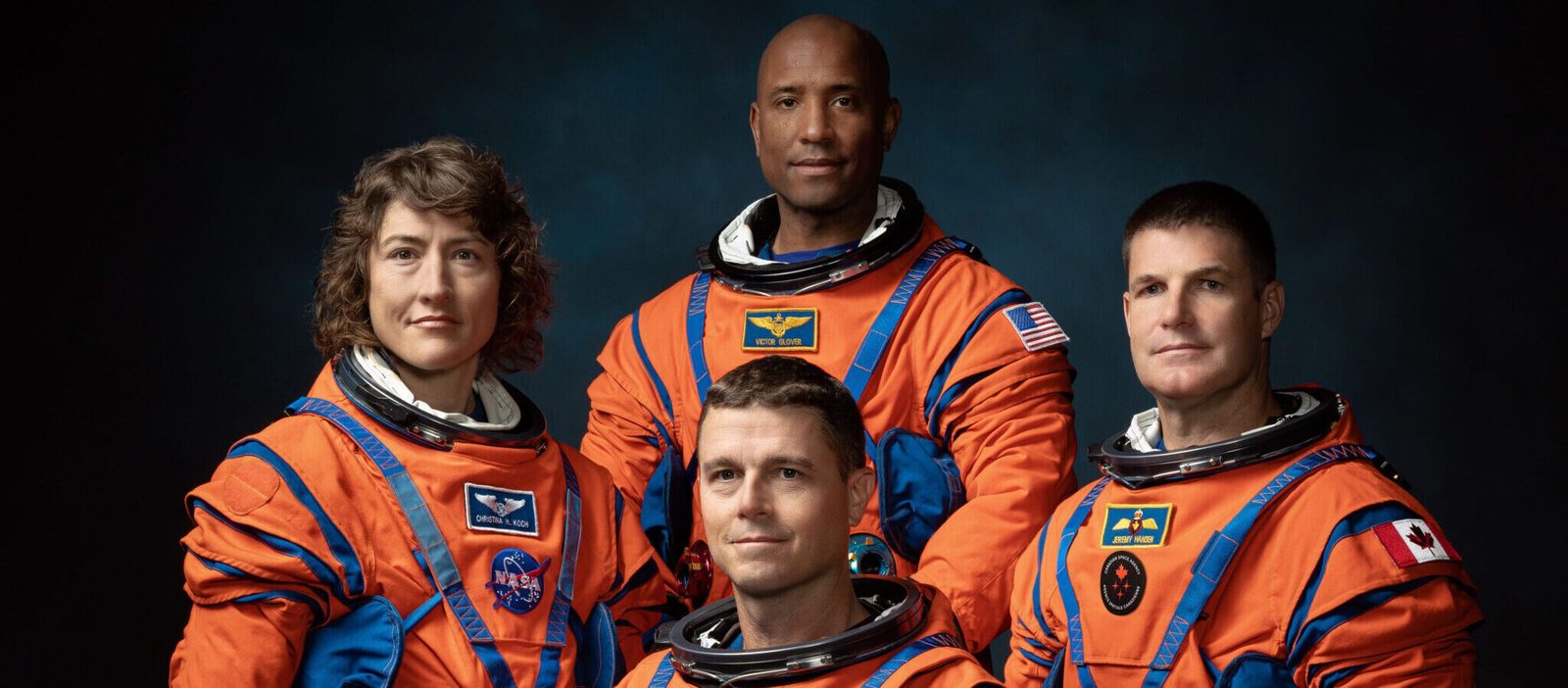
NASA’s Artemis II astronauts returned to Earth on Friday, completing a nearly 10-day mission that marked the first human journey to the moon in more than half a century and advanced preparations for future lunar landings.
The four-person crew—Reid Wiseman, Victor Glover, Christina Koch, and Canadian Space Agency astronaut Jeremy Hansen—traveled a total of 694,481 miles during the test flight, reaching a peak distance of 252,756 miles from Earth. Their trajectory carried them farther than the Apollo 13 mission in 1970.
After reentry, recovery teams from NASA and the US military retrieved the crew in the Pacific Ocean and transported them by helicopter to the USS John P. Murtha for initial medical evaluations. They are expected to arrive at NASA’s Johnson Space Center in Houston on Saturday, April 11.
The mission began April 1 at 6:35 p.m. from Launch Pad 39B at Kennedy Space Center in Florida. The Space Launch System rocket generated 8.8 million pounds of thrust, sending the Orion spacecraft into orbit. Early operations confirmed that onboard systems were functioning as expected, and four CubeSats from international partners were deployed.
Engineers later directed Orion onto a lunar trajectory using its service module engine, bringing the crew within 4,067 miles of the Moon’s surface. During the April 6 flyby, astronauts documented the lunar environment with more than 7,000 images, including views of a solar eclipse and varied surface features.
“The Artemis II crew is home. The entry, descent, and landing systems performed as designed and the final test was completed as intended. This moment belongs to the thousands of people across fourteen countries who built, tested, and trusted this vehicle. Their work protected four human lives traveling at 25,000 miles per hour and brought them safely back to Earth,” said NASA Associate Administrator Amit Kshatriya.
“Reid, Victor, Christina, and Jeremy, welcome home, and congratulations on a truly historic achievement. NASA is grateful to President Donald Trump and partners in Congress for providing the mandate and resources that made this mission and the future of Artemis possible,” said NASA Administrator Jared Isaacman.
The crew conducted a full in-flight evaluation of Orion, including life support systems and manual piloting demonstrations, while also carrying out scientific investigations such as the AVATAR study. Data from the mission will guide preparations for Artemis III and future missions beyond the Moon.