South Korea’s decades of sacrifice are colliding with a more transactional United States – and that collision is raising hard questions about reciprocity, reliability and strategic autonomy.
In 2013, South Korean President Park Geun-hye stood before a joint session of the United States Congress and delivered words that captured the essence of what South Korea has long believed the alliance to mean:
“At the Korean War Memorial near the banks of the Potomac, I read the words etched in granite: ‘Our nation honors her sons and daughters, who answered the call to defend a country they never knew and a people they never met.’ Time and again, I am moved when I read those familiar words. Let me express – on behalf of the people of the Republic of Korea – our profound gratitude to America’s veterans. Their blood, sweat and tears helped safeguard freedom and democracy.”
It was a moving tribute. But in the cold light of 2026, one must ask: Has the alliance lived up to the idealism those words evoke? More urgently, is South Korea beginning to understand – belatedly – what the United States-Japan alliance made clear seven decades ago?
Security for control
Despite its name, the “Mutual Security Treaty” between the United States and South Korea is not, in any meaningful sense, mutual.
The precedent is Japan. When the American occupation ended in 1952, Japan did not fully recover its sovereignty – it was absorbed into an emerging Pax Americana.
The American journalist James Reston observed at the time that it looked as though “the United States is clamping a phony independence on Japan while at the same time preserving the facilities essential to the United States military command.”
One Japanese scholar distilled the transaction even more plainly: “Japan acquires security while the US acquires control.”
And while Japan sat securely within that arrangement, it profited handsomely. Prime Minister Yoshida kept Japan out of the Korean War entirely, allowing it to reap enormous procurement windfalls from the conflict. Yoshida privately called the resulting economic stimulus “a gift of the gods.”
Japan’s postwar miracle was, in no small part, seeded by a war fought on Korean soil.
The alliance forged in blood
South Korea’s relationship with the US has been fundamentally different – not that of a sheltered ally quietly prospering under American protection, but one defined by active, costly and often underrecognized sacrifice.
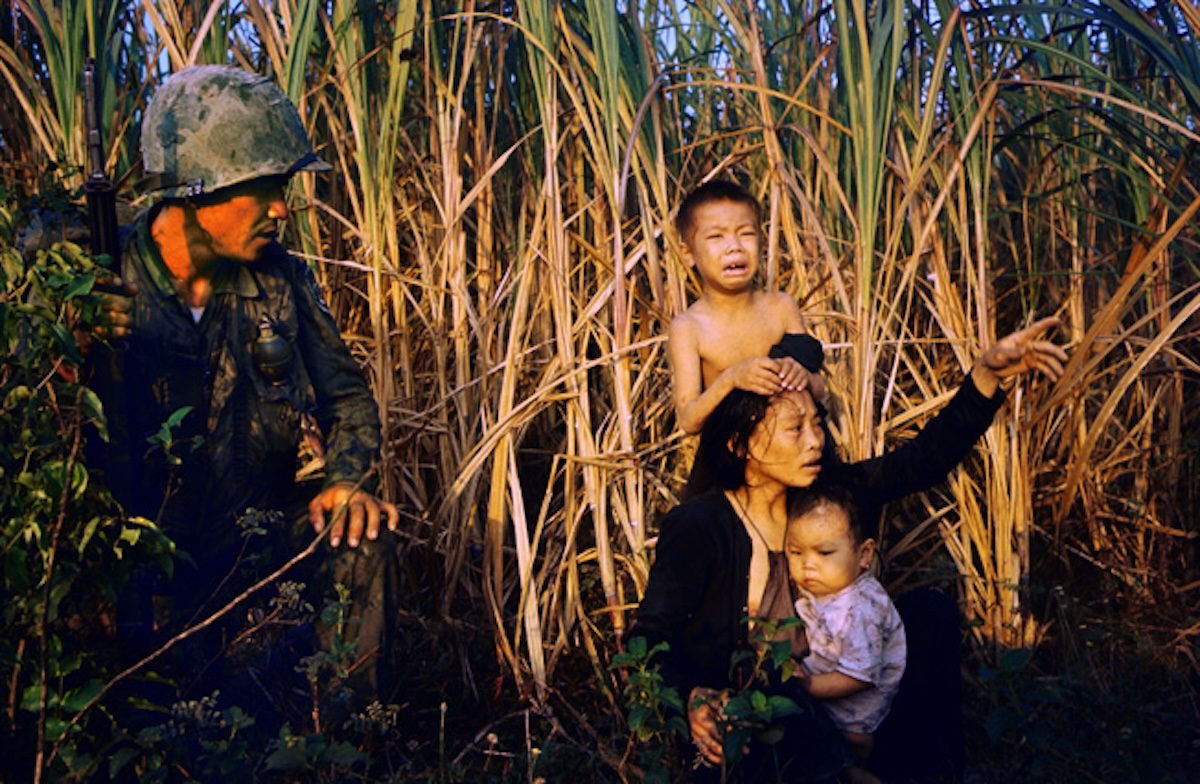
When the United States asked for South Korean boots on the ground in Vietnam, Seoul answered. Over 320,000 South Korean troops were deployed to fight alongside American forces against communist aggression.
More than 5,000 South Koreans were killed, and tens of thousands more were wounded.
This was not a symbolic gesture. It was a commitment written in blood, made on the understanding that the alliance was reciprocal – that in exchange for South Korean soldiers dying in Southeast Asian jungles at Washington’s request, American forces would remain on the Korean Peninsula to deter aggression from the North.
The United States soon undermined that understanding. Even as South Korean troops were fighting and dying in Vietnam at American urging, Washington began withdrawing its own forces from South Korea under Nixon’s “Guam Doctrine” – a strategic pivot that signaled Asian allies would have to bear more of their own defense burdens.
Seoul had paid in full. Washington quietly renegotiated the terms.
The contrast with Japan is instructive. During the Iraq War, Japan deployed its Self-Defense Forces – but they required protection from the Australian Army, shielded from direct combat by “constitutional constraints.”
South Korea, by contrast, sent combat-ready troops. The pattern has been consistent across decades: South Korea fights; Japan hedges; the alliance endures for both.
South Korea has not been a mere satellite, but neither has it been an equal partner. The distribution of costs, risks and benefits has long been asymmetrical.
The rogue elephant
Which brings us to the present moment, and to a question that would have been unthinkable to most South Koreans even a decade ago.
The nature of the United States and its security commitments is undergoing a transformation that can no longer be described as a policy adjustment.
It is a fundamental shift in how Washington relates to its allies.
Political scientist John Mearsheimer has put it starkly:
“If you’re a European, you’re a Gulf state, you’re an American ally in East Asia, you don’t want to get too close to the United States. You want to stay as far away as you can [from] this rogue elephant.”
A “rogue elephant” – not a declining hegemon navigating an orderly transition, but an unpredictable force that may trample the very allies it once pledged to protect.
Not out of malice, necessarily, but out of an increasingly erratic and transactional approach to power that treats decades of alliance as a ledger to be audited and renegotiated at will.
South Koreans who have long been among the strongest defenders of the US-South Korea alliance – who invoked Park Geun-hye’s congressional address as a touchstone, who pointed to the Korean War memorial on the Washington Mall as evidence of a bond transcending geopolitics – are now asking uncomfortable questions.
Is the American military presence in South Korea still a guarantee of security? Or has it always been, as in Japan’s case, primarily about American strategic interests rather than Korean survival?
And if Washington’s reliability is now in doubt, what exactly is Seoul getting from this arrangement – beyond becoming a frontline target in any future conflict?
An uneasy moment
South Korea did not choose this moment of uncertainty. It has been a faithful ally – sending its sons to Vietnam, standing alongside US forces in Iraq and Afghanistan and rarely questioning the terms of the relationship.
And yet the ground is shifting. Washington speaks more openly in transactional terms, while the assumptions that sustained the alliance for decades feel less certain than before.
This is not a call to abandon the alliance. With a nuclear-armed North Korea, such choices are neither simple nor immediate. But it is increasingly unclear what the alliance now demands, and what it ultimately guarantees.
For decades, South Korea’s most pro-US voices spoke with confidence about the alliance’s purpose and durability.
Today, that confidence is harder to sustain. The question is no longer whether the alliance matters, but what, exactly, it has become – and what it will require going forward.
Park Geun-hye’s words at the Capitol were sincere. The gratitude endures. What is less clear is how that sentiment translates into strategy in a more uncertain age.
Hanjin Lew is a South Korean political commentator specializing in alliance politics and East Asian security affairs.