Israelis fear danger, Americans are concerned about exit as a tentative ceasefire takes shape.
A fragile ceasefire has paused the fighting between the United States and Iran, but it has not resolved the issues that drove the war in the first place. The deal has quieted one front, yet the most volatile questions remain open: the status of Iran’s enriched uranium, the future of the Strait of Hormuz, and Israel’s continuing campaign in Lebanon.
The terms are not set yet … not on the Strait of Hormuz, not on the nuclear issue, and not on Lebanon
“This is just a ceasefire in the sense that it’s not peace,” Raphael BenLevi of the Misgav Institute for National Security and Zionist Strategy told The Media Line. He put the point bluntly: “The terms are not set yet … not on the Strait of Hormuz, not on the nuclear issue, and not on Lebanon.”
There is no finished agreement to implement. Instead, there is a pause, and within that pause, an attempt to negotiate issues that were not resolved by force.
BenLevi’s perspective begins from a position many Israelis would recognize, even if not all would accept it in full. He said the military phase had accomplished something significant, describing “the significant degrading of Iran’s threat capabilities across every military realm,” especially its missile forces and, even more importantly, its ability to produce more of them. “Ninety percent of which has been taken offline,” he said. In his assessment, that amounts to “a huge victory for Israel,” in the narrower strategic sense that Iran’s capacity to threaten Israel at scale has been sharply reduced.
The ceasefire can easily look ambiguous if measured only by what still remains. BenLevi rejects that framing. “This is a net positive for Israel on all accounts,” he said. For him, the war was not about image or deterrence as a slogan. It was about taking capabilities off the table before they matured further. In that sense, he argued, Israel did not stop short of its purpose. It already did what it most needed to do. Even the two-week US-backed pause, in his view, does not diminish that. “Everything that we could hope to achieve militarily has been achieved already,” he said, while acknowledging that the outstanding issue for Washington is the Strait of Hormuz.
Everything that we could hope to achieve militarily has been achieved already
Still, the questions do not disappear just because part of the military objective was met. If anything, they became more pointed. The nuclear issue is the clearest example. Before the war, officials and analysts repeatedly warned about the existence of more than 400 kg of enriched uranium on Iranian soil, a detail central to the sense that time was narrowing. After weeks of war, that material has still not been publicly accounted for. BenLevi did not try to evade the issue. “We don’t know exactly where this amount of enriched uranium is sitting,” he said. He called it “a problem,” but argued it is “not as urgent” as the missile production threat, because Iran’s ability to move rapidly from material to weapon has also been degraded.
We don’t know exactly where this amount of enriched uranium is sitting
That distinction may be strategically coherent, but it does not fully answer the political or public question. If the enriched uranium is still there, then one of the war’s most emotionally and symbolically charged problems has not yet been solved. BenLevi’s answer is that Israel is not worse off. Quite the opposite. He said the regime’s broader scientific, industrial, and military infrastructure was hit badly enough that even on the nuclear front, Iran is in a weaker position than before.
But there is reason for unease. Although Israel can point to degraded systems, destroyed production, and damaged command structures, it cannot yet point to a clean end to the conflict.
The second unresolved issue is both maritime and economic. BenLevi called the Strait of Hormuz “the only outstanding issue” for the United States. President Donald Trump was not simply choosing between war and peace when agreeing to a pause in the fighting. Instead, he was trying to freeze the military exchange at a point where Washington believed much of the operational objective had been met, while preventing the economic damage from growing further.
“He’s sort of playing with the gas and the brakes,” BenLevi said. He described a president willing to escalate hard, but also determined “to make sure it doesn’t get out of control” and “doesn’t hurt economic interests.”
The ceasefire, therefore, is not a retreat from pressure, but pressure redistributed. The battlefield quiets somewhat, but the threat remains, and negotiations begin under the shadow of possible renewed force. BenLevi was explicit about that, too. President Trump, he said, has to keep the possibility of returning to fighting open. Otherwise, “he has no leverage on any of these issues.” That fits with the wider public reporting around the deal: a two-week pause tied to reopening Hormuz and buying time for talks, but not a comprehensive settlement.
If that were all, the situation would already be unstable enough. But Lebanon is what makes the current arrangement feel less like a ceasefire and more like a suspended argument. Publicly, Washington and Jerusalem have both said Lebanon is not part of the deal.
On the ground, that exclusion had immediate consequences. Israeli operations against Hezbollah not only continued after the ceasefire announcement, but they intensified. BenLevi said that was hardly surprising. During the Iran phase, most of the Israeli Air Force resources stayed focused on the Iranian front. The minute that front paused, those resources could be redirected north. “Israel has two weeks to go as hard as it wants,” he said, because everyone understands that once negotiations start hardening into diplomacy, pressure will grow on Israel to lower the volume. His conclusion was simple—act now, lock in achievements now, because the next phase may be politically tighter.
Israel has two weeks to go as hard as it wants
According to BenLevi, the underlying Israeli assumption is that the country can no longer tolerate a terrorist army sitting a few kilometers from its communities, armed for invasion and missile fire. “The period … is over,” he said. It’s not just about Hezbollah. It signals a changed Israeli security doctrine, forged from years of failures, warnings, and recurring wars.
This is where the contradiction becomes central; Israeli military thinking, as voiced publicly by political and security figures over recent weeks, points toward a security zone in southern Lebanon—in practical terms, extending military control and freedom of action up to the Litani River. Rather than relying on short-term raids, the strategy would keep Hezbollah at bay, preventing rearmament and reshaping the buffer between Israel and the threat. Whether labeled “occupation” or not, the operational intent is clear.
Ofir Dayan of the Institute for National Security Studies highlights the tougher diplomatic reality. She agrees that Lebanon remains an imminent threat and that Israel was right to insist Lebanon was not formally included in the ceasefire. But she also warns that American patience is unlikely to be indefinite. “There comes a time when the Americans are going to say … wrap it up,” she told The Media Line. Dayan’s point is not that the United States has rejected Israel’s position. It is that Washington may eventually subordinate the Lebanon issue to the larger negotiation with Iran.
There comes a time when the Americans are going to say … wrap it up
The shift is now visible. Prime Minister Benjamin Netanyahu said Israel will move toward direct talks with Lebanon, focusing on dismantling Hezbollah’s military capabilities. The effort is expected to be led by Israel’s ambassador to the United States, Yechiel Leiter, and comes as fighting continues on the ground.
The combination is hard to ignore. Israel is still operating in Lebanon, but at the same time, it is stepping into a negotiation process that could eventually limit how far those operations can go.
This is where the current arrangement may be most fragile. From Israel’s perspective, Lebanon is unfinished business, perhaps the most urgent unfinished business. From Washington’s perspective, Lebanon risks becoming the obstacle that prevents a broader arrangement from taking shape. Dayan noted that Tehran has been saying it will not come seriously to the negotiating table, and will not reopen the Strait of Hormuz, while Israel continues attacking targets in Lebanon. The risk for Israel is that the US could, at some point, decide that Israeli freedom of action in Lebanon is complicating the part of the ceasefire they care about most.
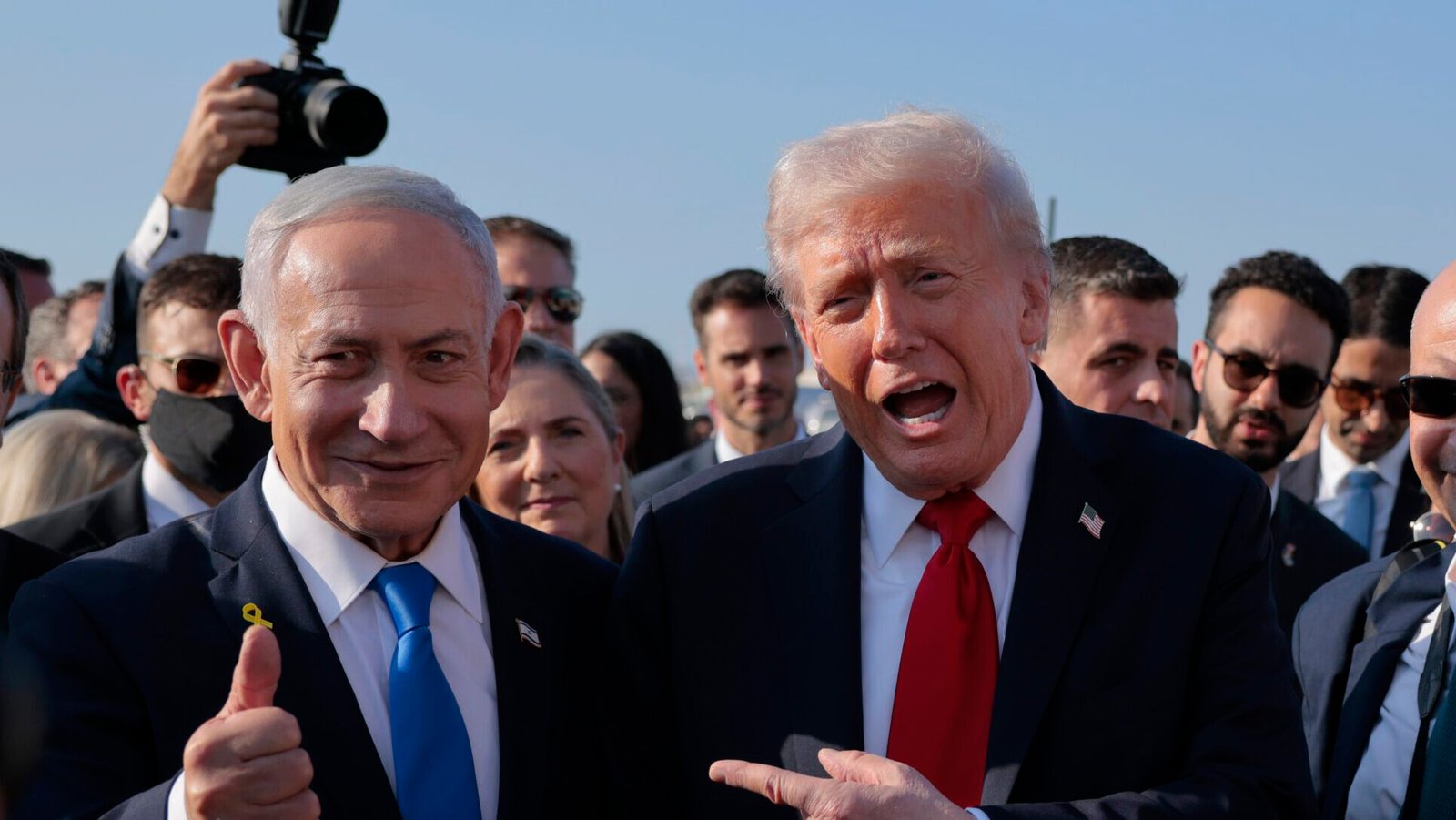
Dayan’s broader argument shows why this could spark genuine US-Israel tensions that go beyond messaging. In her view, Americans and Israelis are no longer processing this war through the same emotional or strategic lens. “Most people just want this to be over with,” she said of the United States. They are not following the debate over missile production, southern Lebanon, or regime pressure in the same way Israelis are. They are thinking about the war as cost, instability, oil, and risk. “They don’t care what Trump says … they just want this to be over with.” Israelis, she said, feel almost the opposite. “We needed more time.”
Israel is still asking whether the threats were sufficiently removed. The US is already asking when the whole thing winds down. The difference in perspectives is why the ceasefire feels so unresolved. It is not just that the technical issues remain open; it is that the two allies are beginning to measure success differently. One is still looking at danger. The other is already looking for the exit.
Dayan also pointed to another factor shaping this next phase: propaganda—especially Iranian and proxy-generated visual propaganda aimed at foreign audiences. “So many people saw those videos and believe that … the entire country’s burning,” she said, referring to AI-generated or manipulated imagery circulated online. For Israel, it affects more than the image. It changes the environment in which Washington operates, especially when a section of the American debate is already suspicious of the war’s rationale.
So where does that leave the ceasefire? Not at peace. Not at resolution. It leaves it in a very recognizable Middle Eastern place: the guns are quieter on one front, louder on another, and the negotiations have begun before the central contradictions are settled.
[Both parties] have essentially decided to stop fighting … in order to have a negotiation
BenLevi said the parties “have essentially decided to stop fighting … in order to have a negotiation.” That may be the most accurate sentence available right now. The ceasefire did not end the war. It moved the war into a narrower room, where the argument now continues over uranium, over the Strait of Hormuz, and over whether Israel can pursue in Lebanon what its military logic says is necessary before American diplomacy says, “Enough!”