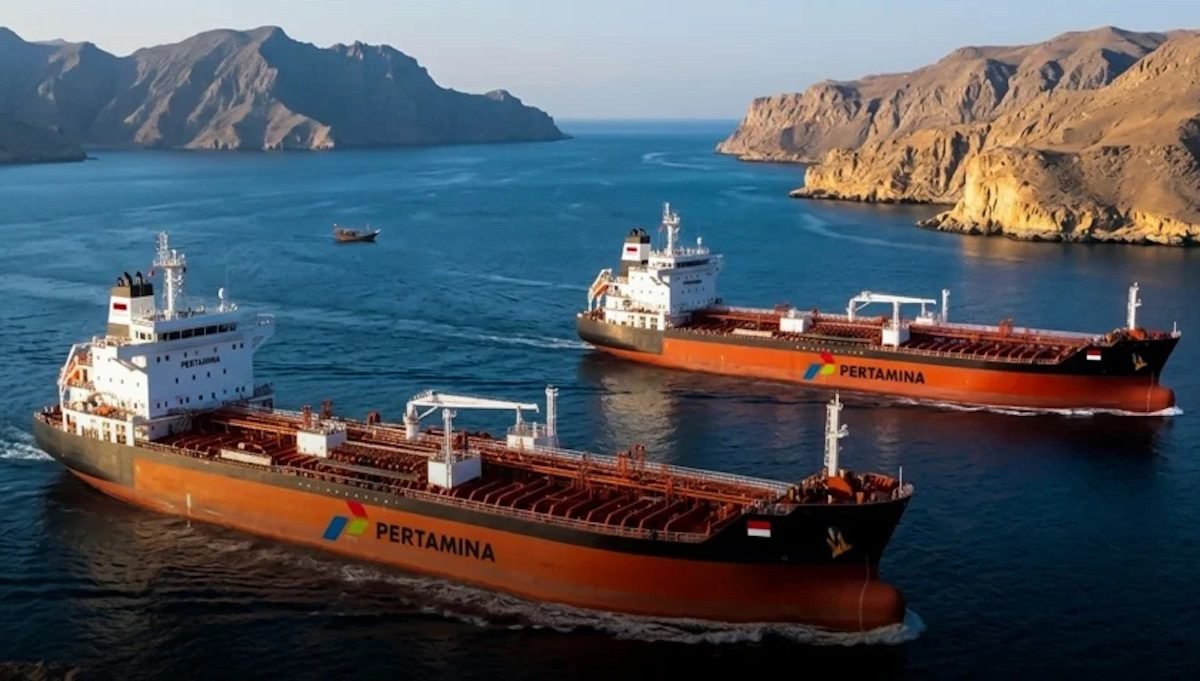
Iran’s detention of two Indonesian oil tankers, the VLCC Pertamina Pride and the PIS Gamsunoro, marked a nadir in bilateral relations long regarded as strategically aligned.
While neighboring states such as Malaysia and Thailand secured priority clearance through the Strait of Hormuz, Indonesia’s maritime assets were left stranded in Iran-blocked waters, undermining Jakarta’s energy security along the way.
The signal has been unambiguous: Tehran does not view Jakarta as a trustworthy partner at a time of war.
Iran’s punitive action reflects an accumulation of bilateral tensions: the protracted legal dispute over Indonesia’s seizure of the Iranian MT Arman 114 tanker, Iran’s recent exclusion from Indonesia-hosted multilateral naval exercises and Jakarta’s ambiguous posture on the US-Israeli strikes that started the Iran war, seemingly intended to assuage Washington.
The crisis has become a costly stress test for the foreign policy and economic management of President Prabowo Subianto’s administration. While Indonesia secured the release of its tankers through Malaysian mediation, the episode has raised questions about Indonesia’s strategic autonomy.
That is: Does Jakarta still command its “free and active” foreign policy compass, or has it become ensnared in a geoeconomic “gilded cage” designed by Western powers?
The first, and likely the main, source of Tehran’s grievance toward Jakarta lies in the protracted legal saga of MT Arman 114. Since its seizure in Natuna waters in 2023 over alleged illegal waste disposal, the Iranian-flagged supertanker has become a symbol of clashing sovereignties.
A July 2025 ruling by the Batam District Court, which ordered the confiscation of the vessel along with its 1.2 million barrels of crude oil, was widely perceived in Tehran as influenced by US sanctions.
The Indonesian attorney general’s subsequent attempt to auction the assets in early 2026, valued at 1.17 trillion rupiah (US$68.8 million), further aggravated tensions, particularly as it unfolded amid a broader regional conflict that demanded solidarity among developing nations.
A second diplomatic wound emerged in the defense sphere. During the fifth Multilateral Naval Exercise Komodo (MNEK) in Bali in February 2025, Indonesia reportedly canceled Iran’s participation. Two Iranian warships, IRIS Dena and IRIS Shahid Mahdavi, were allegedly instructed to turn back while en route.
Reports of pressure from the US Pentagon to exclude Iran from exercises involving American military assets landed badly in Tehran. For Iranian policymakers, the episode amounted to a diplomatic slight, reinforcing the perception that Jakarta prioritizes strategic alignment with Washington over balanced bilateral relations.
Indonesia’s diplomatic ambiguity is apparent in its dual engagement with competing international blocs. On one hand, Jakarta formally joined BRICS in January 2025, a move expected to strengthen ties with Iran as a fellow member of a Western-balancing coalition.
On the other hand, Indonesia actively participates in the Board of Peace (BoP), a multilateral initiative promoted by the Trump administration for Gaza stabilization, which Tehran regards as an extension of Israeli interests.
This dissonance between Indonesia’s rhetoric in BRICS and its BoP participation has fostered the impression that it is straddling two camps without firm footing.
The perception gap has been exacerbated by contrasting leadership styles. Following the February 28, 2026, attack that killed Ayatollah Ali Khamenei, the Indonesian government’s response was widely seen as technocratic and restrained. An official condolence letter from the president was issued only on March 4, with carefully calibrated language likely drafted to avoid offending the US.
In contrast, former President Megawati Sukarnoputri sent condolences promptly on March 1, adopting a more ideological tone by condemning unilateral aggression and invoking the non-aligned movement spirit of the 1955 Bandung Conference.
The divergence signaled to Tehran that Indonesia’s political undercurrents may be more sympathetic than its official posture suggests.
Diplomatic labyrinth
Jakarta’s dilemma in dealing with Iran cannot be disentangled from its deepening economic dependence on the US. The signing of the Agreement on Reciprocal Trade (ART) on February 19, 2026, just 10 days before the Hormuz crisis erupted, has no doubt constrained Indonesia’s diplomatic flexibility.
While ART grants zero-tariff access for thousands of strategic exports, including textiles and electronics, it effectively binds aspects of Indonesia’s economic security policy to Washington’s orbit.
Some observers have described the arrangement as a “gilded cage,” where short-term economic gains come at the cost of muted criticism toward US military actions in the Middle East.
Amid the Indonesia-Iran impasse, Malaysia emerged as an unlikely mediator. A three-hour meeting between President Prabowo and Prime Minister Anwar on March 27 proved pivotal: within 24 hours of Malaysia’s backchannel intervention, Iran granted the Pertamina tankers safe passage through the Strait of Hormuz.
Yet Indonesia’s reliance on a neighboring country to secure the release of critical national assets revealed a troubling breakdown in direct communication between Jakarta and Tehran.
Under the new leadership of Mojtaba Khamenei, appointed on March 9, 2026, Iran appears poised to adopt a firmer stance toward states perceived as ambivalent in their support for the sovereignty of Muslim nations. Unless Indonesia recalibrates its position, its energy security — 20% of which depends on Hormuz transit — will remain exposed to geopolitical volatility.
With Brent crude prices briefly surpassing $120 per barrel, Indonesia’s 2026 energy subsidy burden could swell by more than 210 trillion rupiah beyond initial projections. This geoeconomic shock, effectively a “bullet-less strike,” has the potential to derail priority development programs if supply disruptions persist.
Reclaiming autonomy
Resolving Indonesia’s tanker crisis on a durable basis requires steps beyond routine ministerial diplomacy. First, the MT Arman 114 dispute must be addressed at the highest political level.
The Indonesian government should consider halting the asset auction and pursuing an out-of-court settlement that allows for the vessel’s return to Iran as a goodwill gesture. While such a move may invite criticism from Washington, it is key for rebuilding trust with Tehran.
Second, Indonesia must leverage BRICS to advance economic independence from the US dollar. Initiating energy cooperation and alternative payment systems with fellow BRICS members, including Iran, would provide a buffer against potential secondary sanctions. Indonesian strategic autonomy cannot remain rhetorical; it demands tangible diversification of economic and security partnerships.
Third, personal diplomacy at the leadership level needs recalibration. An eventual state visit by Prabowo to Tehran to meet Supreme Leader Mojtaba Khamenei would carry significant conciliatory weight.
Diplomacy in the Middle East hinges on personal recognition and dignity (izzah). Formal acknowledgment of Iran’s constitutional process should be followed by strategic dialogue on shared maritime security, ensuring Indonesian vessels are no longer caught in great-power crosscurrents.
Indonesia cannot afford to see its stature as a leading Asian middle power eroded by fear of external economic pressure. Balancing Washington and Tehran is inherently complex, but that is precisely the essence of Indonesia’s “free and active” doctrine.
If Jakarta fails to demonstrate consistent independence, every Middle Eastern crisis will remain a latent threat to the stability of its domestic economy.
Dr Jannus TH Siahaan is an analyst and observer of green economics and Indonesia’s political economy. He is a doctoral alumnus of Padjadjaran University.