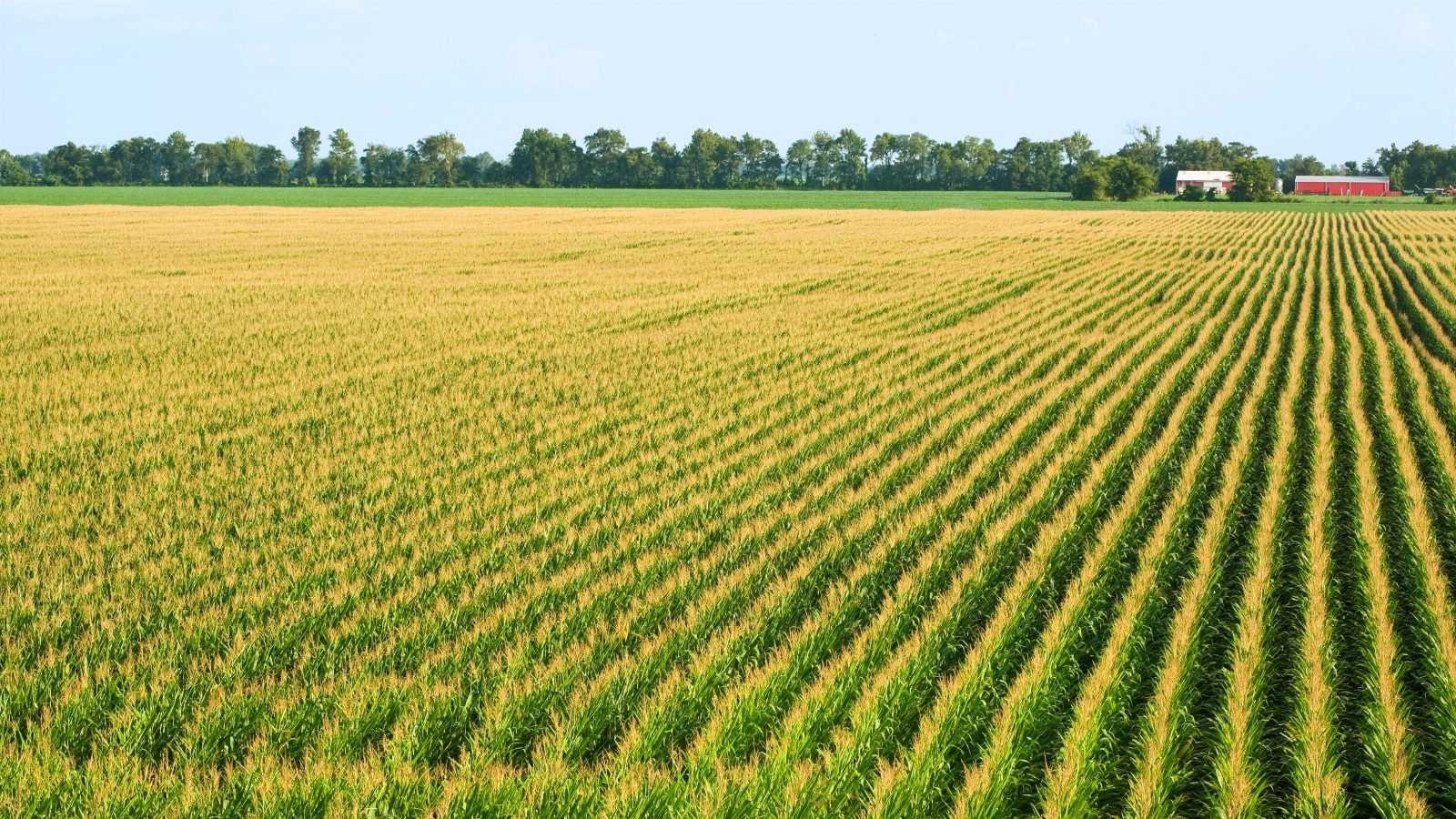
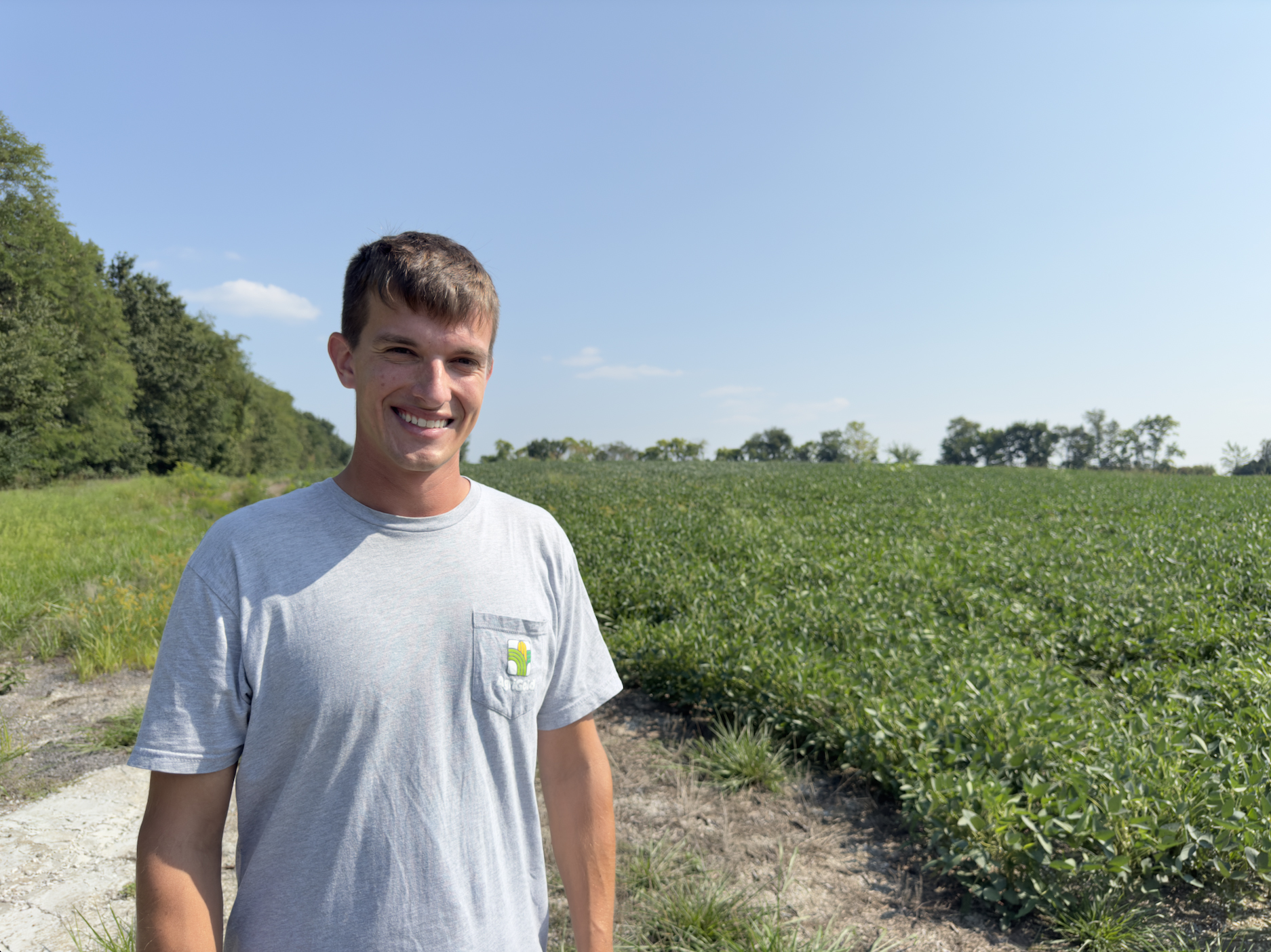
As a row crop farmer in St. Joseph, Missouri, Joe Lau said he’s noticing more extreme weather these days.
Warmer seasons throughout the year. Quarter-inch predictions of rain stamped out by storms that bring 3 inches. Increased pressure from pests on his corn. He’s also noticed that spring is coming earlier.
The USA National Phenology Network shows that this year spring arrived three to five weeks earlier than the average between 1991 to 2020 in much of the central U.S. and two to three weeks earlier in southern Midwest states.
“I have allergies bad,” said Lau, who also grows soybeans. “And this year in particular, it’s hit me hard. It’s wild that we are talking about allergy issues in winter, but that’s technically the reality of it.”
Last month, Climate Central, a nonprofit specializing in communicating climate science, published an analysis that found that spring is trending to an earlier arrival from 1981 to 2025 in most of the United States.
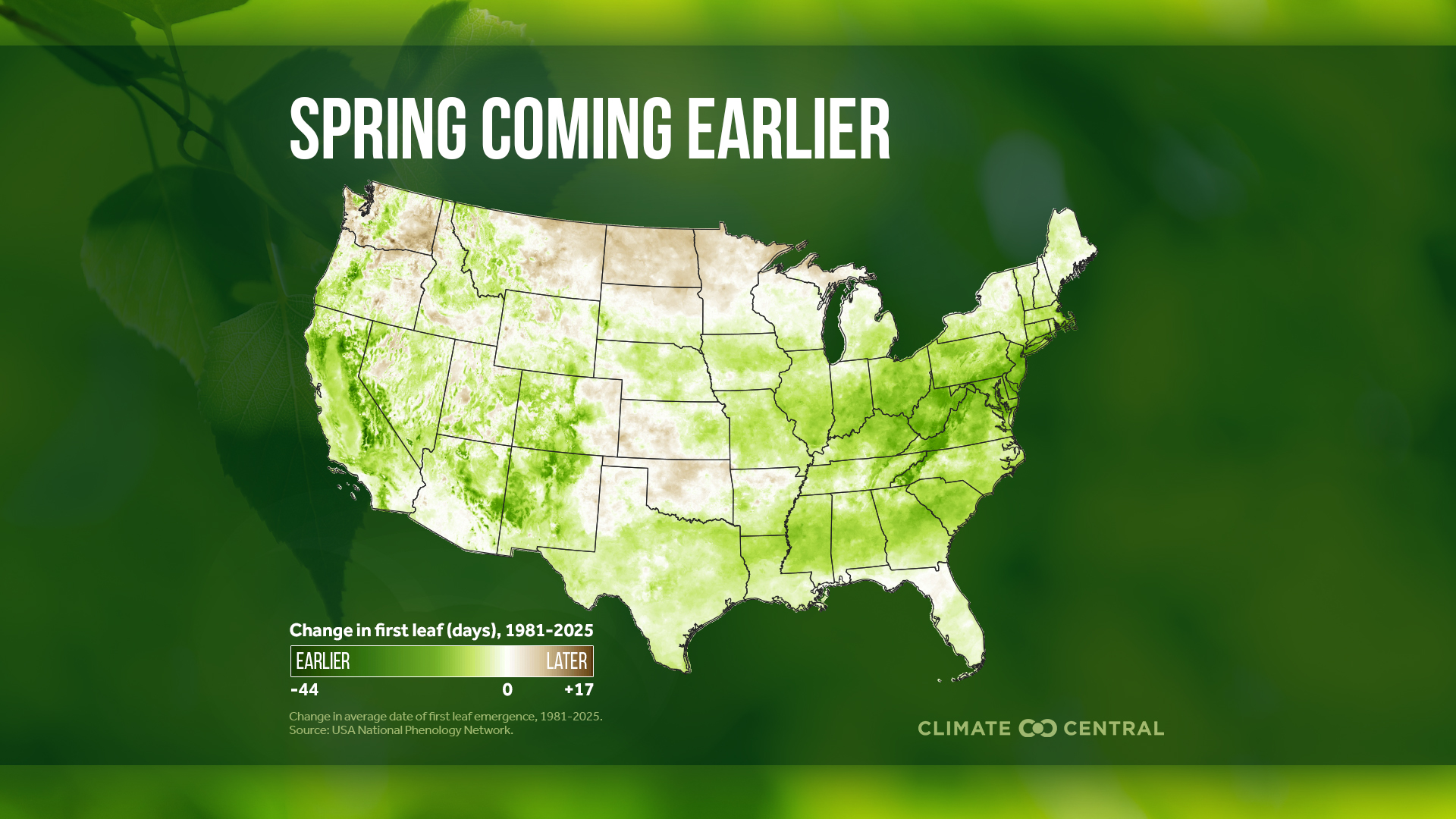
On average, leaves now emerge six days earlier than they did in 1981 in 88 percent, or 212 out of 242, of major U.S. cities. For example, in Lau’s city of St. Joseph, Missouri, the spring leaves tend to arrive two days earlier.
An earlier spring could have consequences for the agriculture industry, ecology, and more.
Where are spring leaves arriving earlier?
Climate Central used open-access data that was collected by the USA National Phenology Network, a group of volunteers and researchers who study seasonal events — like when migratory birds arrive, leaves emerge, and fruit ripens — among plants and animals to determine ecosystem health.
The analysis is based on the NPN’s first leaf index maps, which use models to predict the start of spring. To work, the models are fed data like temperature and the start date of the annual “leaf-out” — when leaves first emerge — for the early spring plants of lilacs and honeysuckle, which are found throughout the U.S.
“That very leading edge of spring is drifting earlier and has drifted, in some cases, a whole lot earlier in just that last few decades,” said Theresa Crimmins, the NPN’s director, in a briefing last month.
“That can cause this ecological mismatch,” Trudeau said.
Earlier springs can also put the agriculture industry at financial risk, she said. Whether it’s corn, soybeans, or specialty fruits, these crops can get hit with a hard freeze following an early leaf-out — also known as a false spring. It could lead to major economic damage in the agriculture industry, said Trudeau.
In 2017, a hard freeze in the southeastern U.S. destroyed fruit crops like peaches, pears, blueberries, strawberries, and even grass for livestock. It led to more than $1 billion dollars in losses for the agriculture industry, according to a report from NOAA.
“We are so dependent upon what happens in the natural environment,” Trudeau said. “And so when things start to shift and change, it’s also going to cause pretty widespread impacts for our lives.”
Growers of specialty crops — such as apricot trees or iris flowers — will be particularly vulnerable. Row crop farmers, like Lau, have more technology to aid them. He said seed treatments have allowed soybean farmers to plant earlier and grow longer, increasing their production.
So the effects of an earlier spring have been “minimal” for him.
“From purely a row-crop production standpoint, the springs have been very favorable for us,” said Lau.
One thing that does have him worried is the bug activity out in his fields — they’ve been plentiful with the warmer weather.
“I raise all non-GMO corn and so I don’t have the insect traits bred into the corn genetically modified, and so that does concern me that we’re kind of relying on what nature hands us,” Lau said.
While farmers and communities are doing their part to innovate and adapt to continue producing, Trudeau said addressing the root of climate change is the most urgent need.