The regime’s new leader is highly likely to have suffered amputations, spinal cord, and brain injuries; the regime is in mosaic command and survival mode
More than one month after the devastating attack by Israeli fighter jets on Ali Khamenei’s office and residence (known as the Beit-e Rahbari), which resulted in the death of the supreme leader of the Islamic Republic, high-ranking officials, and military commanders, the ruling regime in Iran has released no clear news regarding the status of Mojtaba Khamenei, who has been introduced as the new leader. However, a hospital source told The Media Line that he remains in a medical intensive care unit at an underground location.

In a new billboard recently installed in central Tehran, Mojtaba Khamenei is depicted with one hand and with his legs covered. (Social media)
According to the source, one of his arms is completely incapacitated, and at least one of his legs is paralyzed. In the surgeries performed so far, they have been unable to save it. Furthermore, due to the severe impact of the explosion, he has suffered spinal cord lesions, a dislocated jaw, along with brain injuries and extensive trauma to the head and face, effectively preventing him from attending meetings.
After several major surgeries, he must still undergo further operations and remain under special medical care for a long period.
Related Story: Where Is Mojtaba Khamenei?
Meanwhile, a billboard recently displayed in Tehran depicts Mojtaba Khamenei, with one arm missing and his legs obscured.
Previously, the Fars News Agency, affiliated with the Islamic Revolutionary Guard Corps (IRGC), reported his becoming a janbaz (disabled veteran), a term that signifies amputation or the permanent disability of some major body parts.
However, Mohsen Zanganeh, a member of Parliament, says Mojtaba Khamenei’s injuries were minor, and he was hospitalized for only a short period. Denying that the new leader plays no role in leading the regime and is merely symbolic, he stated that “he leads the country’s affairs.” Nevertheless, no official of the Islamic Republic has claimed in the past month to have met with Mojtaba Khamenei or even been in contact with him.
Another Member of Parliament, Mohammad-Reza Rezaei Kouchi, says that in addition to the initial strike on the Beit-e Rahbari, another attack was carried out at Khamenei’s hospital, and the leader survived both attacks.
Previously, Alireza Salarian, the Ambassador of the Islamic Republic to Cyprus, told The Guardian that according to his information, the hands and legs of the third leader of the regime were damaged during the attack on the Beit-e Rahbari, and he probably cannot deliver a speech in such a condition.
On the other hand, in the past week, some Telegram channels belonging to various factions in the Islamic Republic have referred to a letter from Ali Khamenei addressed to the Assembly of Experts, which was responsible for electing the next leader. In it, not only was Mojtaba Khamenei not mentioned as a successor, but he was explicitly denied “hereditary leadership.”
The new leader—whom President Trump said US intelligence sources have described as having homosexual tendencies, and who has traveled to London at least three times to seek treatment for fertility problems with his wife, who was killed in the Israeli attack—issued his first message with repeated errors in logic, wording, and spelling, along with inconsistent writing.
This has led many to believe the IRGC is using his name to run the country as an “absent leader,” and that, for the first time, leadership has effectively been removed from the system of Velayat-e Faqih, “guardianship of the Islamic jurist” from the Islamic Republic.
Ali Larijani, as the Secretary of the Supreme National Security Council, who published the announcement of Ali Khamenei’s death after hours of delay, was the main administrator of the Islamic Republic until his death on March 17. In fact, the regime was managed by a group consisting of IRGC commanders in coordination with the government; his death has dealt a heavy blow to the power structure in the Islamic Republic.
Since then, in line with its defense doctrine, the regime has entered what it calls the “mosaic command” stage for survival, a framework established by the IRGC for situations in which the Islamic Republic faces an existential threat.
The Media Line recently published an exclusive report detailing instructions for military and security units to act independently against the “enemy” in the event of a ground attack, including scenarios involving the destruction of command headquarters and the disruption of military communications.
Related Story Exclusive: Islamic Regime Issues Directive To Counter Potential US Ground Military Operations
According to this strategy, which Abbas Araghchi, the regime’s foreign minister, also briefly alluded to, the Islamic Republic has entered a survival mode in which mosaic command has pre-determined several successors for every crucial post, so that in the event of the death of any key official or main commander, the next appointed person takes over. However, legally, the appointment of these main commanders still requires the commander-in-chief’s decree, namely, Mojtaba Khamenei.
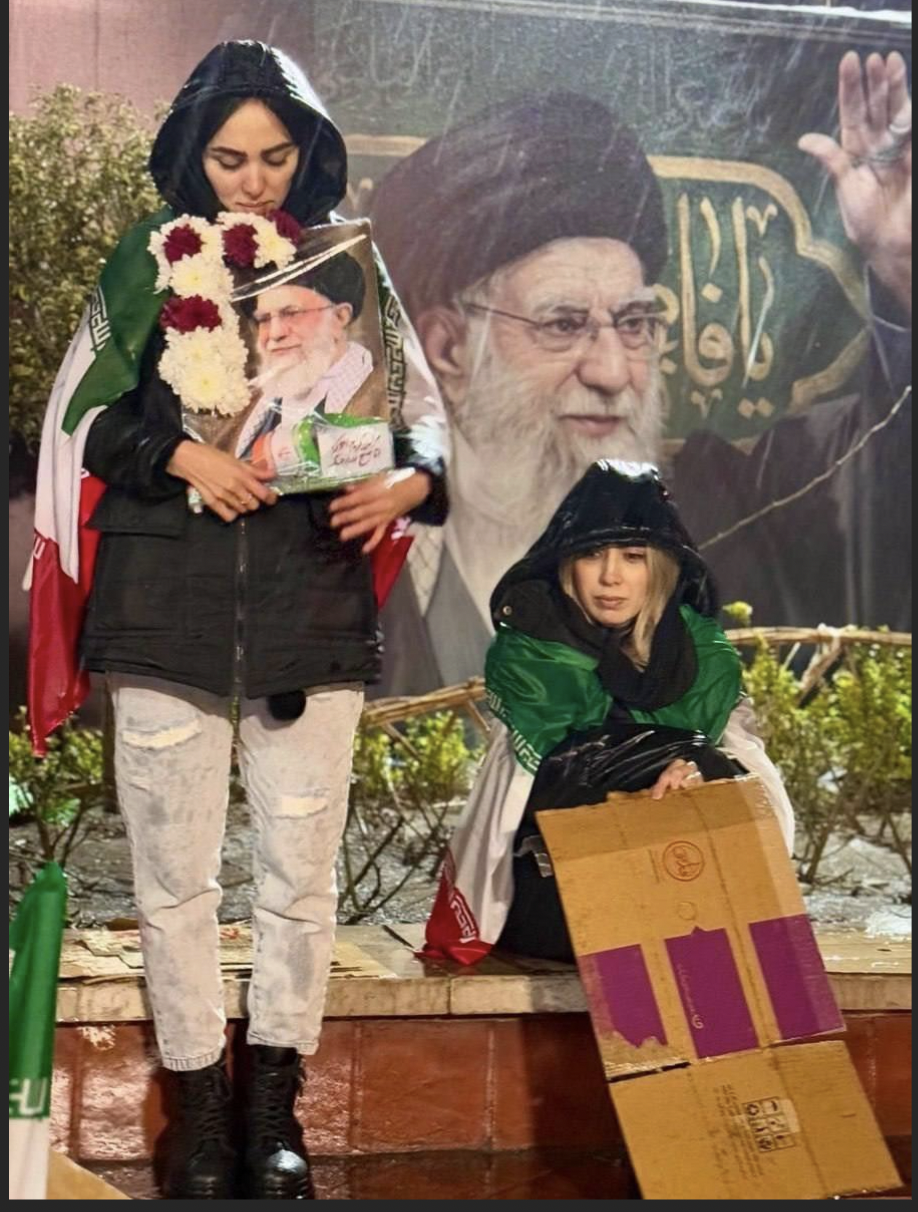
In the first message attributed to him, Mojtaba Khamenei called on supporters of the regime to take to the streets every night. This appears to reflect fear of protesters returning to the streets. Social media users, mocking this image of Mojtaba Khamenei, have referred to him as a “cardboard leader.” (Social media)
In recent days, as the Islamic Republic, in fear of the possibility of protesters returning to the streets, has called on its supporters to create a major presence in the main city centers. Some have compared Khamenei, the absent leader, to the long-absent Twelfth Imam of Shiites, preparing the way for his return. Meanwhile, in some cities, strange billboards have also been installed featuring images of Mojtaba Khamenei and Adolf Hitler with a fake quote from the instigator of World War II, warning potential collaborators.

The installation of billboards featuring Mojtaba Khamenei and Adolf Hitler in some Iranian cities has sparked public shock and outrage. (Social media)
Meanwhile, more than three weeks into the controversial leadership of the absent Khamenei, internal disputes within the government and the clergy have intensified. Some maraji (grand ayatollahs) have officially refused to confirm Mojtaba Khamenei’s status as an “ayatollah.” Among them, Ayatollah Sistani, who has great influence among Iraqi Shiites, along with the ayatollahs of Qom, such as Vahid Khorasani and Mousa Shubairi Zanjani, believe Mojtaba Khamenei lacks the legitimacy of Ijtihad, leadership, and the title of Valiat-e Faqih (Guardianship of the Jurist).
This also occurred in the case of Ali Khamenei himself; despite being viewed by some grand ayatollahs—and even by his own admission—as lacking sufficient religious qualifications, he was installed as a temporary leader through the insistence of Akbar Hashemi Rafsanjani, who sought to shape his own path within the regime after Khomeini. Over time, that temporary role was quietly made permanent.

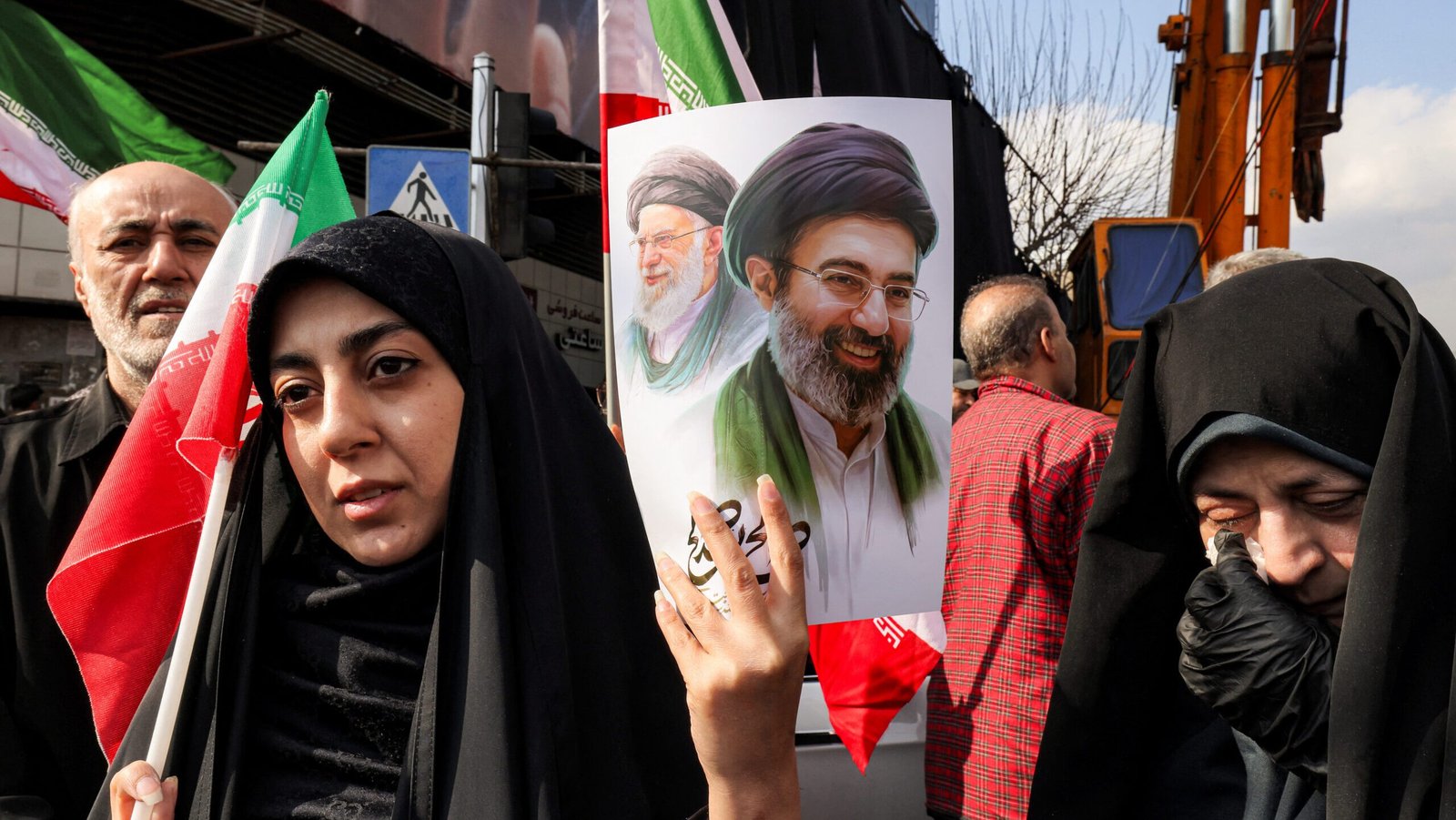
The regime’s propaganda apparatus has produced AI-generated and enhanced images of the new leader to make him appear more attractive and commanding, but there has been no sign of him in public over the past month. (Nur Photo via Getty Images)
Also recently, a group of Shiite students (talabeh) from Qom and Mashhad, in a rare statement, questioned the leadership of Mojtaba Khamenei, accusing the IRGC of seeking to dominate the country with a “religious monarchy,” and described the new leader of the Islamic Republic as lacking the competence for Iftaa (issuing religious rulings).
In recent days, especially after the death of Larijani and President Trump’s reference to negotiating with the “real leader in Iran,” whom some media have called Mohammad Bagher Ghalibaf, the speaker of the Iranian Parliament, disputes within the government have also increased sharply.
It is said that President Masoud Pezeshkian is under heavy pressure to resign, which has been met with strong opposition from the IRGC and even threats to forcibly replace him with his vice president, Mohammad Reza Aref. Some sources have reported intense tension between Pezeshkian and Ahmad Vahidi, the Commander of the IRGC, which has effectively restricted the government’s executive power and blocked his access to Mojtaba Khamenei.
On Tuesday, Zanganeh again denied that Khamenei is still being hospitalized, stating, “I have heard from the Minister of Health that he is in good health.” Nevertheless, the Islamic Republic media have not broadcast any images or even audio of Khamenei in the past month.