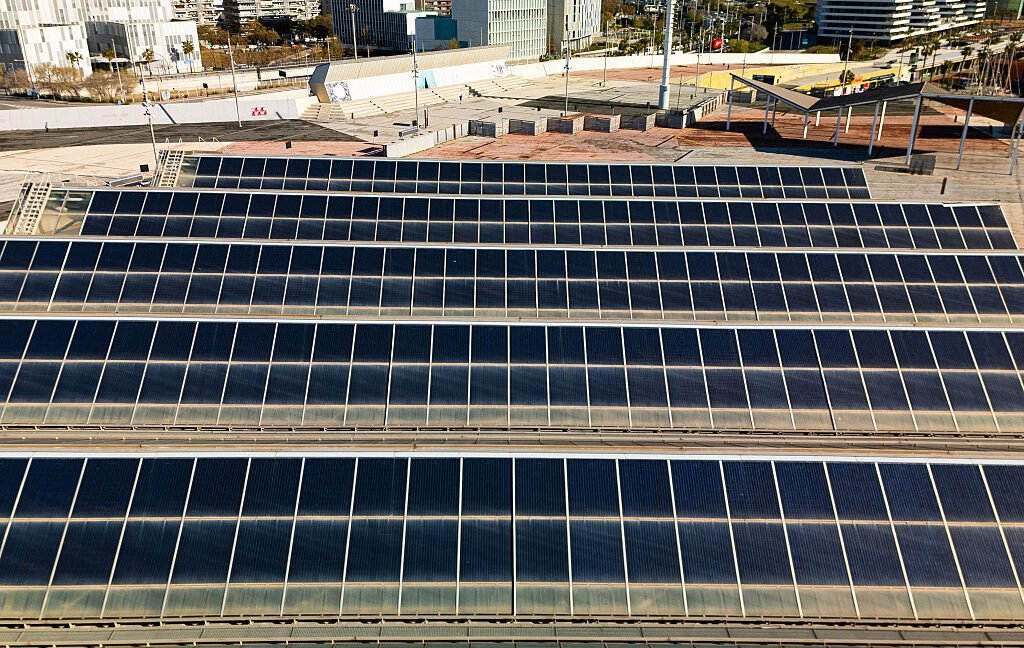
On Wednesday, the International Renewable Energy Agency (IRENA) released its numbers on what was built in 2025. And much as we saw in the US, solar power is the primary driver of change. The numbers show that the world installed an average of 1.4 gigawatts of solar capacity every day last year, for a total of 511 GW. That brings the total solar capacity up to 2.4 Terawatts, making it the largest single source of renewable capacity by far, at more than a Terawatt above either wind or hydro.
Obviously, the actual power generated will be less than the rated capacity. And because solar panels have become so cheap, the economics now favor installing panels in areas that get far less sunlight—places in which photovoltaics would have been a questionable decision just five years earlier. So we’re likely to see the energy produced for each unit of capacity (termed the capacity factor) decline over the coming years.
How much of a factor is that? 2025’s power-generation numbers are not yet available, but data from 2024 shows photovoltaics generating 7 percent of the world’s power, with wind at 8 percent and nuclear at 9. That’s despite having 1.9 times as much solar capacity as wind capacity. Still, despite the lower capacity factor, solar is catching up fast. As these numbers don’t include concentrated solar power or last year’s data, it’s possible that solar has already become the second-largest source of carbon-free electricity (after hydropower). If not, we’re certain to see that happen before the decade is out.
This is all happening at a time when other renewables aren’t standing still. Wind power saw an additional 160 GW of capacity installed and hydro another 18 GW. The rest, meaning things like geothermal and biofuels, grew by a bit under four gigawatts.
Totaling it all up means that renewable capacity grew by roughly 700 GW last year, an increase of 16 percent. That number represents 86 percent of the overall growth in global generating capacity.
“In the midst of uncertain time, renewable energy remains consistent and steadfast in its expansion,” said Francesco La Camera in a statement that referenced the current fossil fuel price shocks. “This not only indicates market preference but also makes a strong case for renewable energy resilience with brutal clarity… Countries that invested in the energy transition are weathering this crisis with less economic damage, as they boost energy security, resilience and competitiveness.”
Overall, renewable generating capacity is now a bit over 5.1 terawatts. Over half of that (2.9 TW) is in Asia, driven by the massive expansion of wind and solar in China. Regionally, Europe is in second place, with a bit under a terawatt of capacity installed.
The data these numbers are based on is available if you want to check things out for yourself.