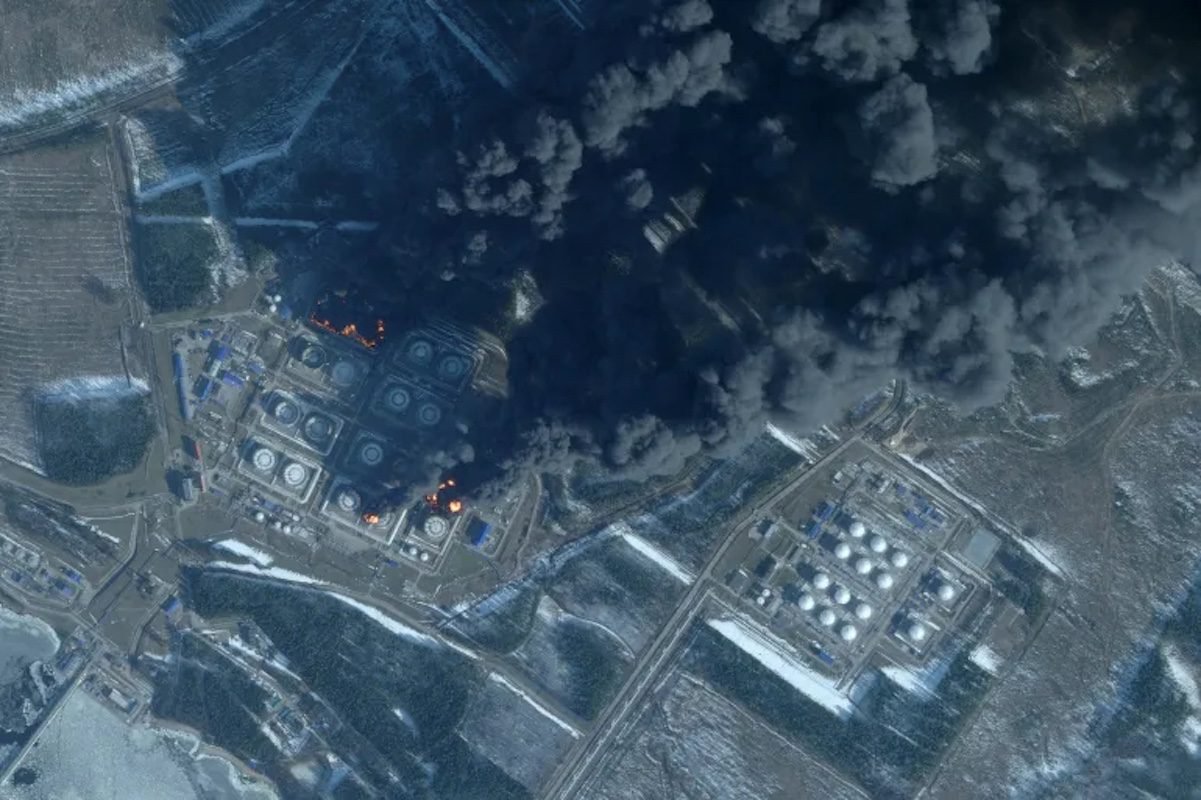

The Slavneft-YANOS oil refinery in Russia’s Yaroslavl Region, one of the country’s five largest and capable of refining 15 million tons of oil per year, was reportedly hit by Ukrainian drones early on March 28.
This follows last week’s bombing of the Ust-Luga oil refinery and port, which prompted speculation that Russian oil producers might soon declare force majeure. Shortly afterward, Russia announced a ban on gasoline exports for an indefinite period.
Against this backdrop, Reuters calculated that 40% of Russia’s oil export capacity had been halted, a figure that includes the impact of earlier strikes on Russian refineries.
The Kremlin has not confirmed the statistic, but there is little doubt that the sustained attacks have reduced export capacity to some degree. This is significant from Washington’s perspective, which has counted on Russian exports to help alleviate the global energy crisis.
US Treasury Secretary Scott Bessent moved toward that goal when he temporarily waived US sanctions on purchases of Russian oil – first extending the waiver to India, then to all buyers. But Ukrainian strikes on Russian refineries have greatly complicated those plans.
The result could be further reductions in global supply, prolonged price spikes, reduced consumer spending worldwide and therefore indirect damage to the US economy.
To be sure, it was argued here that the US might cynically seek to worsen the global energy crisis, calculating that it could manage the systemic consequences by retreating to the Americas while destabilizing Afro-Eurasia and then dividing and ruling it.
While that scenario is still possible, the Trump administration does not appear to prefer it at present, as suggested by the temporary sanctions waiver on Russian oil purchases – though it could still adapt to that scenario if it transpires.
For these reasons, Trump and his team might not have pre-approved Ukraine’s recent strikes against Russia’s energy infrastructure – in which case they would have been a unilateral decision by Ukrainian President Volodymyr Zelensky at the expense of US interests.
If so, Zelensky may have sought to exploit Trump’s hyper-focus on the Iran war to continue hitting the Kremlin’s revenue by reducing its energy exports and the budgetary income derived from them, all in an attempt to pressure Moscow into concessions.
While the US is also pressuring Russia “to make more concessions” – as Foreign Minister Sergey Lavrov noted in a recent interview – strikes on energy infrastructure may not be Washingto’s preferred method. Trump may therefore chastise and even punish Zelensky if the strikes continue.
Any punishment could take the form of suspended arms transfers to NATO allies for delivery to Ukraine, given Trump’s sharp criticism of the alliance in recent days over its refusal to support US efforts to reopen the Strait of Hormuz.
Trump must therefore decide whether restoring Russian oil exports to ease the global energy crisis takes priority over allowing Ukraine to continue striking Russian refineries at the cost of worsening the crisis.
If the former, he will need to take some action against Zelensky. If the latter, it would suggest he is moving toward a more calculated approach to catalyzing a global reset by allowing the energy crisis to worsen.
The coming days should clarify which of these scenarios Trump prefers.