Indonesia is calling it “impact investing.” In fact, it is not.
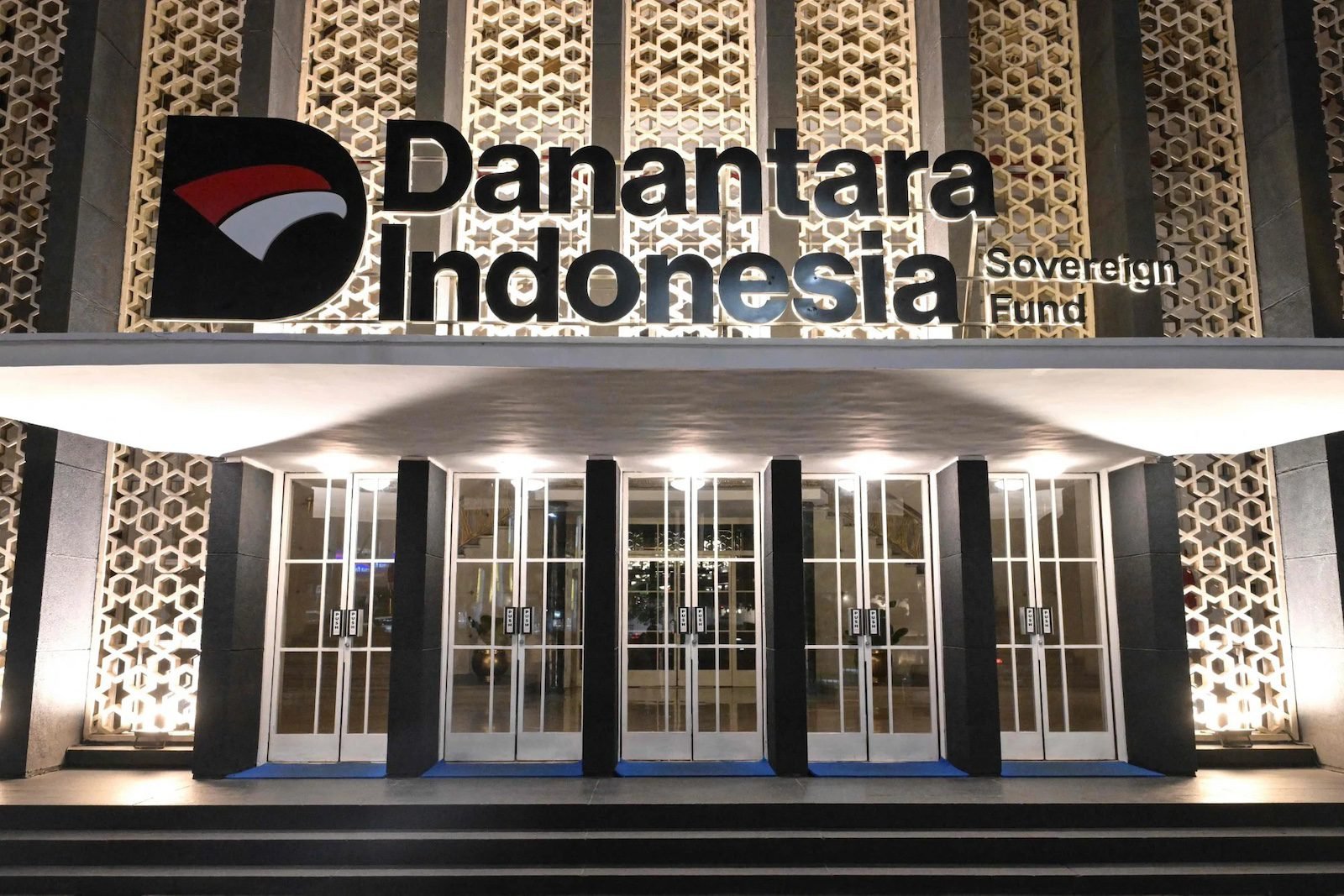
The country’s new sovereign fund, Daya Anagata Nusantara, better known as Danantara, has been presented as a vehicle to align financial returns with national development goals. In practice, it looks far closer to a more assertive form of state capitalism, repackaged in the language of modern finance.
The distinction matters. Indonesia is confronting a familiar but increasingly urgent problem: premature deindustrialization, where industry begins to shrink before the economy reaches high-income status.
Manufacturing’s share of GDP has declined from around 30% in the early 2000s to roughly 18-19% today, while its share of employment has stagnated despite a growing labor force.
Job creation is struggling to keep pace with an expanding workforce of more than 2 million new entrants each year, and growth is increasingly tied to commodities and services rather than higher-value industries. Reversing that trajectory requires disciplined capital investment that is allocated based on performance.
In theory, impact investing offers exactly that. At its core, it means deploying capital with measurable economic, social or environmental outcomes, while maintaining financial discipline.
It can crowd in private investors, scale new industries and support long-term upgrading. But this only works if the institutions allocating capital are credible and follow clear, rigorous rules for capital allocation. That is where Danantara diverges from the model it claims to embody.
Rather than operating at arm’s length from government, the fund is deeply embedded in Indonesia’s broader state-led industrial strategy, particularly the push for downstreaming and resource nationalism.
It is expected not only to invest, but also to coordinate state-owned enterprises and advance national priorities. In effect, the state is both setting the mission and executing the capital allocation. That is not impact investing. It is the state moving its own money around.
What is at stake is credibility. Mislabeling state-directed capital as impact investing risks eroding investor confidence, weakening standards and blurring accountability.
If market-based investment discipline is replaced by political narrative, Indonesia risks misallocating capital while weakening its position in an increasingly competitive regional investment landscape.
This risk is most evident in sectors already dominated by state-owned enterprises. Channeling more capital into these areas may increase investment volumes, but not necessarily productivity or innovation.
Without clear evidence that such investments create new capabilities or move production into higher-value activities, the “impact” becomes difficult to distinguish from the expansion of existing structures.
Recent signals around Danantara’s investment pipeline point in this direction. Large, capital-intensive projects in extractive industries, infrastructure and renewable energy promise strategic visibility but carry familiar risks: cost overruns, political selection and uncertain returns.
For an economy trying to broaden its industrial base, concentration of capital in a narrow set of sectors may constrain, rather than expand, the space for new industries to emerge.
The handling of the Whoosh high-speed rail project’s debt makes the point even clearer. When the Finance Ministry refused to absorb billions in liabilities, the burden was shifted to Danantara and reframed as an investment decision. In substance, this is a transfer of fiscal risk.
That directly contradicts the principles of impact investing. Genuine impact investing requires additionality and measurable returns tied to those outcomes. Absorbing legacy liabilities does neither.
It does not create new economic activity, improve productivity or crowd in private capital. Instead, it repackages existing obligations under a different label, weakening both financial discipline and the credibility of the “impact” being claimed.
Across Asia, governments are competing to attract capital and reposition themselves within shifting global supply chains. Countries such as Vietnam and India are doing so through credible policy frameworks and consistent signals to investors.
Vietnam has aggressively integrated into global manufacturing networks, supported by stable export-oriented policies, participation in trade agreements such as the CPTPP and EVFTA, as well as the rapid expansion of electronics production led by firms like Samsung. The result has been sustained growth in high-value manufacturing and strong inflows of foreign direct investment.
India, meanwhile, has combined industrial policy with clearer market signals through initiatives such as the Production-Linked Incentive (PLI) schemes, which tie government support directly to incremental output and export performance. This approach preserves financial discipline while still advancing national priorities, particularly in sectors like electronics and pharmaceuticals.
The contrast with Temasek Holdings is also instructive. Temasek aligns with national priorities but maintains a reputation for financial discipline and operational independence. That credibility allows it to crowd in private capital while maintaining return-oriented discipline. It shows that state involvement need not come at the expense of market discipline, so long as the boundaries are clear and consistently enforced.
Danantara has yet to establish those boundaries. Its current trajectory suggests a model in which political priorities shape not only what to invest in, but how those investments are made. That may accelerate spending in the short term, but it risks weakening the investment discipline needed to sustain industrial transformation over time.
Calling it impact investing does not create impact; it only obscures whether it exists at all. The country’s challenge is not a lack of ambition or capital, but the credibility of how both are deployed. Without clear boundaries between political priorities and investment decisions, the result is a gradual erosion of trust in a region competing fiercely for capital.
Jonathan Manullang is a permanent member of the Basic Income Earth Network, a London-based organization linking global efforts on basic income.