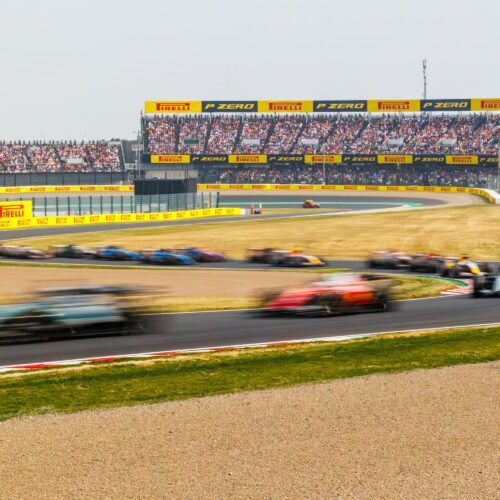
Following this past weekend’s Japanese Grand Prix, Formula 1 goes into a five-week hiatus now that war in the Gulf has made it impossible to hold races in Bahrain and Saudi Arabia. The unplanned break is probably welcome up and down the paddock as teams, drivers, and officials try to get their heads around this new generation of F1 car and the radical new demands it places on them all. Those new challenges were on full display at Suzuka.
On the plus side, the race itself was quite exciting. That’s something you could not have said in 2025, a snoozefest with cars driving in procession and few opportunities to overtake. A hefty reduction in aerodynamic downforce for 2026 means that cars can follow each other more closely. But after this visit to one of motorsport’s most-loved, most challenging circuits, it’s very hard to avoid the conclusion that F1 has painted itself into a corner with its new hybrid systems. The sport itself recognizes this; on April 9, it will hold crisis talks to try to find a solution.
You don’t have the energy
The problem, as we have been warned for some time, is the new hybrid power trains, which combine a 1.6 L V6 that generates 400 kW (536 hp) with a 350 kW (469 hp) electric motor. Getting to a near 50:50 split between internal combustion and electric power was key to attracting new auto manufacturers to the sport, and Audi, Ford, Cadillac, and Honda were all enticed by the 2026 rules. The electric motor is fed by a 1.1 kWh (4 MJ) battery pack, but depending on the track, cars are allowed to deploy 8–9 MJ from the electric side, which means recovering that energy while out on track.
A few weeks ago in Shanghai, F1 was at a circuit with plenty of low- and medium-speed corners and braking zones that allowed drivers to recharge their batteries several times a lap through regenerative braking at the rear axle. But Suzuka has far fewer braking zones, so the cars could regenerate only about 3.65 MJ of the 8 MJ allowed this weekend. At a full deployment of 350 kW, there’s enough energy to power the electric motor for less than 12 seconds. That energy deficit is made up by siphoning off power from the engine via the electric motor, using it as a generator—this is known in F1 as “superclipping.”
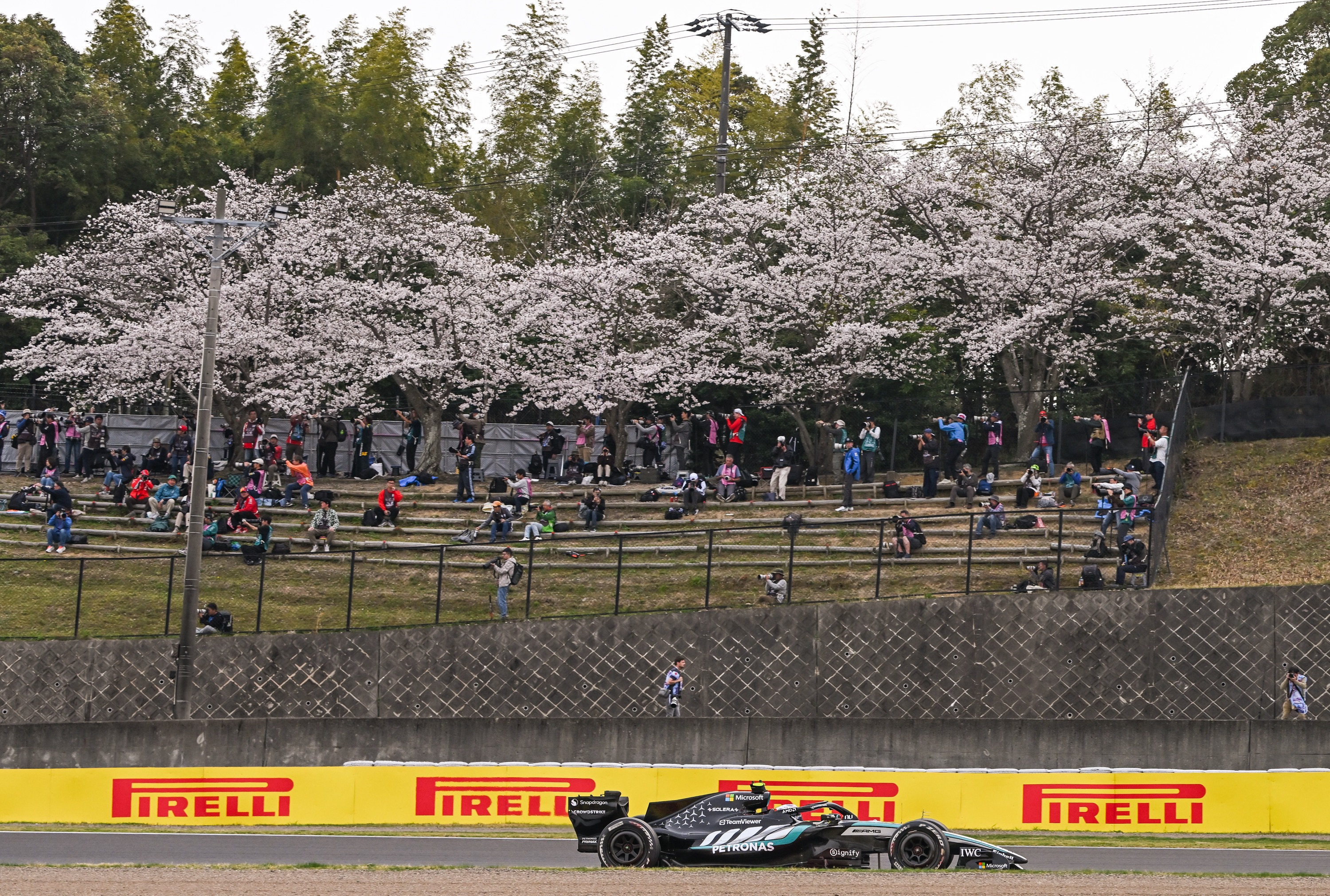
Depending on the state of the battery and where the car is on track, it might have 750 kW (1,005 hp), it might have 400 kW, or it might only have 150 kW (201 hp) at the rear wheels. Each driver will use their energy differently, and the complicated nature of the hybrid systems, which are mostly automated, means they can behave erratically. Get too much wheelspin or oversteer, and the algorithms that control power delivery will adjust on the next lap.
And that in turn means cars acting unpredictably, which we saw with dramatic consequences when the Haas of Oliver Bearman had to take avoiding action to dodge the slow-moving Alpine of Franco Colapinto as the drivers approached the entry to Spoon Curve. Bearman darted left over the grass to miss the Alpine and spun, hitting the wall in a 50 G impact.
Critics of the new technical rules have long predicted that dangerous speed differentials of up to 70 km/h (43 mph) were possible, and it seems they were right. Hence the April 9 meeting to discuss solutions. It probably won’t be easy, though. The simplest fix would be to allow a larger battery, but F1 cars are very tightly packaged, and this would require each team to undergo an expensive redesign, making the cars bigger and heavier in the process.
Increasing the V6 engine’s fuel flow to generate more internal combustion horsepower would also help but would likewise probably require a larger fuel tank, again resulting in a redesign and bigger, heavier cars. Or the sport could limit the amount of power of the electric motor; capped at just 200 kW (268 hp), the battery could last for around 20 seconds.
No more fast corners
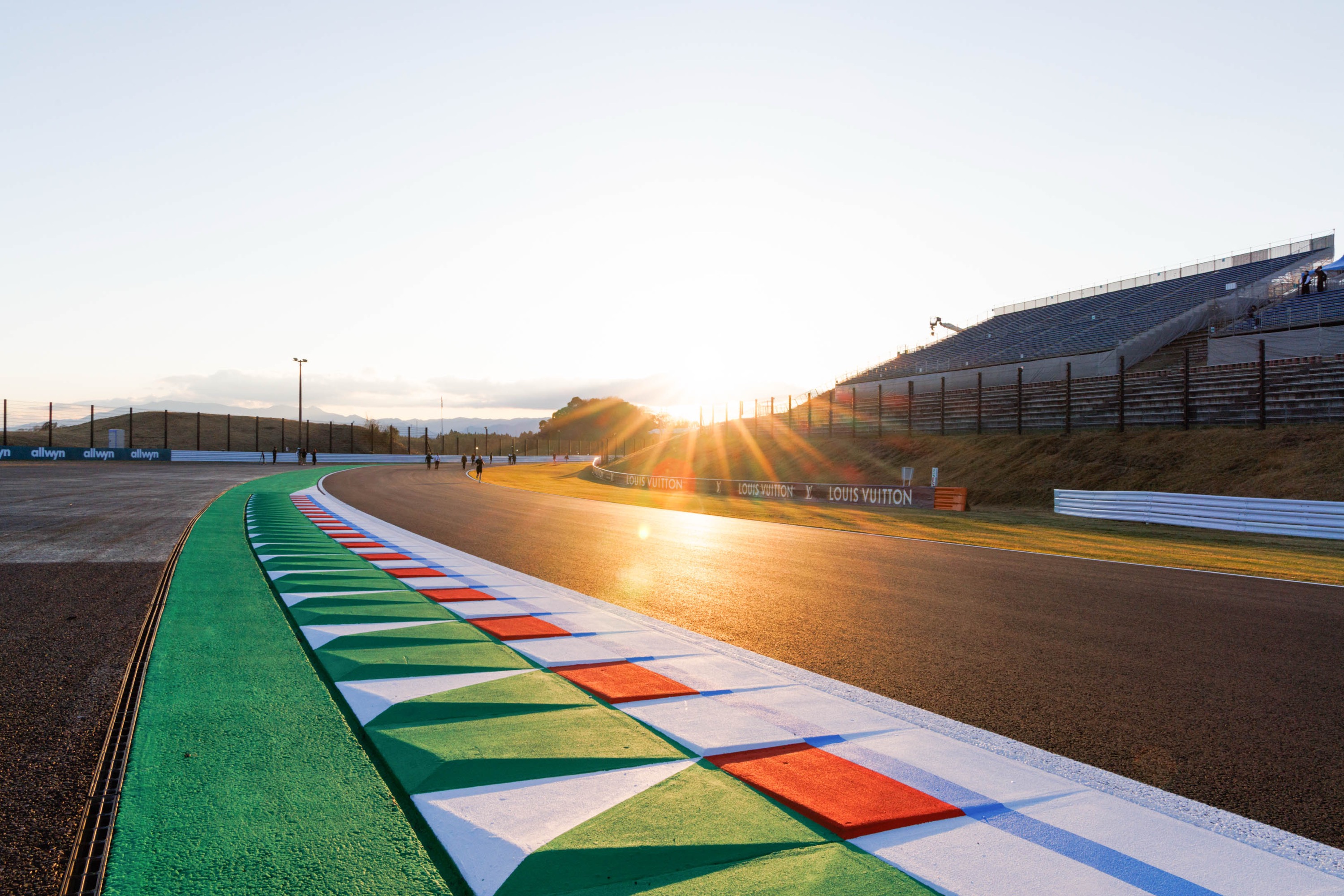
Unlike many F1 fans (and some of the drivers), I have tried hard to be positive about the 2026 technical regulations. That posture became very difficult to maintain after watching the cars qualify. The most famous corner at Suzuka is called 130R, a fast left toward the end of the lap that comes after a long flat-out run from Spoon. It used to be a challenge, but last year, 130R was barely a corner; the cars had so much downforce that they went through it on rails.
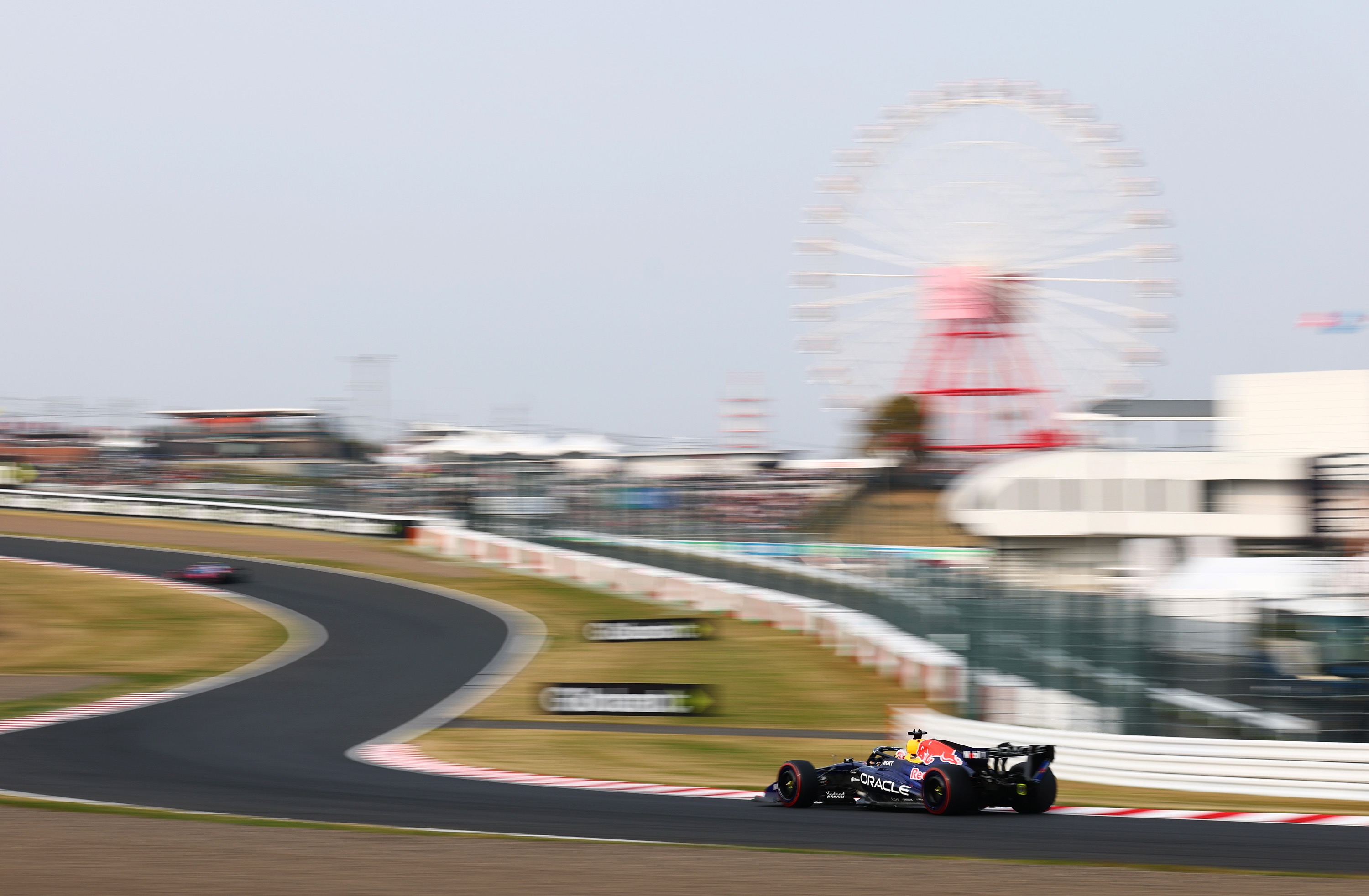
If you thought that was bad, it was all forgotten this year as drivers coasted through the corner all the way to the Casio Triangle instead, losing up to 50 km/h (32 mph) from the apex of 130R. Watching the onboard footage of cars slowing through 130R was frankly demoralizing, as was the similar sight of cars lifting and coasting into turn 1.
“The problem is, of course, you have a long straight and then only a little chicane and then a long straight again,” said Red Bull’s Max Verstappen. “So if you deploy in one straight, you have nothing on the other. Whereas on some other tracks, if you have a long straight, then you have maybe a few corners and you have time to charge. Here, you don’t.”
That’s now also true for turn 1 and Spoon—instead of braking from high speed, the cars begin to decelerate halfway down the straight, then begin their coast phase well before the corner.
So the fastest way around an entire lap is now no longer going flat out but instead choosing where and when to deploy that precious and limited energy. “I was a bit disappointed in qualifying, as the more you pushed, the slower you went,” said Williams driver Carlos Sainz. “That’s what happened to me in Q2. I think I had a bit less slipstream on my lap and I was in clean air, I went quicker in every corner, slower in every straight, and I went one tenth slower. And that’s simply because I spent more time at full throttle because I went faster in the corners and pushed harder. Super clipping came into the deployment a bit, and a bit of lift and coast also in that qualifying lap. Overall, not good enough, I think, for F1.”
“High-speed corners now became the charging station for the car. So you go slower, you charge the battery in the high-speed, and then you have the full power on the straight. So driver skill is not really needed anymore,” said Aston Martin’s Fernando Alonso. Ferrari’s Charles Leclerc was more blunt: “I can’t understand quali—it’s a fucking joke! I go faster in corners, throttle earlier… I’m losing everything in the straight!”
I have to agree. F1 is supposed to be the fastest single-seater racing cars, not just the fastest single-seaters at low- to medium-speed tracks. I sincerely hope the sport finds a solution. If it doesn’t, the Italian Grand Prix at Monza and the Belgian Grand Prix at Spa—two of the fastest and most exciting circuits on the calendar—might as well just not take place.
That said, even vocal critics like Leclerc think that there’s plenty of merit to the 2026 cars, which race well. It’s a different kind of racing from what we are used to in F1; lap times are limited by energy, not grip, and the demands on drivers are now far more mental than physical, as they have to know when and where to deploy and when to conserve. This, too, draws criticism from racing drivers who would rather that was confined to Formula E.
Four-time world champion Verstappen, in particular, has described the racing as “mushroom mode” (in reference to the mushrooms in Mario Kart), “anti-racing,” and a “joke.” Making things worse for the Dutch driver is the fact that his Red Bull is far from competitive, perhaps the fifth fastest team out of 11. His contract allows him to exit Red Bull if he isn’t second in the points by a certain point this summer, and as such, I would not be too surprised if Verstappen retired from the sport at the end of 2026 to compete in other races like the Nürburgring 24H or the 24 Hours of Le Mans.
Two in a row
Young Kimi Antonelli of Mercedes was victorious on Sunday, adding a second win to his tally. Fast all weekend, he took pole but messed up his start and was down to sixth place as he was swarmed by the faster-moving McLarens and Ferraris. Among the issues Mercedes will no doubt be working on during the five-week break is getting off the line better, as their cars have lost positions at the start of each of the three races this year.
McLaren’s Oscar Piastri took the lead and, other than briefly being passed by the Mercedes of George Russell on lap 8, managed to stay there until his pitstop. Russell took first again before pitting a few laps later, at which point Antonelli took the lead and never gave it up. He was helped by a safety car triggered by the Bearman crash, allowing Antonelli to make a stop with far less time lost than his rivals, who stopped under green flag conditions.
Piastri, who didn’t complete a single Grand Prix lap in Australia or China, showed that McLaren is starting to figure out its new car and came home in second place, with the Ferrari of Leclerc in third. Russell, meanwhile, finished in sixth after losing several positions when a software glitch told his engine to start superclipping instead. “It was a bug in the electric system, in the software, that we thought we were going to give him an advantage by deploying energy,” explained team principal Toto Wolff.
F1’s next race will be the Miami Grand Prix, held during the first weekend in May.