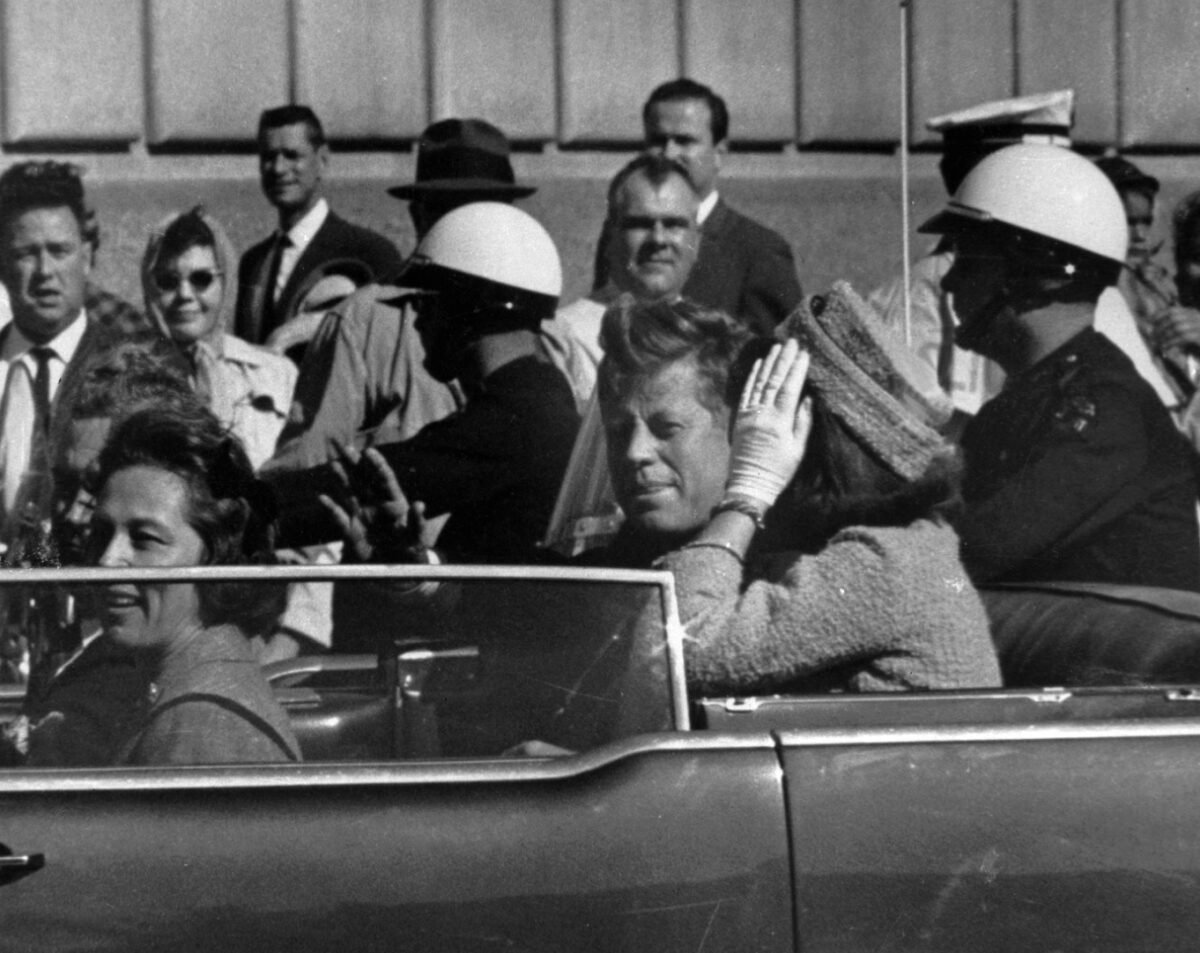
More than six decades after the assassination of President John F. Kennedy, a chilling claim from someone in his inner circle is stirring fresh debate — and raising new questions about one of the most scrutinized moments in American history.
Evelyn Lincoln, Kennedy’s fiercely loyal personal secretary, reportedly spent her final years convinced that the president wasn’t just assassinated — but deliberately eliminated in a calculated political plot from within his own government.
Lincoln, who worked closely with Kennedy for over a decade, died in 1995. But before her passing, she left behind a startling 11-page addendum tucked into an unpublished memoir — a document that would later be uncovered in the JFK Library in Boston.
According to researchers, the handwritten notes reveal Lincoln’s deeply held belief that Lee Harvey Oswald did not act alone — and may not have been the true mastermind at all.
“From the catbird seat that I had during my 12 years as John F. Kennedy’s personal secretary,” Lincoln wrote, “I would have to say that, in my opinion, President Kennedy’s death… was a deliberate professional political murder.”
Her words weren’t casual speculation. They were shaped by years inside the White House, witnessing the intense political pressures and powerful enemies Kennedy faced.
And Lincoln didn’t shy away from naming those enemies.
From organized crime figures to extremist groups, she believed multiple factions had both the motive and the means to want Kennedy gone. She pointed to the explosive political climate of the early 1960s — especially in Dallas — where tensions were high and hostility toward the president was palpable.
“The atmosphere… was filled with hatred and suspicion,” she wrote. “The time was ripe.”
Perhaps most shocking was her suggestion that elements of the mafia, intelligence agencies, and anti-Castro operatives may have intersected in a shared goal — removing Kennedy from power.
Lincoln theorized that anger over failed attempts to reclaim Cuba, combined with Kennedy’s civil rights push and crackdown on organized crime, created a dangerous alliance of interests.
In her view, that convergence could have led to a coordinated assassination effort — one far more complex than the lone gunman narrative.
And she wasn’t alone in questioning the official story.
Lincoln claimed that Vice President Lyndon B. Johnson initially suspected a broader conspiracy before ultimately backing the conclusion that Oswald acted alone — a shift that has long fueled speculation among skeptics.
To this day, Kennedy’s assassination remains a subject of intense debate, with countless theories attempting to explain what really happened on that tragic day in Dallas on November 22, 1963.
But Lincoln’s account stands out for one reason: proximity.
She wasn’t an outsider or a distant observer. She was there — inside the halls of power, witnessing the tensions, the threats, and the stakes.
And according to historians who’ve reviewed her writings, she had nothing to gain by sharing her beliefs — especially since she never made them public during her lifetime.
Now, decades later, her words are resurfacing — and reigniting a question that refuses to fade:
Was the official story the full truth… or just part of it?