Following the US-Israel strikes on Iran on February 28, major airlines canceled numerous flights to and from Middle Eastern countries, leaving many travelers stranded. This sparked a race between Beijing and Taipei to evacuate Taiwanese travelers from the region.
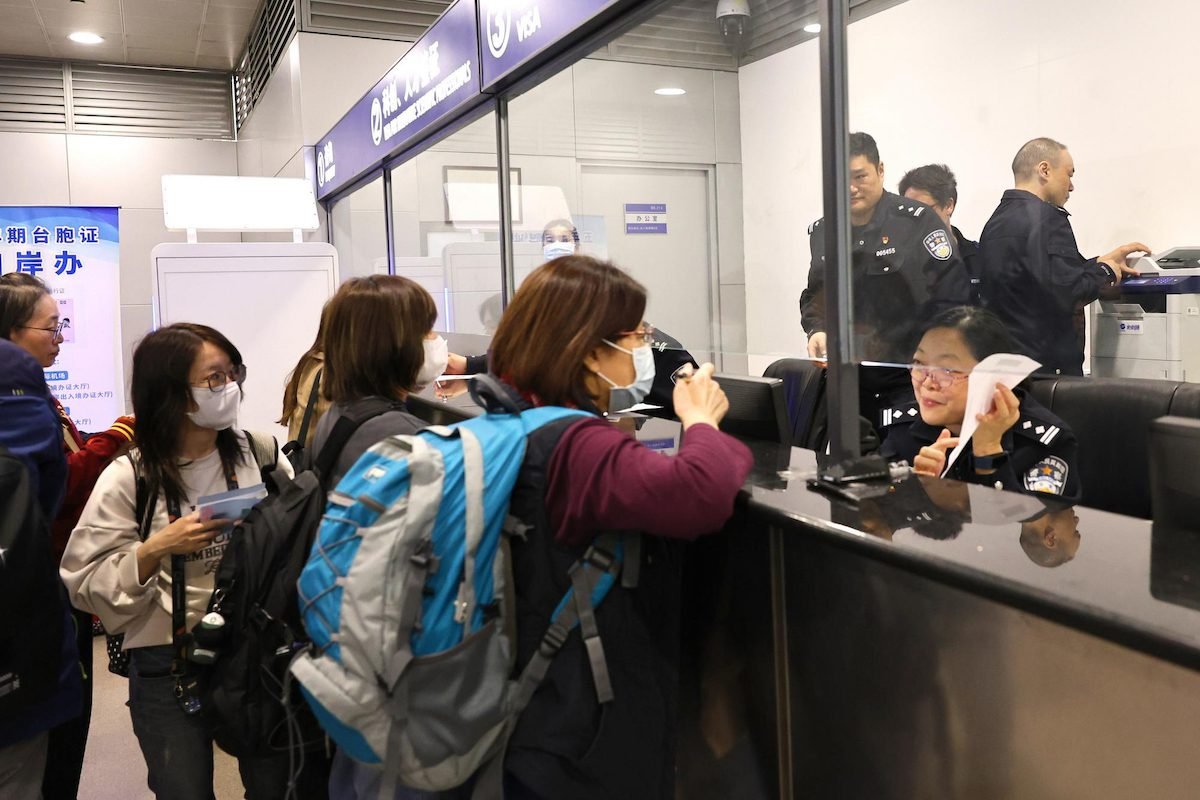
On March 10, a China Eastern Airlines flight carrying over 70 Taiwanese travelers who had been stranded in Turkey for five days arrived in Shanghai from Istanbul. Chinese state-owned media greeted and interviewed the travelers at the airport, where one interviewee expressed his gratitude to his “motherland” on camera.
Clearly, Beijing not only wanted to demonstrate its consistent stance that Taiwanese people are Chinese citizens but also sought to imply that Taipei could not protect its citizens like Beijing could.
Taiwanese officials subsequently claimed that these travelers were not stranded in the Middle East but were simply unable to obtain tickets, and accused Beijing of “cognitive warfare” aimed at discrediting the Taiwanese government.
Taiwan’s Ministry of Foreign Affairs also said it had actively assisted thousands of Taiwanese in returning to Taiwan and advised citizens not to accept assistance from Beijing. Beijing immediately fired back at Taipei’s accusations, calling them “shameless” slander.
The episode sparked widespread discussion on social media in Taiwan. While some comments expressed understanding for the Taiwanese government, many more were critical, comparing its perceived “inaction” on the evacuation to Premier Cho Jung-tai’s private charter flight to Japan days earlier to attend a baseball game.
As the first incumbent premier to visit Japan since Taiwan severed diplomatic ties in 1972, Cho’s visit was widely seen as a diplomatic breakthrough for Taiwan.
However, Taipei’s poor handling of the evacuation issue significantly diminished the impact of Cho’s visit. His leisure trip stood in sharp contrast to the experiences of travelers unable to return to Taiwan. Some asked why an official could charter a plane to watch a game, yet the government was unwilling to do the same to bring citizens home.
Although Taipei has denied any “inaction”, the negative impact is undeniable. Taipei should recognize that such missteps risk undermining its long-standing diplomatic efforts – efforts crucial to reinforcing and maintaining Taiwanese people’s sense of self-identity.
Lacking broad international recognition, Taiwan’s formal diplomacy has long faced significant obstacles, pushing it toward informal and values-based diplomacy instead. This strategy has allowed Taiwan to maintain substantive relations with most countries alongside those countries’ ties with mainland China.
For Taiwanese, one of the most tangible benefits is the ability to travel to most countries on a Taiwan-issued passport and seek assistance from local Taipei Representative Offices – Taiwan’s de facto diplomatic missions abroad. This reinforces their self-identity as citizens of an independent nation.
Yet the perceived “inaction” in the face of this crisis appears to confirm Beijing’s long-held narrative: the Democratic Progressive Party-led government is unable to protect Taiwanese people, while the Chinese government stands as a strong guarantor for Taiwanese compatriots. This threatens to undermine the consolidation of Taiwanese identity that the DPP aims to achieve.
Indeed, shortly after strikes against Iran began, Taiwanese officials warned Taiwanese citizens against using their Mainland Travel Permits (identity cards issued to Taiwanese citizens by the Chinese government) to register for evacuation as Chinese nationals, saying doing so could “label them as having close ties with Iran” and jeopardize their safety.
This response clearly reflects a defensiveness toward mainland China that shapes Taipei’s approach to self-identity – one that stands in contrast to its reaction when Japan evacuated two Taiwanese citizens from Saudi Arabia on a chartered flight arranged by the Japanese government on March 14. Taiwan’s MOFA expressed its gratitude to Japan, claiming it reflected “a sincere friendship of mutual support in times of emergency.”
While most Taiwanese are unlikely to embrace Beijing’s political propaganda outright, such episodes can fuel anxiety about their self-identity – particularly if citizens feel they may one day have to seek help abroad as Chinese nationals.
A parallel case is the 2018 Typhoon Jebi disaster in Japan, when some Taiwanese travelers criticized the Taipei Economic and Cultural Office (TECO) in Osaka for its “poor attitude” and perceived “inaction” when they sought its assistance.
Reports also circulated that some travelers had sought help from the Chinese Consulate in Osaka, effectively forcing them to acknowledge a Chinese identity. This sparked fierce online criticism of the MOFA and its personnel in Osaka, with some linking the humiliation of that acknowledgment to a “dereliction of duty” by Taiwanese officials.
Ultimately, under intense public pressure, Su Chii-cherng, then director of the TECO in Osaka, committed suicide at his official residence. A Control Yian report published a few months later refuted some of the claims that had circulated online, and some evidence pointed to misinformation spread by Beijing.
Regardless, the episode reflects the insecurity some Taiwanese people feel about their self-identity – and the political challenges that insecurity poses to the Taiwanese government in Taipei.
Ultimately, while Taiwanese identity has become the island’s mainstream, a key issue for the DPP is how it assigns meaning to that identity. Leaders including former President Tsai Ing-wen and incumbent President Lai Ching-te have sought to frame being Taiwanese as a source of pride and glory.
Yet the Taiwanese government’s perceived “inactions” – whether real or merely amplified on social media – risk distorting that narrative, which is exactly what Beijing wants.
Zhenlin Cui is a PhD candidate at SOAS University of London and a Visiting Research Fellow at Waseda University.