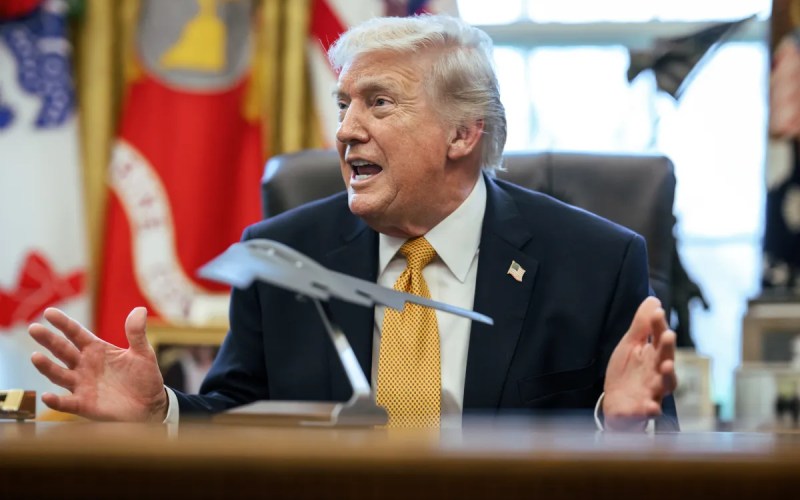
Donald Trump said the United States has a “very serious chance” of reaching an agreement with Iran, indicating that ongoing negotiations could lead to the reopening of the strategically vital Strait of Hormuz and a sharp decline in global oil prices.
Speaking to reporters, Trump suggested that control of the waterway could be shared under a future arrangement. When asked who would oversee the strait, he replied that it could be “jointly controlled,” adding that leadership details would depend on Iran’s evolving political structure.
Trump described Iranian interlocutors as “very reasonable” and “respected,” signalling a pragmatic tone despite the recent escalation in conflict.
Backchannel talks and regional mediation
According to officials familiar with the discussions, Washington is engaging with senior Iranian figures, including parliamentary speaker Mohammad Baqer Qalibaf.
Trump confirmed that contacts had taken place, including talks led by envoy Steve Witkoff and adviser Jared Kushner, with further discussions expected.
Regional actors — including Egypt, Pakistan and several Gulf states — are understood to be facilitating indirect communication between Washington and Tehran. These efforts appear aimed at opening channels rather than establishing a formal mediation framework.
Tehran has acknowledged “initiatives” to reduce tensions, while maintaining that the United States should be directly involved in any substantive diplomatic process.
Trump said Iran had initiated contact amid concerns over potential U.S. strikes on critical infrastructure, including energy facilities. He reiterated that Tehran had agreed it would not pursue nuclear weapons, a central demand of Washington.
“They want to make a deal, and we are very willing,” Trump said, adding that negotiations were being conducted within a limited timeframe to test progress.
Despite the diplomatic tone, he cautioned that military operations could resume if talks fail, underscoring the conditional nature of the engagement.
Strait of Hormuz remains partially disrupted
While negotiations continue, the situation in the Strait of Hormuz remains fragile. A small number of vessels, including two tankers bound for India, have successfully transited the waterway carrying liquefied petroleum gas from the Gulf.
However, broader maritime traffic remains heavily constrained. Hundreds of vessels and tens of thousands of seafarers are still effectively stranded following Iranian threats to target ships attempting to exit the Gulf.
Trump said oil prices would “drop like a rock” if an agreement is reached and the strait reopens, a claim that aligns with market sensitivity to disruptions in the region.
Separately, U.S. Energy Secretary Chris Wright indicated that further releases from the Strategic Petroleum Reserve are unlikely at this stage, with Washington instead exploring alternative measures to stabilise fuel supply and refining capacity.
The reserve currently holds approximately 415 million barrels, following a coordinated release earlier this month with international partners.