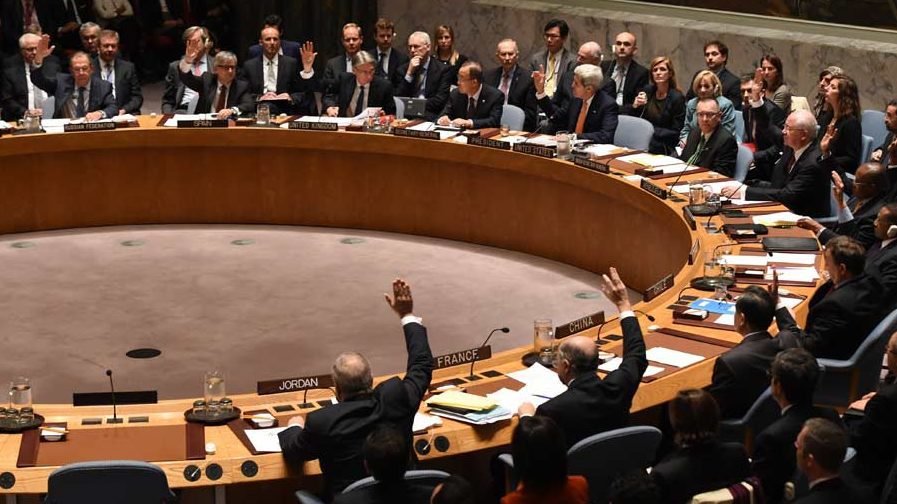
Several members of the United Nations Security Council expressed their appreciation for the measures the government of Syria has taken in recent months to combat terrorism and enhance internal stability. This development shows some countries are beginning to change their approach to Syria, while still stressing the need to respect its sovereignty and territorial integrity.
At a session on Syria, several countries pointed to signs of improvement in security and the economy, even as major challenges remain. In this context, the UN deputy special envoy for Syria, Claudio Cordone, called on Israel to adhere to the 1974 Agreement on Disengagement, warning of the risks of military escalation that could undermine the fragile truce. He also said Damascus has stepped up contacts with regional and international actors to ease tensions and prevent further escalation.
Cordone pointed to early signs of economic improvement, particularly after some external financial channels reopened, which could help ease living conditions despite ongoing sanctions and infrastructure challenges. He also praised the measures taken by Syrian forces in confronting the Islamic State, noting that these operations have contributed to reducing the group’s capabilities in several areas.
The session was also characterized by cooperation among several countries, including Russia, Turkey, China, and Denmark, along with others, in supporting Syria’s stability and criticizing Israeli violations, while emphasizing the priority of preserving Syrian territorial unity. Despite differing interests, this alignment reflects a growing recognition of the risks posed by continued instability to regional security.
Meanwhile, the US special envoy for Syria, Thomas Barrack, said the country has undergone what he described as “profound transformations” over the past 15 months, referring to shifts that may influence how the international community engages with the crisis. Syria’s permanent representative to the UN, Ibrahim Olabi, affirmed that Syria is moving forward with a comprehensive national path that is receiving increasing support within the council.
These developments come amid a complex regional backdrop, with Syria remaining a focal point of competing international and regional interests since the conflict began in 2011, leading to economic decline and deep political and territorial divisions.
Although the intensity of military operations has declined in recent years, parts of the country remain outside government control, while challenges persist regarding foreign military presence, economic sanctions, and reconstruction efforts.
Tensions between Syria and Israel also remain a factor, particularly amid repeated airstrikes, highlighting the urgency of upholding the 1974 agreement to avoid a broader confrontation. Any improvement in security or economic conditions is viewed as a limited step within a long and complex path toward stability.
Praise at the Security Council points to a shift in tone, with some countries taking a more pragmatic approach focused on containing the crisis and supporting gradual stability rather than pushing for rapid, sweeping change. Nevertheless, disagreements persist over the future of the political process and the role of the Syrian government, as well as the ongoing impact of sanctions on any potential economic recovery.
In sum, the Security Council’s discussions reflect a mix of caution and guarded optimism. While praise is paired with warnings, a lasting solution will depend on broader international agreement and the ability of key actors to address the root causes of the crisis.