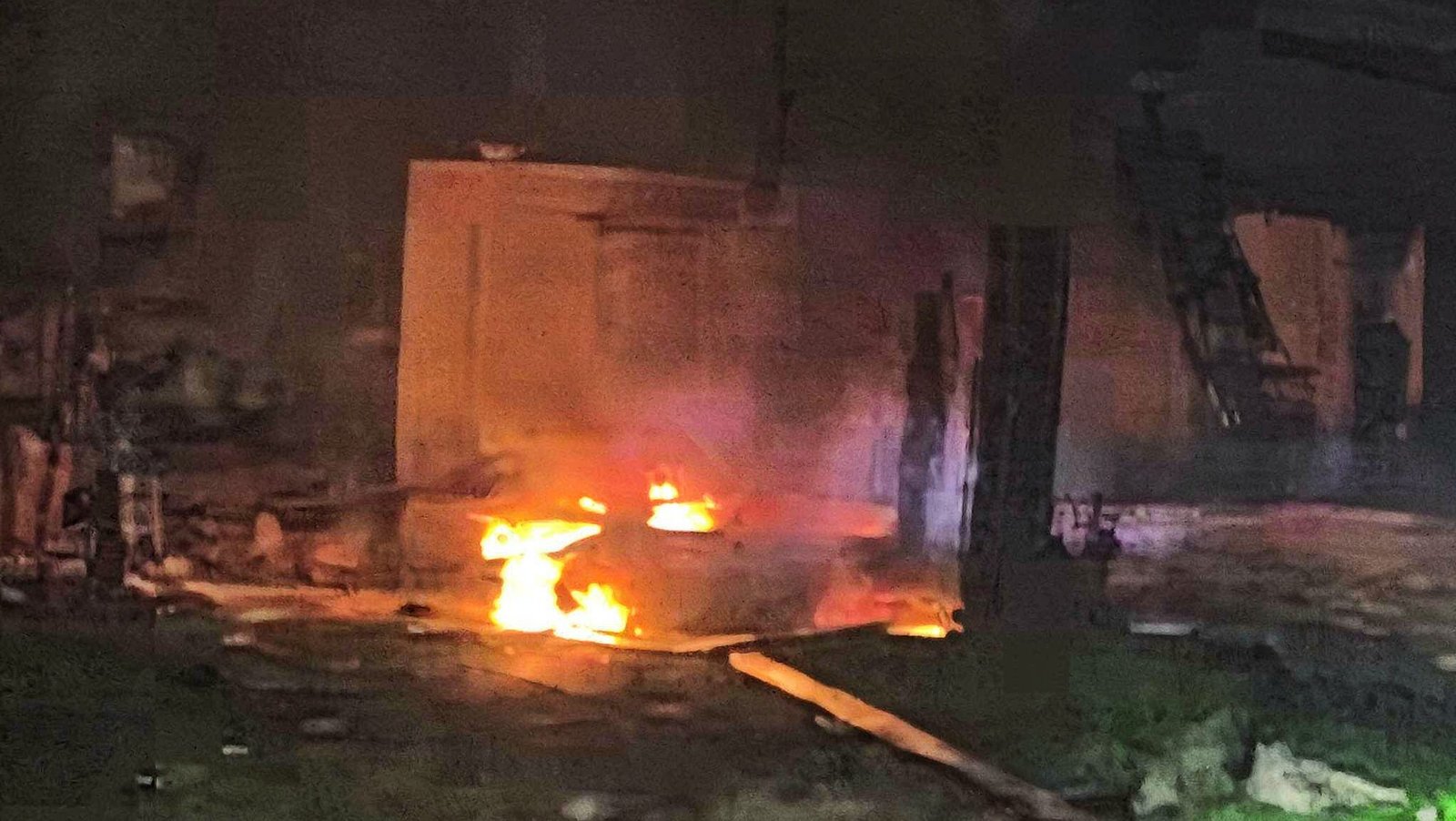
An Iranian missile strike on Dimona injured 34 people Saturday evening, as Tehran said the attack was carried out in response to US and Israeli strikes on its nuclear infrastructure.
Among the wounded were a 12-year-old boy and a woman in her 30s who sustained moderate injuries. It was later reported that the boy’s condition was upgraded to serious. More than 20 people were treated for shrapnel exposure, injuries sustained while running to shelters, and anxiety-related symptoms, according to medical officials.
Israel Defense Forces (IDF) announced it will launch an investigation into the failure to intercept the missile that struck Dimona.
Air raid sirens sounded repeatedly across Dimona as missiles struck 12 locations in and around the city. Iran’s state news agency Tasnim said the barrage was launched “after the US and Israel attacked the Bushehr power plant and the Natanz facilities.”
Tasnim added: “The enemy has once again received an unforgettable lesson. The missile attack on the Dimona area has once again conveyed a clear message: no area is safe from Iranian missiles. The enemy must surrender before it is too late.”
Dimona is the center of what is believed to be Israel’s nuclear program, with key facilities located in the surrounding Negev region. Israel has maintained a longstanding policy of ambiguity regarding its nuclear capabilities.
Iran said the United States and Israel struck the Natanz nuclear facility on March 21, with officials reporting no radioactive leakage, while the IAEA confirmed the attack and said radiation levels remained unchanged. Last Wednesday, the International Atomic Energy Agency confirmed that a projectile struck and leveled a structure about 350 meters from the Bushehr nuclear power plant.
The Israel Defense Forces (IDF) said Saturday it carried out a strike on a strategic research and development site at Malek Ashtar University in Tehran. The military said the facility was used by the Iranian regime to develop components for nuclear weapons production and is part of Iran’s military industries tied to its ballistic missile program.
According to the IDF, the university operates under Iran’s Ministry of Defense and is subject to international sanctions for its role in advancing the nuclear program and missile development.