Much has been written about President Donald Trump’s alleged lack of clearly defined goals and strategic objectives in the war with Iran. But the more pressing and consequential question has received far less attention: Does the Iranian regime have an endgame at all?
So far, Iran has shown no interest in a ceasefire while doing everything in its diminished power to expand the war across much of the Middle East and beyond — in the process torpedoing the global economy.
The US and Israel have been relatively clear in their war aims, including disabling Iran from making nuclear weapons, reducing Iranian missile threats, degrading Iran’s capability to sustain its proxies and creating conditions that enable organic regime change in Tehran.
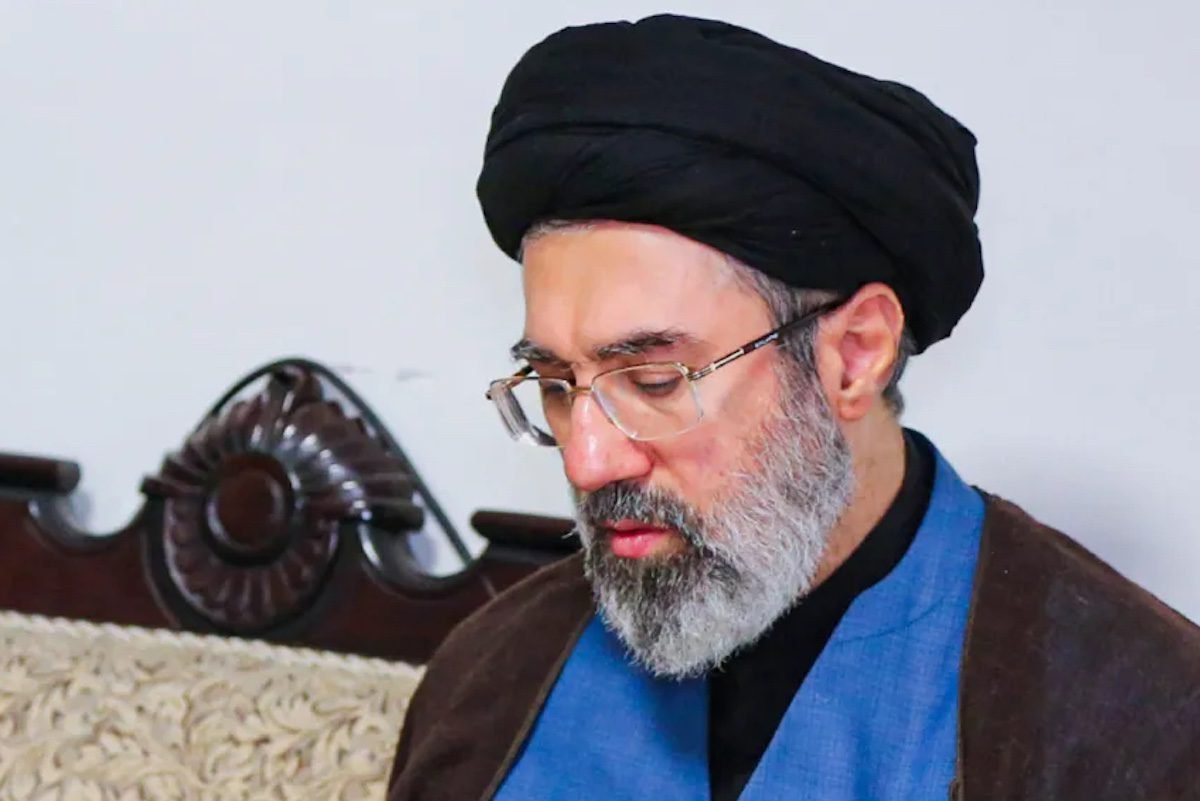
Iran’s goals, on the other hand, are less clear. Ayatollah Khamenei talked tough at the start of this war, threatening the US with a “strong punch.” A message, purportedly by his son and successor Mojtaba Khamenei, who has not been seen in public since his elevation, rejected any talk of de-escalation and avowed to bring the US and Israel to “their knees.”
Almost in the tone of a victor, he dictated conditions for stopping the war, including the payment of reparations for the damage caused, plus a pledge not to attack Iran again.
This sounds like bluster. Neither Israel nor the US nor even other countries in the region have suffered casualties and damage anywhere near that suffered by Iran, and unlike Iran, their leadership remains intact.
Their air defenses are still working while Iran’s have been decimated. The US and Israel operate freely in Iranian airspace, striking at will without losing a single aircraft, while the Iranian navy and air force have suffered heavy losses.
Iran’s missile stockpile will not last indefinitely, and there is a clear tapering in the intensity of retaliation as its capacity for producing new missiles and drones is substantially degraded. With many missile launchers taken out of service, a war of attrition cannot be a rational goal for Iran.
As the war progresses, Iran’s economy will suffer even more. The wealth of Iran has been stashed abroad by its elite, with the late Supreme Leader Ali Khamenei alone reportedly worth hundreds of billions of dollars.
Iran’s main allies are Russia and China, neither of which has offered substantial material help to Tehran’s war effort. Russia is trapped in its own war, and China’s help is invariably linked with demands for family jewels like mines and ports as collateral, in addition to control over revenue streams. In the real world, there is no flying carpet bringing aid to Iran.
Iran’s economy is now in worse shape than it was when the conflict started. China used to buy 90% of Iran’s oil exports through the Strait of Hormuz, and there has inevitably been a decline in those shipments since the war started. India’s increased imports of Iranian oil may somewhat mitigate the loss, but not fully.
While strikes on oil infrastructure on both sides are widely felt and visible, the damage to water supplies has been less so. In these “saltwater kingdoms,” comprising deserts and relatively dry mountains, water was the lifeline before oil came into the picture and remains so today.
There are no permanent rivers in the Gulf region and six Gulf countries – Bahrain, Oman, Qatar, Kuwait, Saudi Arabia and the UAE – depend heavily on desalination, producing 1.9 trillion gallons per year; the capacity is even higher. Water infrastructure on both sides has been hit in this war.
Middle East countries like Bahrain, UAE and Kuwait, which have suffered damage to their water infrastructure due to Iran’s missile attacks, can restore them, having sufficient wealth to do so. And they can act quickly thanks to technical and logistical help from the US and Israel, the latter widely acknowledged as the global leader in desalination technology.
Aside from a plummeting economy and collapsing currency, water woes were also a trigger for the protests that exploded in Iran earlier this year. The regime responded by killing an unknown number of protesters, with estimates varying from a low official figure of 3,117 to a high of more than 30,000.
Even after hostilities cease, Iran will have neither the technical support nor the money to repair its water infrastructure and may face years of water shortages. Without water, food shortages will grow more acute by the month.
That disparity will also have a diplomatic dimension. The US and Israeli technical assistance that helps Gulf states restore their water infrastructure will give a boost to Israel’s “water diplomacy” — its effort to normalize relations with neighbors that had stalled following its Gaza operations.
Iran’s experienced leadership has been decimated; some who have survived Israeli strikes are reportedly facing accusations of being foreign agents or have been marginalized by hardliners – as President Masoud Pezeshkian learned after trying to mend fences with Middle Eastern neighbors by offering an apology. The episode and the selection of Mojtaba Khamenei are proof, if any were needed, that the hawks are calling the shots in Tehran.
Beyond nurturing proxies, Iran has invested its wealth in missiles, drones and nuclear facilities – all of which are rapidly being destroyed by US-Israeli airstrikes. Iranians, suffering inflation and unprecedented devaluation of the currency, appear to have had enough of the theocracy, with 80% of them viewing the regime as illegitimate.
The remainder are religious hardliners and members of the repressive state apparatus and their families. Non-state entities such as Hezbollah, the Houthis, Hamas and Iraqi Shia militias have expanded in support of the Iranian regime, but their lifeline remains the Iranian theocracy – which itself now faces an existential threat.
While there is much talk of US and Israeli ammunition and missiles running out, it is more likely to happen with Iran, as its weapons manufacturing and storage facilities are increasingly hit. Moreover, Iran is highly dependent on imports of explosive precursors from China, and the passage of these imports cannot be assured during the war.
All this puts a question mark over the claimed limitless supply of Iranian drones. Though Iran has transferred its drone technology to Russia, which is now producing its own version of the weapon, a flow of drones from Russia to Iran at a significant scale does not appear likely at present, with the Ukraine war showing no sign of abating.
Attacks on energy infrastructure represent a new escalation in this war and a major environmental risk, particularly for Iran, as was seen when US-Israeli attacks on its oil infrastructure resulted in black rain over Tehran.
Israel later hit the South Pars gas fields while Iran has retaliated on gas infrastructure in UAE, Saudi Arabia and Kuwait, causing long-lasting damage to relations with Gulf countries. Iran’s selective closure of the Strait of Hormuz is likely to alienate additional countries, including import-dependent Asian nations, already suffering from energy price spikes caused by the war.
If Iran’s leadership believes the spreading global energy crisis will work in its favor, that also seems unlikely. Iran’s predictions of oil prices jumping to US$200 have proved too optimistic; Trump’s 30-day waiver for Russian oil, with indications it may be extended, will ensure that the energy crisis remains moderate.
After three weeks of war, oil prices are still hovering around $105 a barrel. India’s LPG crisis also appears to be tapering off, with gas-laden ships now arriving regularly at Indian ports. The only loser may be China, which is growing more dependent on Russian oil, and as a result, losing some of its leverage over Russian President Vladimir Putin.
Meanwhile, Trump and Netanyahu do not appear to be in a hurry to end hostilities; it is left to Iran’s regime to consider its own survival, if not that of the Iranian people. And yet, the regime has issued threats against Trump’s life while facing subversion from within, as Israel’s continued success in eliminating Iran’s top leadership indicates.
Ironically, Ali Larijani, head of the Iranian National Security Council, who had told Trump, “Be careful not to get eliminated yourself,” was himself killed a few days later in an Israeli airstrike.
There has been chatter that hardliners in Iran will seize total control to establish an “Islamic Republic 2.0”, a prospect a Washington Post op-ed succinctly suggested “won’t be pretty.” This scenario, however, is not borne out by the situation on the ground.
Iran’s posturing – in the face of an economy in shambles, water stress, damage to oil infrastructure and export capability, and the attrition of its fighting capability – is only pushing it further from the one goal its rulers appear to share: regime-survival.
Without Iran gravitating toward a rational and feasible endgame, we may soon witness the chaotic collapse of its theocracy that the US and Israel seek.
R.N. Prasher has studied physics, economics and law and served as an Indian Administrative Service officer for 34 years. He writes extensively on geopolitics and published the 2025 book, “Geopolitics: Impact on Energy Transition and Energy Security.”