When Japanese Prime Minister Sanae Takaichi planned her visit to the Oval Office, she was hoping to showcase something familiar: Japan’s renewed commitment to defense spending, alliance coordination, and economic investment in the United States. Instead, on Thursday, she had to walk into a different conversation shaped by a widening war in the Middle East.
Following US-Israeli strikes on Iran on February 28, Tehran has moved to disrupt shipping through the Strait of Hormuz, the world’s most critical energy chokepoint, through which roughly one-fifth of global oil supplies pass. The crisis has sent oil prices surging and markets reeling. For Japan, which relies on the Persian Gulf for some 90% of its crude imports, the implications are immediate and severe.
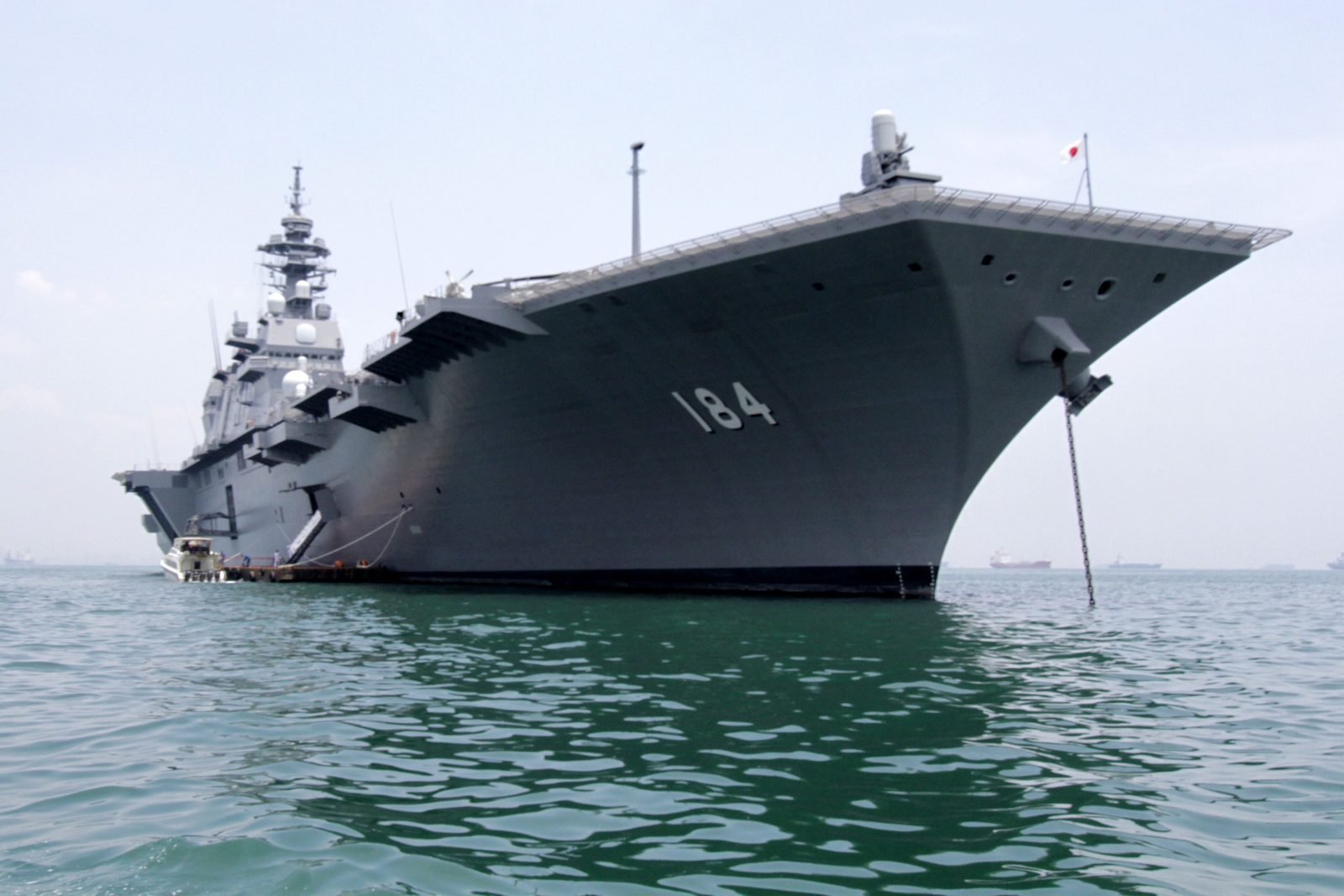
In the weeks leading up to the summit, speculation in Tokyo and even Seoul centered on a simple question: Would Japan contribute militarily? President Donald Trump has publicly called on allies to help secure the Strait of Hormuz, even as he insists the United States does not need their help. Privately, US Defense Secretary Pete Hegseth reportedly asked his Japanese counterpart for Japan’s endorsement of a “maritime taskforce,” an international coalition to safeguard commercial transits in the Strait of Hormuz.
What Trump and his team appear to be seeking is not subtle. Not statements, not funding, but operational support as in escort missions, minesweeping and logistics.
Yet Japan came prepared with something else. Takaichi brought with her a package of economic commitments, including plans to invest roughly $73 billion in US energy projects, alongside a roughly $100 million joint shipbuilding research and development initiative aimed at advancing next-generation technologies.
In many ways, it was a familiar playbook – what critics have long called “checkbook diplomacy.”
Takaichi struck a careful tone. Asked post-summit whether Japan would send naval assets, she replied: “We agreed that ensuring the security of the Strait of Hormuz is indeed of the utmost importance. However, there are limits to what we can and cannot do under Japanese law, so I provided a detailed and thorough explanation of this point.”
Those limits are real and binding. Any deployment of the Self-Defense Forces would fall under Japan’s 2015 security legislation. A “survival-threatening situation” would permit the use of force under limited collective self-defense. An “important influence situation” would allow rear-end logistical support to the American forces. Both require Diet approval and would face significant domestic scrutiny, particularly given public skepticism toward US military action in Iran.
Even the legal threshold is contested. During Diet deliberations in 2015, then-Prime Minister Shinzo Abe pointed to the hypothetical mining of the Strait of Hormuz as an example of a situation that could threaten Japan’s survival. But Japan’s substantial oil reserves – often estimated at over 200 days – have led some lawmakers to argue that even a serious disruption may not rise to that level.
There is, of course, a third option. Do what Abe did in 2020 and dispatch vessels for intelligence gathering under a low-risk legal framework. But such a move would be largely symbolic.
Looking back, this tension is not new. In 2003, the George W. Bush administration faced similar reluctance from allies as it assembled a coalition for the Iraq War. But Japan, under Prime Minister Junichiro Koizumi, ultimately dispatched around 600 Self-Defense Force personnel to non-combat areas under a special measures law, despite legal constraints and public opposition. Neighboring South Korea sent even more, at one point deploying roughly 3,600 troops.
What made that possible was not enthusiasm for the war. It was confidence in the alliance. Even as publics in both countries viewed the Iraq invasion with high skepticism, there remained a broad understanding: when the United States calls, allies respond. The alliance itself was seen as worth sustaining, even at political cost.
That assumption no longer holds as firmly.
What has changed is not just the nature of the conflict in the Middle East – it is the nature of American leadership. Trump has not simply questioned alliances; he has redefined them as transactions. In doing so, he has weakened the very logic that once made allies willing to incur political and military costs on Washington’s behalf.
Even as Japan has complied with Trump’s unilateral demands, from trade negotiations to increased investment in the US, it has done so in an environment where the alliance feels less like a shared strategic project than one shaped by coercive leverage.
Trump may have hoped for a dramatic gesture in the latest meeting, perhaps something unmistakable – a clear signal that Japan is ready to fight alongside the United States beyond its immediate region. Instead, Takaichi delivered verbal support, restraint and a portfolio of economic commitments.
At a state dinner, Takaichi invoked her mentor Shinzo Abe, declaring: “Japan is back.” The question is what that means in practice – and whether it aligns with what Washington wants.
Japan today is more capable, more assertive, and more willing to expand its strategic role in the Indo-Pacific. Under Takaichi, the pace of rearmament is arguably faster than at any point since Abe. But it remains cautious about direct military involvement in conflicts that do not clearly meet its legal and strategic thresholds. The United States, meanwhile, appears to be asking for something more.
That gap is now coming into focus.
The Iran crisis may be an early indicator of a broader shift. For decades, the alliance rested on an implicit bargain that the United States would lead, and its allies would follow. That bargain now looks less certain under an increasingly mercurial leadership in Washington.
Japan may indeed be back in one sense. But whether it gets back in the way Washington expects – blood alliance, not checkbook diplomacy – remains an open question.