Reporting Highlights
- Sowing Doubt, Risking Supply: Health Secretary Robert F. Kennedy Jr. is spreading doubts about the safety of vaccines and considering changes that could prompt manufacturers to flee the U.S. market.
- Plagues of the Past: History has shown how vaccine-preventable diseases can roar back when trust in shots or access to them have faltered.
- Dangers Abroad: As the U.S. pulls international aid, deadly and disabling diseases like diphtheria, rubella and polio continue to harm people overseas and can easily reach the U.S.
These highlights were written by the reporters and editors who worked on this story.
Dr. Adam Ratner hovered over a gravely ill infant in a New York City intensive care unit on a grim day in 2022. The 3-month-old girl spiked a fever two days earlier and had become lethargic. Soon she was having seizures and struggling to breathe.
She didn’t register Ratner’s towering frame or the bright hospital lights. Her eyes stared up and to the right, eerily frozen.
He ran his hand over the soft spot on her head, which should have been flat. Instead, it bulged, a sign that too much fluid was building up inside her skull.
The baby’s life was in danger, and Ratner needed to figure out why. He worried the culprit was bacterial meningitis, an infection of the membranes that protect the brain.
What came back on her lab tests was something out of the history books.
The infant’s meningitis was caused by invasive Haemophilus influenzae type b, or Hib, a type of bacteria that used to kill nearly 1,000 children a year in the U.S. A shot introduced in the late 1980s was so effective that Ratner, a veteran pediatric infectious disease doctor, was among the generations of physicians who had never seen a case. But the baby’s parents, Ratner learned, had chosen not to vaccinate her.
Disheartened, he told his colleagues, “This should be a never event.”
It wasn’t. The following year, Ratner treated another infant with Hib, then another, each of them unvaccinated. Two went home, but one had to be discharged to a rehabilitation facility. That 5-month-old boy had huge black pupils that didn’t respond to light, and he needed a ventilator to breathe. Ratner and his colleagues noted an “absence of brain stem reflexes,” indicating severe damage.
The U.S. government took a half century to build a vaccination system that shielded children from such a fate. Its success depended on two fundamental pillars: parents trusting in vaccines and children having access to them. Both are now in peril, thanks in no small part to the man steering America’s health policy.
Health and Human Services Secretary Robert F. Kennedy Jr., who founded an antivaccine group and once likened the immunization of children to a holocaust, is transforming a government that long championed the lifesaving benefits of shots into one that spreads doubts about their safety here and abroad.
Kennedy is also considering changes that could prompt the few companies that make vaccines for American kids to abandon the U.S. market, leaving parents who want the shots unable to get them.
The threat to vaccine access reaches across the globe after Kennedy yanked the government’s $1.6 billion pledge to the aid group that provides shots for the world’s poorest children. For decades, the U.S. had funded such work not just as a humanitarian mission but as a way to keep Americans safe from unchecked contagions.
Kennedy’s efforts to reshape vaccine policies have been well chronicled, but ProPublica wanted to take a broader look at how the changes might affect Americans’ health in the years to come.
We found that long-forgotten plagues have roared back, killing and maiming children in parts of the world where access to vaccines or trust in them faltered. What seemed like subtle changes to a country’s vaccine policies had disastrous consequences years later.
Even in places that offer highly advanced health care, doctors have felt impotent trying to undo the damage when these horrors return. Modern medicine can’t reverse paralysis from polio. Surgeons can intervene when a baby is born blind, deaf and with heart defects after being exposed to rubella in the womb, but the child is still likely to face a life shaped by disability.
ProPublica reviewed hundreds of studies on vaccines and outbreaks of the diseases they prevent and interviewed more than three dozen people who have worked on U.S. immunization programs here and abroad, dating back to the days of smallpox. Some had never spoken publicly about their experiences.
They shared a pit-of-the-stomach dread that American children will end up fighting for their lives against infections that have long been preventable.
“I think there always was a worst-case scenario,” said Dr. Melinda Wharton, who retired last September after more than three decades leading immunization programs at the Centers for Disease Control and Prevention. “I don’t think I imagined it could or would be this bad.”
This week, Kennedy’s agency indicated it planned to appeal a federal court ruling that halted, at least temporarily, some of his changes. Among those was the decision to drop six diseases from the routine childhood immunization schedule.
HHS declined to make Kennedy available for an interview. In an emailed response to detailed questions, HHS spokesperson Andrew Nixon said that the agency has not limited access to or insurance coverage for vaccines. During the prior administration, federal health agencies “told the public that questioning vaccine policy was off limits,” Nixon said. “That posture contributed to a collapse in trust in U.S. health care.”
“Secretary Kennedy believes that trust is rebuilt through an open review of safety data, the willingness to ask the hard questions, and ensuring the American people have all emerging information as soon as we know it,” he said.
Vaccination rates have fallen in large swaths of the country. Resentful of how government institutions responded to the COVID-19 pandemic, many Americans lost trust in public health leaders. Antivaccine activists spread misinformation and recast the once-fringe practice of refusing shots as an exercise in “medical freedom.”

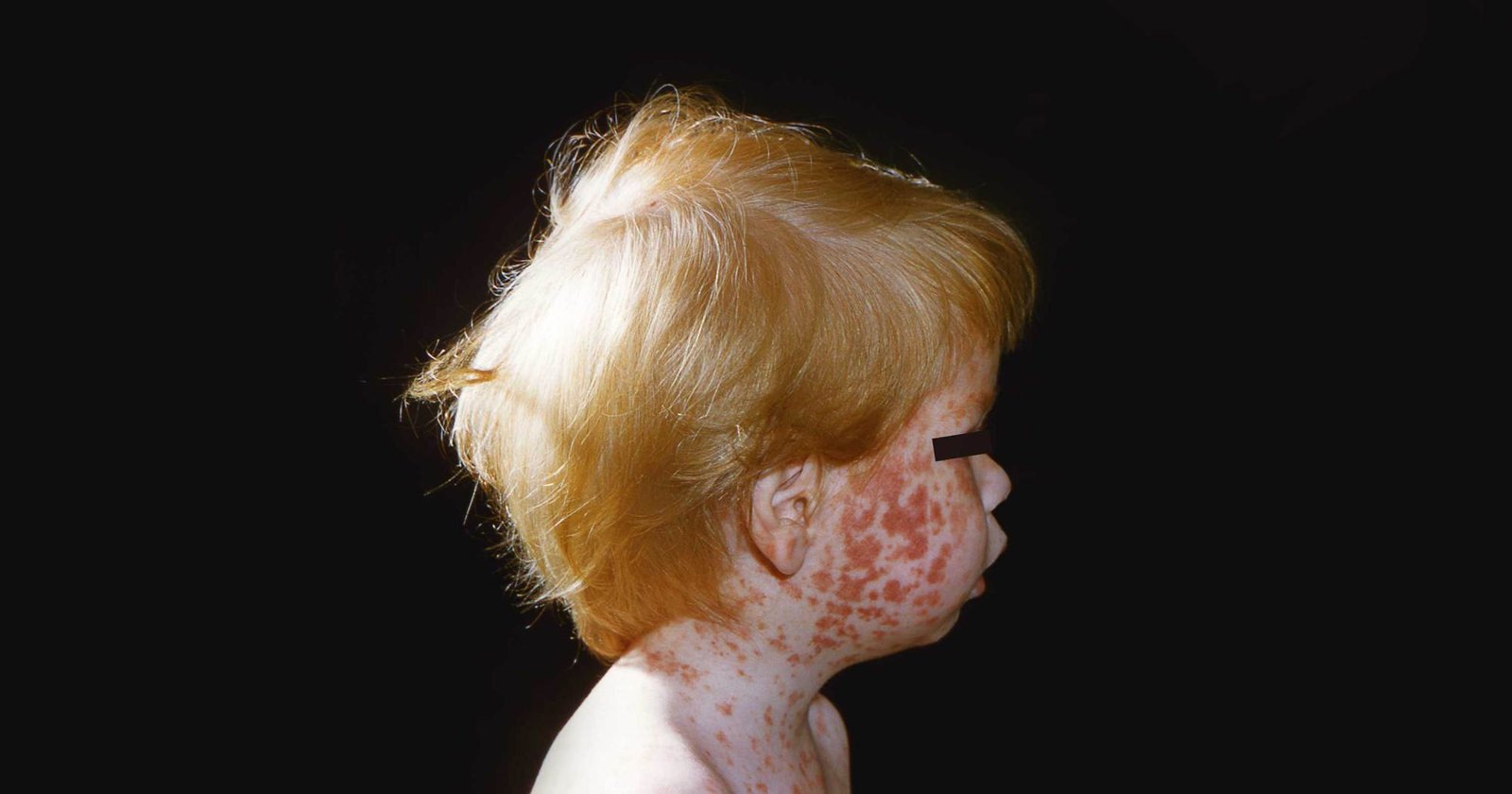
Now the U.S. is experiencing a surge in measles not seen in three decades. There have been more than 3,600 cases across 46 states and three deaths since January last year. The virus spread so fast in South Carolina this year that some medical teams had to examine infected patients in their cars to protect vulnerable people in their waiting rooms, like they did during the worst days of COVID-19.
Measles, among the most contagious diseases, is typically the first to infect undervaccinated communities and serves as a warning that other scourges will follow.
That’s what happened in New York City where antivaccine forces distributed illustrated handouts that seeded fear in Orthodox Jewish communities. Ratner saw a direct line between a loss of trust and the sick children in his ICU — first with measles in 2018 and 2019, then with Hib a few years later.
Now the villainization of vaccines isn’t coming from pamphlets passed out on a Brooklyn street corner. It’s coming from the highest health offices in the U.S. government.
“I’m worried,” Ratner said, “that we’re going back to a time where people die in childhood.”
The U.S. has been a leader on vaccination since the nation’s founding.
During the Revolutionary War, George Washington ordered troops to be inoculated against smallpox, which had ravaged the Continental Army and was scaring away recruits. Washington knew the perils of the disease: His face was pocked with scars from his own teenage infection.
The inoculation, the country’s first immunization mandate, took a primitive form. A sore from a smallpox patient was lanced, then the pus was inserted under a healthy person’s skin. Though some people died, the resulting infection was, for the vast majority, milder than the type caught in a bunkhouse or on a battlefield.
Washington gave the order in February 1777, “keeping the matter as secret as possible” so that the British wouldn’t attack his bedridden troops during their monthlong recovery. Had he not carried out the inoculation, many historians have concluded, the British may have won.
Nearly two centuries later, in the throes of the Cold War, CDC scientists teamed up with their counterparts from America’s archenemy, the Soviet Union, to wipe smallpox from the planet. They worked through the World Health Organization to track the virus in cities, rainforests and war zones, vaccinating those at risk. Four U.S. presidents, Democrats and Republicans, backed the work until the disease that had haunted humans since the days of the pharaohs was gone.
Vaccines, for decades, weren’t politically divisive. They were so uncontroversial that McDonald’s restaurants in the 1990s put the childhood immunization schedule on their tray liners.
When the nation’s immunization program was in trouble in the 1980s, Republicans and Democrats stepped in to save it.
Vaccine makers were abandoning the U.S. market after a flood of lawsuits alleged that the shot used at the time to protect children from diphtheria, tetanus and whooping cough caused profoundly disabling seizures. Scientists later discovered genetic causes of some of the most devastating forms of epilepsy, but parents who sued back then won big verdicts and settlements.
At one point pediatricians could only buy that shot from a single company, and there were shortages. The U.S. also was down to just one manufacturer for the measles-mumps-rubella shot and one for the polio vaccine.
“If there is a fire tomorrow in the plant where the polio vaccine is manufactured, what would happen?” Rep. Henry Waxman asked the CDC director during a 1984 House subcommittee hearing.
“We would have a shortage,” the director answered.
An exasperated Waxman shot back: “Are we going to then start putting money into iron lungs for polio victims?”
A liberal Democrat from California, Waxman for years worked with Sen. Paula Hawkins, a conservative Florida Republican, on legislation that stopped the exodus of vaccine makers by limiting their liability. Launched in 1988, the federal Vaccine Injury Compensation Program pays people who suffer rare but serious side effects, using money from a special tax on certain shots. The program maintains a table of injuries that are eligible for quicker payouts, and a dedicated vaccine court rules on cases involving health problems not listed on the table.
Those who don’t like what they are offered can still sue vaccine makers in traditional civil courts, but a Supreme Court ruling significantly limited the types of cases that can win there.
Just as the compensation program was getting off the ground, measles laid bare a different weakness in the immunization system. The disease tore through American cities, hitting Black and Hispanic preschoolers especially hard. Between 1989 and 1991, there were more than 55,000 cases and 123 deaths.
In June 1991, President George H.W. Bush, a Republican, stepped into the White House Rose Garden with a message for “every parent everywhere in America”: “Please, make sure your child is immunized.”
He announced that a special team of health officials was investigating why so many kids were missing their shots.
“While some say each generation repeats the mistakes of the last, no generation in America should suffer the plagues of the past,” Bush said.
The problem was access. Parents couldn’t afford the vaccines given at pediatricians’ offices. Bush’s successor, President Bill Clinton, a Democrat, ushered in a program that to this day offers free shots through local doctors to more than half of American kids.
Vaccination rates climbed, and measles cases dropped precipitously. By 2000, the U.S. had stopped local spread of the virus so well that global health authorities declared it eliminated here.
Having made progress at home, the U.S. government championed the use of vaccines abroad. Dr. Susan Reef, who had trained in the CDC disease-detective program made famous by Kate Winslet’s character in the movie “Contagion,” crisscrossed the globe showing health officials how they could save babies from birth defects and early death by introducing the rubella vaccine.

Also known as German measles, rubella is usually mild in kids and adults. When people get infected very early in pregnancy, though, they face up to a 90% chance of giving birth to a baby with congenital rubella syndrome. About a third of those infants die before their first birthday. Most survivors have deafness, blindness, heart defects or intellectual disabilities. Before the vaccine, a U.S. epidemic in the mid-1960s led to 20,000 babies born with the syndrome.
Reef and her CDC colleagues helped foreign health authorities set up surveillance systems that identified newborns with congenital rubella syndrome.
During a 2011 rubella epidemic in Vietnam, Reef spotted a cluster of tiny bassinets in a Ho Chi Minh City intensive care unit. The babies’ eyes had cataracts, a sign of vision loss. She knew that most would have trouble hearing, if they could hear at all. A collaborator from the WHO told Reef that at least one of the infants had been abandoned by his family.
Doctors had isolated the contagious newborns to prevent the spread of rubella, a sign the country’s surveillance system was working. But the scene of this preventable suffering, Reef said, “broke my heart.”
Vietnam launched a national rubella immunization program a few years later.
When Reef’s work began, less than half the world’s countries had introduced a rubella shot. When she retired in 2022 after a 30-year career at the CDC, all but 19 had.
For half a century, one idea lay at the core of all U.S. immunization programs: Let down your guard and the diseases will return.
Dr. Chuck Vitek saw this happen as he walked the worn linoleum floors of Russian infectious disease hospitals in the mid-1990s.
Throughout that decade, a massive epidemic of diphtheria raged across the countries of the former Soviet Union. The CDC repeatedly deployed Vitek to help health authorities contain this ancient contagion, once widely known as the “strangling angel of children.”

Diphtheria’s name is drawn from the Greek word for leather because tissue destroyed by the diphtheria toxin builds up in the back of the throat like a piece of hide, sealing off a swollen airway. Many parents had to watch their children suffocate. For those who escape asphyxiation, the toxin can damage the heart and nerves. Patients who seem better can drop dead weeks later.
At one hospital, Vitek peered into the mouth of a sick Russian teenager and saw the thick greyish-white membrane covering a third of his throat. Doctors had administered antitoxin promptly, so his windpipe wasn’t blocked. But, pale and weak, the boy faced a terrible wait. Had diphtheria ruined his heart?
Vitek had to leave before it was clear whether the child would survive. But one detail from his medical history stood out above all others: The teen had not been vaccinated.
“It was sad because it was something that would have easily been prevented with vaccination,” Vitek recalled.
Vitek was another graduate of the CDC’s disease-detective program. A big part of his assignment was to investigate why diphtheria had come back. One obvious problem was access; the collapse of the Soviet Union in 1991 disrupted vaccine supplies. But that wasn’t the whole answer.
The unvaccinated Russian boy offered a clue to the rest.
The Soviets had been big believers in immunization. Diphtheria shots for kids had been free — and mandatory — since the 1950s.
When diphtheria seemed like a problem of the past, though, the Soviet Union eased up. Concerns about fevers and other possible side effects from the shot used back then overshadowed fears of the disease. In the 1980s, Soviet health authorities created alternative immunization schedules with lower-dose diphtheria shots and fewer total injections, and they directed pediatricians to put off vaccination if a child had one of a long list of health issues. “If a kid had a runny nose, a stomachache, almost anything,” Vitek said, doctors would skip the shot that day. “They wouldn’t make an effort to catch them up.”
Antivaccine activists tapped into the deep mistrust of government institutions in the years leading up to the collapse of the Soviet Union. One 1988 column in a Moscow newspaper suggested that Soviet officials knew the shot could be harmful — even deadly — but kept this secret. (In focus groups held years later, parents vividly recalled how news stories made them afraid of immunizations, Vitek and a colleague found.)
By 1990, only 60% of infants in Soviet Russia had received all three full-strength diphtheria shots before their first birthday.
The disease found a foothold. Before the epidemic was over, more than 157,000 people were infected and 5,000 died, mostly in Russia.
Health officials in Russia ended the policies that left their people vulnerable and held mandatory mass vaccination campaigns.
“It was an extra dose across the entire population,” Vitek recalled.
It took years to end the epidemic.
Japan had a similar struggle with rubella.

When health authorities introduced a rubella shot in the 1970s, they took an approach that weighed who was most at risk, targeting future mothers by giving the shot only to junior high girls. The boys of this era were passed over and remained susceptible as they grew up. Rubella researchers refer to them as “the lost generation.”
In 1989, Japan changed course and began vaccinating young boys and girls with a shot that combined protection for rubella, measles and mumps. But doctors quickly discovered that the mumps component — different from the U.S. version — sometimes caused a type of meningitis. Mistrust spread as health officials downplayed the risk at first, then yanked the combined vaccines in favor of standalone shots.
Japan in 1994 dropped its strict immunization mandates. Health authorities continued to recommend shots, but vaccination became a matter of personal choice, and a lack of trust shadowed the immunization program for years. One study showed Japan’s confidence in vaccines was among the lowest in the world.
Time and again, rubella circulated in the men who were never offered the shots as boys, then spread to pregnant women who hadn’t been fully vaccinated. Babies were born with the type of devastating birth defects that Reef saw in the ICU in Vietnam. Japan’s epidemic from 2012 to 2014 was so bad that researchers discovered a temporary drop in the country’s fertility rates that coincided with a spike in Google searches for the Japanese word for rubella.
Serious misgivings about vaccination in one part of the world can have far-reaching consequences. Twenty countries that thought their days of paralytic polio were behind them saw the dreaded disease return in the 2000s. The virus was traced to Nigeria, where religious and political leaders in some areas had boycotted polio immunization campaigns amid false rumors that the shots had been tainted to make Muslim girls infertile.
Organizers of the boycott feared the vaccine more than the disease.
The governor of one northern Nigerian state told the Associated Press in 2004: “It is a lesser of two evils to sacrifice two, three, four, five, even 10 children [to polio] than allow hundreds or thousands or possibly millions of girl-children likely to be rendered infertile.”
Polio roared back in Nigeria, leaving more than 2,500 children disabled. It spread around the world for years, paralyzing kids as far away as Indonesia.
When Kennedy became America’s top health official last year, no other leader at the CDC had more experience preventing death and disability with vaccines than Dr. Melinda Wharton.
It was Wharton who had sent Vitek to Russia to figure out why diphtheria returned. And it was Wharton who started Reef on her quest to vanquish congenital rubella syndrome. Like them, she had trained as a disease detective.
In her 39 years at the CDC, Wharton had seen activists try to persuade Americans that the shots they were giving their babies were scarier than the diseases those shots prevented. In 2021, Kennedy had written in a book that measles — a virus the CDC says kills nearly 1 to 3 of every 1,000 children who contract it — wasn’t the menace that the government proclaimed.
“Measles outbreaks have been fabricated to create fear that in turn forces government officials to ‘do something,’” he wrote. “They then inflict unnecessary and risky vaccines on millions of children for the sole purpose of fattening industry profits.”
During his confirmation hearings, Kennedy told senators he isn’t antivaccine. “I am pro-safety,” he said. “I worked for years to raise awareness about the mercury and toxic chemicals in fish, and nobody called me anti-fish.”
In his early days as the nation’s top health leader, HHS dismissed thousands of Wharton’s colleagues, ended vaccine promotions during an especially deadly flu season and buried a CDC measles forecast that stressed the need for immunization.

Wharton set five empty cardboard boxes on her filing cabinet in case she needed to pack up quickly.
In recent years she managed the committee of outside experts that recommends which shots Americans should get and when. Few people had ever heard of her obscure corner of the federal health bureaucracy.
But Kennedy knew it well. He understood that Congress had given these advisers the power to determine which shots were free for more than half of American kids and which ones insurers must pay for. Many states used the committee’s recommendations to set vaccine mandates for kids attending school.
Kennedy for years complained the panel had been captured by Big Pharma. On June 9, his chief of staff at the CDC removed Wharton from her role managing the committee. Just as that news was sinking in, Wharton’s phone lit up with messages from the committee’s members. Kennedy had announced in a Wall Street Journal column that he was replacing all of them. “A clean sweep is needed to re-establish public confidence in vaccine science,” he wrote.

Kennedy stacked the new committee with many vaccine skeptics who quickly delved into his longstanding grievances about America’s immunization system. Webcasts of the meetings became a megaphone for mistrust. Some devolved into shouting matches as doctors from medical societies pushed back against misinformation.
One of Kennedy’s new appointees, Retsef Levi, a professor of operations management at the MIT Sloan School of Management, suggested that vaccinating a baby was like flying on an airplane that hadn’t been rigorously tested. “I suggest to parents to be very, very suspicious when people tell them that something is safe, especially a vaccine,” he said.
In an emailed response to questions from ProPublica, Levi said that vaccines have benefits and risks “often personalized to the individual’s health status, risk factors, and preferences.” Being transparent about those benefits and risks, including being honest about what is known and not known, increases public confidence in vaccination programs, he said.
The chair of the committee, Dr. Kirk Milhoan, told the “Why Should I Trust You?” podcast he wasn’t afraid to reconsider whether the polio shot is needed any longer. In an email to ProPublica, Milhoan, a pediatric cardiologist, said that the committee is required to review vaccines every seven years “to optimize effectiveness and to reevaluate possible long term risks.”
Like Kennedy, Milhoan doesn’t think vaccines have been appropriately tested for safety. In the podcast, he said American parents deserve to know the risks so they can decide whether they’re more concerned about the disease or the potential for side effects from the shot.
“What we are doing is returning individual autonomy to the first order, not public health,” he added.
Since she retired last year, Wharton has tuned in to the meetings she used to run, but at times they were too painful to watch. The new committee at one point sought advice from a former president of the antivaccination group Kennedy founded, while a CDC compilation of evidence that ran counter to her presentation was quietly removed from the panel’s website. For insight on the childhood schedule, the panel listened to a 90-minute talk by a Kennedy ally, a vaccine-injury attorney who once petitioned the government to withdraw approval of the polio shot for infants and toddlers.
In January, the acting CDC director trimmed the childhood immunization schedule so that it recommended routine protection for 11 diseases rather than 17. Six shots that had been universal would now fall into a category that essentially means “talk to your doctor and decide for yourself,” with guidance for certain shots based on risk.
“The idea that it’s increasingly acceptable to put children at risk for these kinds of things is really just terrible,” Wharton said. “To have it be the official position of the federal government, it’s very frightening.”
Nixon, the HHS spokesperson, defended the slimmed-down schedule, saying it would “maintain robust protection against diseases that cause serious morbidity or mortality to children while aligning the U.S. with peer nations.”
As for the committee, Nixon said Kennedy’s appointees are “committed to rigorous review and independent thinking.”
“Restoring confidence requires advisory bodies that are willing to ask hard questions, not simply reaffirm prior consensus and rubber stamp recommendations,” he said. “Disagreement at public meetings is a healthy scientific debate and the way to overcome groupthink.”
The American Academy of Pediatrics, which for decades had collaborated with the committee on the childhood vaccine schedule, boycotted the panel’s meetings and sued to block many of Kennedy’s moves.
On Monday, a federal judge sided with the academy, finding that for an advisory committee dedicated to using vaccines to control preventable diseases, more than half of the new members “appear distinctly unqualified.” While he considers the case, the judge, for now, put on hold Kennedy’s appointments to the panel as well as the CDC’s changes to the childhood vaccine schedule.
The ruling is a setback for Kennedy, but the Trump administration has foreshadowed other changes that could affect Americans’ access to shots.

In September, President Donald Trump stepped up to the microphone in the White House’s Roosevelt Room with a major announcement about his administration’s efforts to counter the rise of autism. Flanked by Kennedy and other top health officials, the president urged pregnant women not to take acetaminophen, the pain reliever often sold as Tylenol. This news ricocheted around the globe.
But less attention was given to other bombshells dropped about vaccines that day. The president complained that pediatricians were giving so many shots, they were treating America’s children like horses.
“They pump so much stuff into those beautiful little babies, it’s a disgrace,” he said.
Without explaining how, Trump said his administration was going to get aluminum removed from vaccines. “Who the hell wants that pumped into a body?” he said.
Aluminum has been used in shots since the 1930s to boost immune response. It is an essential ingredient in vaccines for nine diseases, including diphtheria, tetanus, whooping cough, human papillomavirus (a cause of cervical cancer), one version of the Hib vaccine, and many of the combination shots babies receive. Kennedy has long questioned its safety.
A CDC-sponsored study found an association between aluminum in shots and asthma in young kids. But the researchers, citing limitations in their analysis, wrote that “these findings do not constitute strong evidence for questioning the safety of aluminum in vaccines.” A larger study by Danish government researchers subsequently found aluminum in shots did not increase the risk of autism, asthma, autoimmune diseases or dozens of other conditions. Kennedy criticized the methodology and tried unsuccessfully to get the Danish study retracted.
If the federal government were to ban aluminum in vaccines, companies would have to reformulate them and, possibly, launch costly clinical trials. Nearly all the shots American kids get are made by a handful of pharmaceutical giants. The market is fragile enough that if any were to balk and stop making these vaccines, families could face shortages or lose access altogether.
The fate of the measles-mumps-rubella shot, which does not contain aluminum, is also up in the air. At the White House autism press conference, Trump, without offering evidence, said he had heard bad things about that shot, which has been used here since 1971. Researchers around the world repeatedly have found it does not cause autism.
Nevertheless, the president implored parents to insist on separate shots for measles, mumps and rubella — “separate, separate, separate,” he repeated.
But there are no FDA-approved standalone shots for measles, mumps or rubella. Facing a year with the most American measles cases in a generation, the president had suggested that there’s a problem with the only surefire prevention available and told parents to demand shots that don’t exist here.
In an X post, the acting CDC director at that time called on manufacturers to develop them.

A White House spokesperson did not answer questions about the president’s plans.
“The Trump administration is committed to a nuanced, nimble, and multi-faceted approach to restore Gold Standard Science as the guiding principle of our health policymaking without compromising access to or coverage of any lifesaving treatment, including vaccines,” Kush Desai wrote in an email. “Until unveiled by the Administration, discussion about potential new policies or their second order effects is pointless speculation.”
The federal court ruling that paused January’s revisions to the childhood vaccination schedule doesn’t stop Kennedy from making similar changes in the future, as long as he follows the proper procedures. While moving shots to the talk-to-your-doctor category may seem harmless, it could affect access down the line.
The injury compensation program that Congress created to prevent manufacturers from fleeing the U.S. market in the 1980s only covers immunizations the CDC recommends for “routine administration” to children or pregnant women. That leaves shots in other categories open to legal challenges by vaccine injury lawyers, renewing the specter of big legal verdicts that previously prompted vaccine makers to bolt.
Kennedy has long railed against the Vaccine Injury Compensation Program, arguing it’s a gift to the pharmaceutical industry that removes any incentive to make safe products. Before he became HHS secretary, Kennedy referred plaintiffs to a law firm suing a vaccine maker in exchange for a cut of its fees if they won, federal financial disclosures show.
Last year, he hired a vaccine injury lawyer to help him overhaul the compensation program and expand who can receive payments. In September, that attorney said he and Kennedy were considering ways to add symptoms of autism to the program’s injury table for quick payouts.
So many studies — performed in different parts of the world and involving more than a million people — have found no link between vaccines and autism that this has become scientific consensus. (Scientists have found serious methodological flaws in papers that have claimed such a link.) The compensation program’s vaccine court spent years in the 2000s trying cases that alleged shots caused autism and found they didn’t. ProPublica asked HHS whether Kennedy planned to add symptoms of autism to the program’s injury table, but the agency did not answer.
Given how prevalent autism is, a change like this could exhaust the compensation fund. If the program collapses and the legal protections go away, manufacturers may stop selling shots here like they did in the 1980s.
Then, even Americans who still trust vaccines couldn’t get them.

Diseases that have been wiped out in the U.S. are still found in other parts of the world.
Polio is endemic in Pakistan and Afghanistan, and this month the CDC warned American travelers that the virus has been circulating in 28 additional countries, including Israel and the United Kingdom. In 2022, a young unvaccinated man in New York was paralyzed by the virus.
That same year, an outbreak of diphtheria began in Western Europe, its largest rise in cases in 70 years. Health authorities investigating the infection of an unvaccinated German boy in 2024 discovered that the toxic strain of the diphtheria bacteria had spread over two years from newly arrived migrants to homeless Germans, then to the child and his mother, who had no known contact with either group.
The 10-year-old was admitted to a hospital in the historic city of Potsdam. Like Ratner encountering his first patient with Hib, the German doctors had never seen diphtheria before.
“It was taught as history,” said Dr. Bernhard Kosak, head of pediatric emergency medicine and critical care there.
Treated with antitoxin and antibiotics, the child was transferred to the big teaching hospital in Berlin where a ventilator helped him breathe. But the marvels of modern intensive-care medicine couldn’t undo the damage from this ancient toxin. The boy died in January last year.
Diseases can follow the contours of global travel. In just the first few months of last year, the CDC found, people infected with measles arrived in the U.S. from Canada, Vietnam, Mexico, Pakistan, the Philippines, Saudi Arabia, Afghanistan, Australia, Guinea, the Netherlands, Somalia, Spain and Uganda.
The Trump administration has walked away from long-standing international alliances that helped the U.S. beat back scourges in other countries. The president withdrew the U.S. from the WHO. And Kennedy backed out of the government’s promise to give $1.6 billion to Gavi, the global vaccine aid group the U.S. has funded for decades. He accused the organization of neglecting vaccine safety.
“Secretary Kennedy has made clear that American public health dollars going abroad must be spent wisely,” Nixon, the HHS spokesperson, said. “That means reviewing funding commitments and ensuring programs meet safety and effectiveness standards. Protecting Americans at home remains our first obligation.”
Reef, the former CDC doctor who had witnessed newborns suffering from congenital rubella syndrome in Vietnam, is devastated by the pullback.
“It makes me very very sad,” she said, then paused for a long time. “Very very sad. I can’t explain to you what it feels like to see all your hard work going by the wayside.”
In retirement, she remains part of the group of experts that helps governments decide when to introduce the rubella vaccine and also serves on four WHO committees that determine whether nations have eliminated rubella or measles.
When countries launch rubella vaccination campaigns for the first time, they can’t just target babies or the virus shifts to older groups and can infect those who are pregnant. To avoid this, Gavi for many years supported immunizing all children from 9 months old up to age 15 when countries first introduce the shot, which offers protection not just for rubella but also for measles.
But facing a massive hole in its budget, Gavi’s board in December decided in the future to save money by only guaranteeing that vaccine up to age 10 when a country first debuts it. Modeling predicts the change could result in 72,000 additional deaths from measles and congenital rubella syndrome, according to the Gavi board’s records.
A Gavi spokesperson acknowledged that the shift creates a greater risk of congenital rubella but said that the organization had to figure out how to protect as many people as it could with far less money. Countries that want to offer the vaccine to older kids, she noted, can draw from a different pot of Gavi money, but that will leave those places with less funding for other shots.
Fallout from the budget cuts goes well beyond rubella. “The bottom line is that, over the next five years, we expect to be able to prevent 600,000 future deaths less than if we were fully funded,” the spokesperson said.
Addressing Kennedy’s criticism, the spokesperson added, “Gavi’s utmost concern is the health and safety of children. Our approach to vaccine safety is guided entirely by global scientific consensus.”

The spread of measles in the U.S. warns of future rubella outbreaks. Since the rubella shot here is given in combination with the vaccine for measles and mumps, parents who turn down measles vaccines leave their kids vulnerable to rubella, too. It could take 20 years before birth defects from rubella become common again. Unvaccinated children have to grow old enough to become pregnant. The long lag time can give a false sense of security.
But, Reef warned, “when it comes back, it will come back with a vengeance. We will see babies being born who are blind, deaf and have heart disease.”
The world is ill prepared for a major resurgence in diphtheria. Antitoxin, made from the blood of horses, has to be given immediately. Yet supplies are scarce, and not many companies sell it. Dozens of kids in Pakistan died in 2024 because doctors there couldn’t get it in time.
Vitek, the CDC doctor who fought diphtheria in Russia, helped obtain permission for the CDC to keep an emergency stash of antitoxin for Americans after the only manufacturer with FDA approval stopped making it. The U.S. medical system still relies on an emergency supply controlled by the CDC.
ProPublica asked the CDC and HHS how many diphtheria patients the government’s current supply could treat, but neither agency would say. (“The CDC vigilantly monitors disease trends, maintains emergency stockpiles, and supports outbreak response at home and abroad,” Nixon said.)
Vitek retired in July after 33 years with the CDC, but he still worries how diseases that seem vanquished can reappear if people can’t or won’t get shots.
The unvaccinated parts of America could find themselves, like Germany, one unwitting traveler away from an outbreak of a horror from the history books.
“Once it gets reintroduced, your kid could get sick or die, even with modern medicine,” Vitek warned. And diphtheria, he noted, “it’s a terrible way to die.”