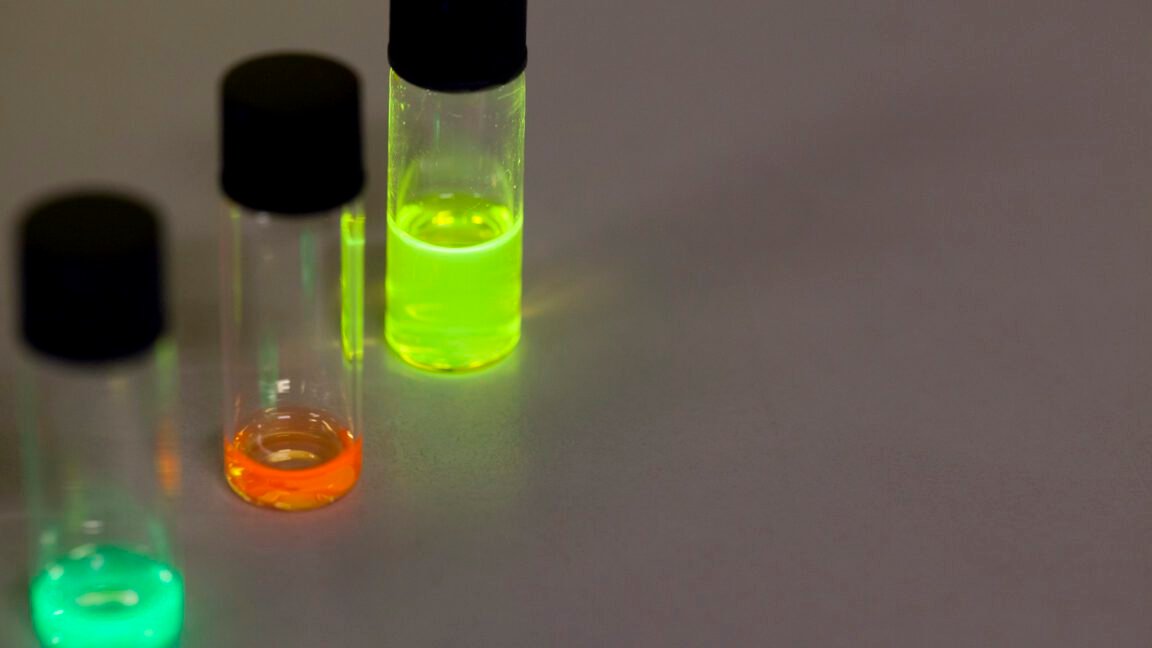
Germany recently banned TCL from marketing some of its TVs as QLED (quantum dot light-emitting diode), with a Munich court ruling that the TVs lack the quantum dot (QD) structure and performance associated with QLED TVs. The decision increases pressure on TV companies to be more honest with their marketing.
Samsung has actively campaigned against TCL’s use of the term QLED. A year ago, Samsung sent Ars Technica results from testing performed by Intertek, a London-headquartered testing and certification company, on TCL’s 65Q651G, 65Q681G, and 75Q651G. The results showed that the TVs lacked sufficient amounts of cadmium and indium (two chemicals used in QD TVs, either individually or in combination). Intertek reportedly tested the optical sheet, diffuser plate, and LED modules in each TV using a minimum detection standard of 0.5 mg/kg for cadmium and 2 mg/kg for indium.
At the time, a TCL representative told me that TCL had “definitive substantiation for the claims made regarding its QLED televisions.”
But based on previous dissections of TCL TVs shared online and conversations with industry experts, it seems those TVs may employ some QDs but not enough to offer a significantly wider color gamut than similarly specced, non-QD rivals. It’s common for TVs marketed as QD, especially budget sets, to primarily rely on phosphors or a combination of phosphors and QDs at varying ratios, for color conversion. That’s instead of, as the terms QD TV and QLED suggest, QDs. Phosphors are cheaper than QDs, and their associated color performance in displays is not as good.
Other manufacturers, including Samsung, have been accused of marketing TVs that rely heavily on phosphors as QD or QLED.
German ruling backs QD concerns
Given the rivalry between Samsung and TCL, it’s reasonable to view Samsung-commissioned testing on TCL TVs with some skepticism. But there’s no doubt that TV marketing has muddied the meaning of terms like QDs and QLED, making it easy to see how companies like TCL might overstate their use of QDs to justify higher prices and drive demand. Earlier this month, a Munich court ruled on a lawsuit from Samsung, reportedly finding that it’s misleading for TCL to market some of its TVs, including the QLED870-series sold in Europe, as QLED.
According to South Korean electronic components news site The Elec, “The court found that the quantum dot structure applied in the TCL models in question did not actually contribute to improved color reproduction. According to the ruling, the products used only a very small amount of quantum dots applied to a diffusion plate, which does not deliver the color enhancement consumers would expect.”
In response to the ruling, a Samsung spokesperson shared a statement with Ars Technica saying:
This is not an isolated issue, and this is not the first time these other manufacturers have been called into question for their claims. Shoppers should never have to question whether they’re getting the tech they thought they were buying. The results of this lawsuit affirm exactly that.
TCL didn’t respond to requests for comment.
The ruling comes as TCL (PDF) and Hisense (PDF) face similar lawsuits in the US over so-called QLED TVs. The lawsuits, which are seeking class-action certification, are ongoing. However, the ruling in Germany could sway US consumers’ views on brands like TCL and on OEM claims about QD TVs.
Eric Virey, principal displays analyst at semiconductor and technology analyst firm Yole Group, told Ars:
For TCL specifically, this is a serious warning shot. The company is trying to position itself in the US as a credible alternative to Samsung, LG, and others, not only in entry-level and mid-range products but, increasingly, for high-end products. This is illustrated by their recent takeover of Sony’s TV business. This kind of negative publicity is getting in the way of that strategy.
Quantum accountability
While the US cases are ongoing, the German court’s ruling against TCL could bolser plaintiffs’ settlement talks—or strenthen efforts to show that TCL TVs lack the performance expected from QLED TVs. And other TV brands are also likely to have oversold their TVs’ QD technology and effectiveness.
“Some products marketed as ‘QLED’ use conventional backlight architectures (standard phosphors, optical films, diffuser plates) and rely on picture modes or software tuning to create a more saturated ‘vivid’ look,” a January whitepaper by TÜV Rheinland and QD supplier Nanosys reads. The whitepaper, “Re-defining a ‘true’ Quantum Dot Display,” also points to devices that have QD material at “trace levels, or in packaging and integration designs that limit excitation and light extraction of certain wavelengths.”
“In these cases, the display may still achieve competitive headline gamut coverage, yet the measurable optical signature of an effective QD system is absent or minimal,” the whitepaper says. “The spectrum, color, volume behavior at high luminance, chromaticity stability, and temporal response can remain similar to those of non-QD LCD solutions.”
For now, the German ruling brings needed scrutiny to “QLED” and other potentially misleading display terms.
A clear understanding of what constitutes QD displays is also essential for QD-OLED displays and will only become more important if true quantum dot electroluminescent displays ever take off. (These displays, using a backlight-free technology, are also known as QDEL or QD-LED.)
“A quantum dot display should be defined by a combination of measurable material concentration and TV performance outcomes in terms of color purity, color gamut et cetera. Ideally, in a way that is understandable by consumers,” Virey said.
TÜV Rheinland and Nanosys’ whitepaper argues that QD displays should meet certain performance requirements that go beyond color gamut: “The display must deliver the optical advantages associated with quantum dots, including spectral precision, tunability and stability, improved color accuracy behavior across luminance (not just a single 2D gamut number), and, where applicable, temporal performance under backlight modulation.”
With TV marketing remaining murky—and often misleading—digging into detailed performance reviews remains the most reliable way to gauge how a display might perform in the real world.