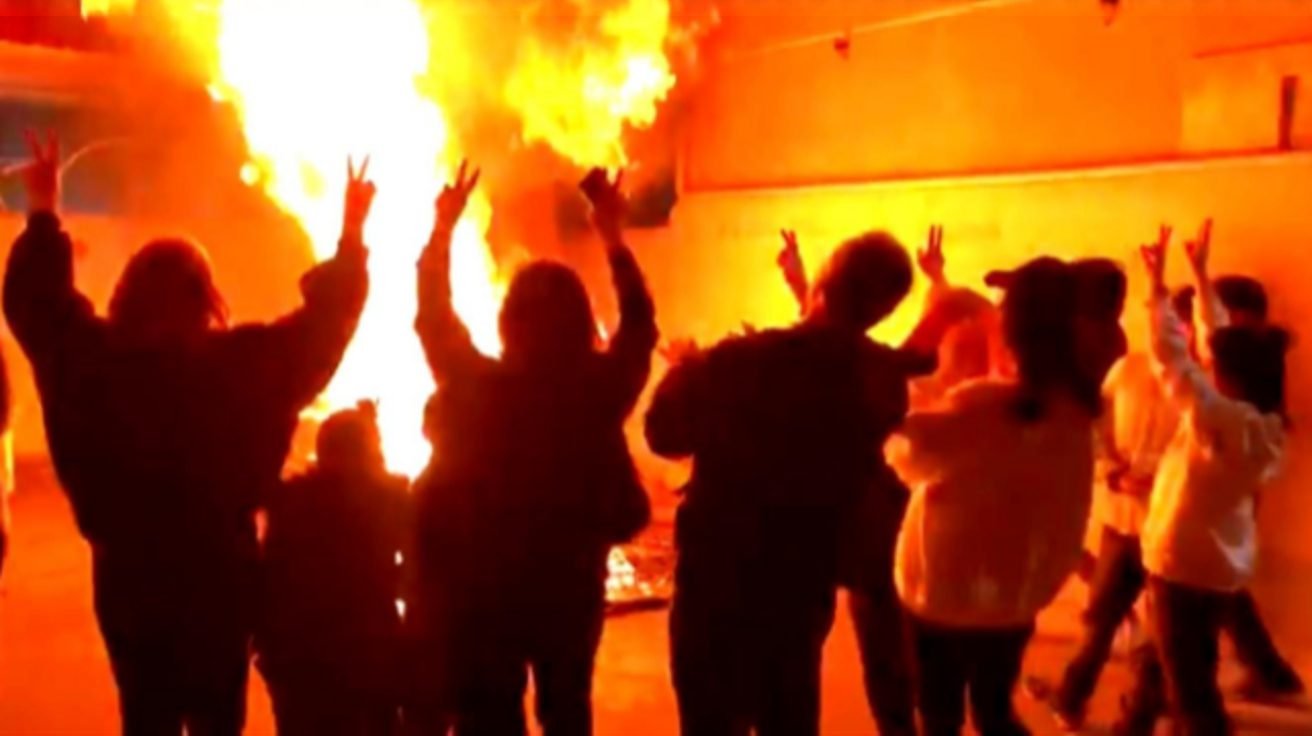
On the evening of Tuesday, March 17, large numbers of people across Iran’s cities and villages took to the streets to celebrate Chaharshanbe Suri, the ancient Persian fire festival, with dancing and jubilation. At the same time, many seized the occasion to chant slogans against the regime, a number of whose senior figures have recently been killed. In response, members of the Islamic Revolutionary Guard Corps (IRGC) and the Basij opened fire on crowds in various parts of the capital and other cities. Reports circulating on social media indicate that several individuals were wounded and a number of others arrested.
A day earlier, the Iranian regime’s Prosecutor General had warned that any observance of Chaharshanbe Suri was prohibited and that violators would face imprisonment. The commander of the police, alongside senior IRGC officials, had also threatened that any protest would be treated as a hostile action against the regime in wartime and met with live fire.
Related story: The Bonfire of Defiance: Iran’s Youth Head Into the Streets Tuesday Night
Nevertheless, images shared on social media show that, despite the heavy deployment of military and security forces throughout Tehran—armed with heavy and semi-heavy weapons, including machine guns—people still poured into the streets, lit bonfires, danced, sang Iranian national songs, and chanted anti-regime slogans.
An eyewitness in western Tehran told The Media Line that, regardless of warnings from some urging people not to hold Chaharshanbe Suri celebrations under wartime conditions—particularly as the Islamic Regime remains in mourning for its slain leader and senior officials, and as Basij and IRGC forces have become increasingly aggressive—people could not forgo what they saw as a rare and exceptional opportunity to confront the regime.
She said that in every corner of the district, there were crowds so large that “security forces largely remained at a distance,” issuing only occasional warnings over loudspeakers that the gatherings were illegal. The public, however, ignored these warnings, forming circles around the fires in the streets, leaping over the flames, dancing, and singing.
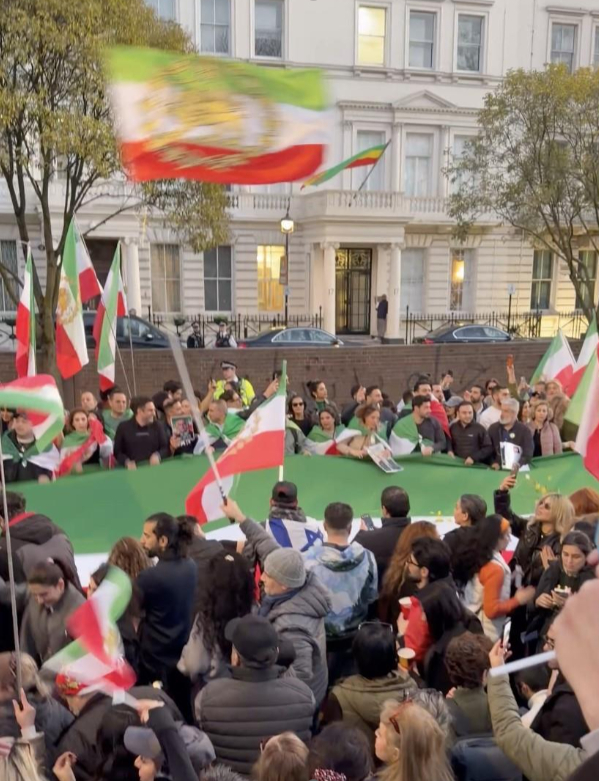
Iranians around the world, including in London, gathered outside the embassies of the Islamic Republic and held Chaharshanbe Suri celebrations. (Social media)
These events unfolded as, earlier on Tuesday, several Basij centres and checkpoint patrols in different parts of Tehran were targeted by the Israeli military. News of the killing of Ali Larijani, as well as Gholamreza Soleimani, the commander of the IRGC Basij, further fuelled public elation. Larijani was secretary of the regime’s Supreme National Security Council and a key behind-the-scenes figure following the death of Khamenei.
BREAKING: As People gather in Streets Nationwide to celebrate #ChaharshanbeSuri, Confrontations have been Reported between Regime’s Criminal forces and the #Protesters. This footage was recorded in the Chitgar district of Western #Tehran about an hour ago. #Iran… pic.twitter.com/p3BcYF6Rpy
— Omid Habibinia (@omidhabibinia) March 17, 2026
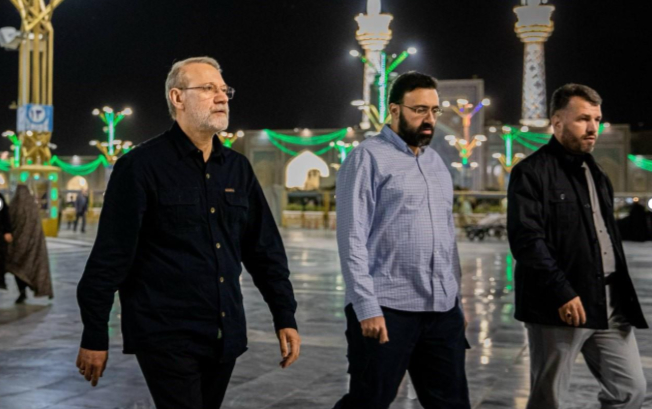
Ali Larijani, who is regarded as one of the key figures behind the massacre of protesters in January, was killed along with his son, his chief of security, and his deputy. (Tasnim News)
Larijani’s death has reportedly deepened internal fractures within the government. Informed sources suggest that Masoud Pezeshkian is highly dissatisfied with the current situation and is under pressure from some of his associates to resign. Meanwhile, the IRGC has effectively consolidated its grip on power, narrowing the space for civilian political figures.
At the same time, leaked audio files—said to be linked to the Basij—as well as accounts attributed to IRGC members, indicate that the regime’s military and security forces are anticipating the possible entry of hostile foreign or opposition forces. As a result, they have maintained a constant presence in the streets.
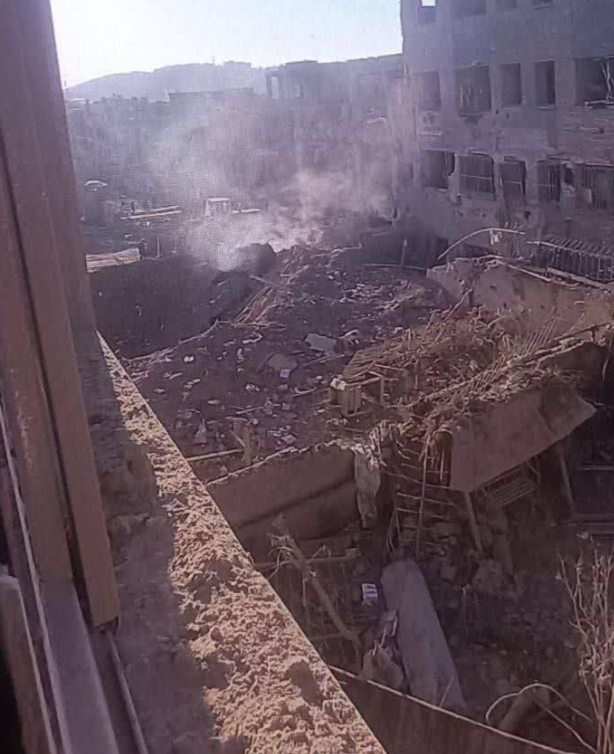
The IRGC-affiliated Telegram channel Sabereen News published a photograph of the site where Larijani was killed, which is said to have been struck in the early hours of Tuesday by air-to-surface missiles fired from Israeli fighter jets. (Sabereen News)
The opposition group Mujahedin-e Khalq (MEK) has claimed responsibility for an attack on the Khuzestan Governorate building and has released footage of its operational units conducting drills for potential engagements with IRGC forces. Concurrently, the IRGC has continued its attacks
During last year’s 12-day conflict, Iranian operatives affiliated with Israel’s Mossad reportedly played a significant role in ground-level operations. Despite the regime’s repeated announcements of arrests of individuals allegedly linked to “enemy networks” or those accused of sending videos to Persian-language media outlets abroad, it has so far struggled to counter such activities effectively.
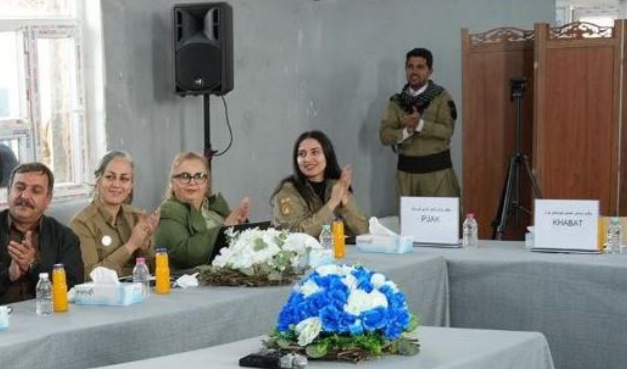
Kurdish parties opposed to the Islamic Republic have recently formed an alliance. The leader of one of these parties has said that an attack on the regime’s forces is possible. (Kurd)
While Kurdish groups publicly maintain that they do not currently intend to attack regime forces for now, Baba Sheikh Hosseini, one of the leaders of the Kurdish coalition, has stated that military operations against the Islamic regime remain highly probable and have been planned and rehearsed for years.
Abdullah Mohtadi, the leader of one of the parties in this coalition front, told Newsweek that with US support, “we could push back the regime’s forces and take control of cities in Kurdish areas.” He also said that if the United States decided to “support and protect” the Kurdish parties, they could play “a very significant role.”